The story of Prophet Yusuf is one of the most loved stories in the Quran, and it is unlike any other. Almost every prophet's story is spread across several surahs, but the story of Yusuf (peace be upon him) is told in one surah, from beginning to end, in its natural order. Surah Yusuf, the twelfth surah, is a Makkan surah of 111 ayat, and nearly all of it follows one family over many years: a father, a gifted son, and eleven brothers.
The Quran itself introduces it as “the best of stories”
(Quran 12:3). Al-Sa'di, in the closing pages of his tafsir of the surah, explains that it is among the best and clearest of stories because of how its people move between hardship and relief, between humiliation and honour, and how every turn carries a lesson.
This guide tells the whole story of Prophet Yusuf in order, quoting the ayat directly and explaining them with the classical tafsir: Ibn Kathir, al-Tabari, al-Sa'di and al-Tafsir al-Muyassar. Where the Quran is silent about a detail, we say so, because a story this precious does not need anything added to it.
Who was Prophet Yusuf?
Prophet Yusuf (peace be upon him) was the son of Prophet Ya'qub, the grandson of Prophet Ishaq and the great-grandson of Prophet Ibrahim (peace be upon them all). His father reminds him of this noble line in the very first scene, when he tells him that Allah will complete His favour on him “as He completed it upon your fathers before, Abraham and Isaac”
(Quran 12:6).
He had eleven brothers. One of them was his full brother; the commentators, including al-Muyassar, name him Binyamin, while the Quran simply calls him "his brother." The other ten were his half-brothers, and the whole drama of the surah begins with how they felt about Yusuf.
In English Yusuf is often called Joseph, and the Saheeh International translation quoted below uses that name. In this article we use his Quranic name, Yusuf.
The dream of eleven stars, the sun and the moon
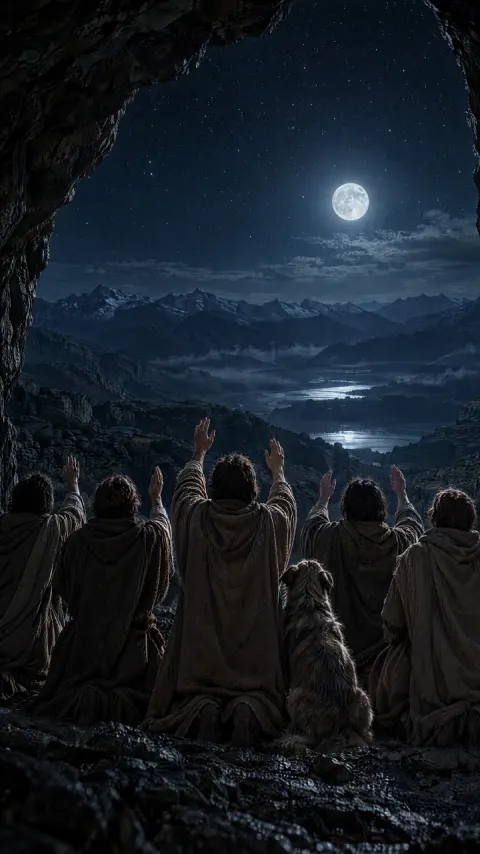
The story begins with a boy's dream. Yusuf saw eleven stars, the sun and the moon bowing down to him, and he told his father.
﴿إِذْ قَالَ يُوسُفُ لِأَبِيهِ يَـٰٓأَبَتِ إِنِّى رَأَيْتُ أَحَدَ عَشَرَ كَوْكَبًا وَٱلشَّمْسَ وَٱلْقَمَرَ رَأَيْتُهُمْ لِى سَـٰجِدِينَ ٤ قَالَ يَـٰبُنَىَّ لَا تَقْصُصْ رُءْيَاكَ عَلَىٰٓ إِخْوَتِكَ فَيَكِيدُوا۟ لَكَ كَيْدًا ۖ إِنَّ ٱلشَّيْطَـٰنَ لِلْإِنسَـٰنِ عَدُوٌّ مُّبِينٌ ٥ وَكَذَٰلِكَ يَجْتَبِيكَ رَبُّكَ وَيُعَلِّمُكَ مِن تَأْوِيلِ ٱلْأَحَادِيثِ وَيُتِمُّ نِعْمَتَهُۥ عَلَيْكَ وَعَلَىٰٓ ءَالِ يَعْقُوبَ كَمَآ أَتَمَّهَا عَلَىٰٓ أَبَوَيْكَ مِن قَبْلُ إِبْرَٰهِيمَ وَإِسْحَـٰقَ ۚ إِنَّ رَبَّكَ عَلِيمٌ حَكِيمٌ ٦﴾(4) [Of these stories mention] when Joseph said to his father, "O my father, indeed I have seen [in a dream] eleven stars and the sun and the moon; I saw them prostrating to me." (5) He said, "O my son, do not relate your vision to your brothers or they will contrive against you a plan. Indeed Satan, to man, is a manifest enemy. (6) And thus will your Lord choose you and teach you the interpretation of narratives [i.e., events or dreams] and complete His favor upon you and upon the family of Jacob, as He completed it upon your fathers before, Abraham and Isaac. Indeed, your Lord is Knowing and Wise."

Ibn Kathir reports from Ibn 'Abbas, Qatadah and others that the eleven stars stood for his eleven brothers, and the sun and the moon for his father and mother. He also records the saying of Ibn 'Abbas that the dreams of prophets are revelation. Ya'qub understood at once what the dream meant, which is why he answered with both joy and caution.
His advice was simple: do not tell your brothers. Al-Muyassar explains that Ya'qub feared they would envy him, become hostile and plot to destroy him, because Satan is an open enemy to people. Al-Sa'di draws a lesson from this: it is wise to keep hidden a blessing whose mention could stir up harm, and it is allowed to warn someone about another person's likely reaction when the purpose is sincere advice.
Then Ya'qub gave his son the meaning of the dream as a promise. Allah would choose him, teach him “the interpretation of narratives”
(Quran 12:6) and complete His favour on him and on the family of Ya'qub. Al-Muyassar explains that this completed favour means prophethood and the message, as it had been given to Ibrahim and Ishaq before him.
 Watch this story in QASASYusuf's DreamEleven stars, the sun and the moon bowed to him.Open on Google Play →
Yusuf and his brothers: jealousy and the plan
The brothers did not need to hear the dream to feel jealous. They could already see how much their father loved Yusuf and his brother.
﴿إِذْ قَالُوا۟ لَيُوسُفُ وَأَخُوهُ أَحَبُّ إِلَىٰٓ أَبِينَا مِنَّا وَنَحْنُ عُصْبَةٌ إِنَّ أَبَانَا لَفِى ضَلَـٰلٍ مُّبِينٍ ٨ ٱقْتُلُوا۟ يُوسُفَ أَوِ ٱطْرَحُوهُ أَرْضًا يَخْلُ لَكُمْ وَجْهُ أَبِيكُمْ وَتَكُونُوا۟ مِنۢ بَعْدِهِۦ قَوْمًا صَـٰلِحِينَ ٩ قَالَ قَآئِلٌ مِّنْهُمْ لَا تَقْتُلُوا۟ يُوسُفَ وَأَلْقُوهُ فِى غَيَـٰبَتِ ٱلْجُبِّ يَلْتَقِطْهُ بَعْضُ ٱلسَّيَّارَةِ إِن كُنتُمْ فَـٰعِلِينَ ١٠﴾(8) When they said, "Joseph and his brother are more beloved to our father than we, while we are a clan. Indeed, our father is in clear error. (9) Kill Joseph or cast him out to [another] land; the countenance [i.e., attention] of your father will [then] be only for you, and you will be after that a righteous people." (10) Said a speaker among them, "Do not kill Joseph but throw him into the bottom of the well; some travelers will pick him up - if you would do [something]."
Notice how the plan grows. First a complaint: our father loves them more. Then an accusation against their own father, a prophet: he is “in clear error”
(Quran 12:8). Then the terrible idea of killing or exiling their brother, followed by a promise to themselves that they would become righteous afterwards. Al-Muyassar explains that they meant they would repent and seek forgiveness once it was done.
One of the brothers spoke against killing him and suggested the well instead, where some travellers might pick him up. The Quran does not name this brother, and we do not need his name. Al-Sa'di uses his words as an example of choosing the lesser of two harms: the plan was still wrong, but it was far less evil than murder.
Then they went to their father with smiles and promises. They asked him to send Yusuf with them the next day so he could enjoy himself and play, and they swore to guard him. Ya'qub told them that parting with Yusuf grieved him, and that he feared “that a wolf would eat him while you are of him unaware”
(Quran 12:13). They replied that if a wolf ate him while they were such a strong group, they would truly be losers.
Yusuf in the well
They took him out and agreed together to put him into the bottom of the well. At that very moment, alone in the dark, Yusuf received a promise from his Lord.
﴿فَلَمَّا ذَهَبُوا۟ بِهِۦ وَأَجْمَعُوٓا۟ أَن يَجْعَلُوهُ فِى غَيَـٰبَتِ ٱلْجُبِّ ۚ وَأَوْحَيْنَآ إِلَيْهِ لَتُنَبِّئَنَّهُم بِأَمْرِهِمْ هَـٰذَا وَهُمْ لَا يَشْعُرُونَ ١٥ وَجَآءُوٓ أَبَاهُمْ عِشَآءً يَبْكُونَ ١٦ قَالُوا۟ يَـٰٓأَبَانَآ إِنَّا ذَهَبْنَا نَسْتَبِقُ وَتَرَكْنَا يُوسُفَ عِندَ مَتَـٰعِنَا فَأَكَلَهُ ٱلذِّئْبُ ۖ وَمَآ أَنتَ بِمُؤْمِنٍ لَّنَا وَلَوْ كُنَّا صَـٰدِقِينَ ١٧ وَجَآءُو عَلَىٰ قَمِيصِهِۦ بِدَمٍ كَذِبٍ ۚ قَالَ بَلْ سَوَّلَتْ لَكُمْ أَنفُسُكُمْ أَمْرًا ۖ فَصَبْرٌ جَمِيلٌ ۖ وَٱللَّهُ ٱلْمُسْتَعَانُ عَلَىٰ مَا تَصِفُونَ ١٨﴾(15) So when they took him [out] and agreed to put him into the bottom of the well... But We inspired to him, "You will surely inform them [someday] about this affair of theirs while they do not perceive [your identity]." (16) And they came to their father at night, weeping. (17) They said, "O our father, indeed we went racing each other and left Joseph with our possessions, and a wolf ate him. But you would not believe us, even if we were truthful." (18) And they brought upon his shirt false blood. [Jacob] said, "Rather, your souls have enticed you to something, so patience is most fitting. And Allāh is the one sought for help against that which you describe."

Ibn Kathir explains that Allah inspired Yusuf in that narrow, frightening place to comfort his heart and make him steady: his distress would not last, and one day he would tell his brothers what they had done. About the words "while they do not perceive," Ibn Kathir reports two readings: Mujahid and Qatadah said the brothers would not know that this inspiration came from Allah, and Ibn 'Abbas said they would not recognise Yusuf when he told them. The second meaning is exactly what happens years later in Egypt.
That night the brothers came home weeping, with a story about racing each other and a wolf, and with Yusuf's shirt stained “false blood”
(Quran 12:18). Ibn Kathir and al-Muyassar both point to the detail that gave them away: the shirt was not torn. A wolf does not eat a boy and leave his shirt whole.
Ya'qub did not accept their story, and he did not lose control either. He said “patience is most fitting”
(Quran 12:18), in Arabic fa-sabrun jamil, "beautiful patience." Ibn Kathir quotes Mujahid that beautiful patience is patience with no panic in it, and al-Muyassar describes it as patience with no complaint to any created being. Ya'qub then turned to Allah alone for help.
 Watch this story in QASASYusuf in the WellHis brothers threw him into a well... then what happened?Open on Google Play →
The caravan and the house of al-'Aziz
A company of travellers stopped near the well and sent a man to draw water. When he let down his bucket, he found a boy holding on to it.
﴿وَجَآءَتْ سَيَّارَةٌ فَأَرْسَلُوا۟ وَارِدَهُمْ فَأَدْلَىٰ دَلْوَهُۥ ۖ قَالَ يَـٰبُشْرَىٰ هَـٰذَا غُلَـٰمٌ ۚ وَأَسَرُّوهُ بِضَـٰعَةً ۚ وَٱللَّهُ عَلِيمٌۢ بِمَا يَعْمَلُونَ ١٩ وَشَرَوْهُ بِثَمَنٍۭ بَخْسٍ دَرَٰهِمَ مَعْدُودَةٍ وَكَانُوا۟ فِيهِ مِنَ ٱلزَّٰهِدِينَ ٢٠ وَقَالَ ٱلَّذِى ٱشْتَرَىٰهُ مِن مِّصْرَ لِٱمْرَأَتِهِۦٓ أَكْرِمِى مَثْوَىٰهُ عَسَىٰٓ أَن يَنفَعَنَآ أَوْ نَتَّخِذَهُۥ وَلَدًا ۚ وَكَذَٰلِكَ مَكَّنَّا لِيُوسُفَ فِى ٱلْأَرْضِ وَلِنُعَلِّمَهُۥ مِن تَأْوِيلِ ٱلْأَحَادِيثِ ۚ وَٱللَّهُ غَالِبٌ عَلَىٰٓ أَمْرِهِۦ وَلَـٰكِنَّ أَكْثَرَ ٱلنَّاسِ لَا يَعْلَمُونَ ٢١﴾(19) And there came a company of travelers; then they sent their water drawer, and he let down his bucket. He said, "Good news! Here is a boy." And they concealed him, [taking him] as merchandise; and Allāh was Knowing of what they did. (20) And they sold him for a reduced price - a few dirhams - and they were, concerning him, of those content with little. (21) And the one from Egypt who bought him said to his wife, "Make his residence comfortable. Perhaps he will benefit us, or we will adopt him as a son." And thus, We established Joseph in the land that We might teach him the interpretation of events [i.e., dreams]. And Allāh is predominant over His affair, but most of the people do not know.
The Quran calls Yusuf a ghulam, a boy, at this point. It does not give his exact age, and the commentators' estimates are not something we need to rely on. The travellers hid him as merchandise, and he was sold “for a reduced price - a few dirhams”
(Quran 12:20). Who sold him? Ibn Kathir reports two views: Ibn 'Abbas and Mujahid said it was his brothers, and Qatadah said it was the travellers. Ibn Kathir considers the first view stronger, and al-Muyassar follows it, explaining that the sellers wanted to be rid of him because they had no idea of his rank with Allah.
The man who bought him in Egypt is later called al-'Aziz, a title of high rank. Ibn Kathir describes him as the minister of Egypt. He told his wife to honour Yusuf's stay, hoping the boy would benefit them or that they might adopt him as a son. And Allah tells us what was really happening: “And thus, We established Joseph in the land”
(Quran 12:21). The well that was meant to make him disappear had become the road into one of the great houses of Egypt.
When Yusuf reached full strength, Allah gave him judgement and knowledge, “And thus We reward the doers of good.”
(Quran 12:22)
The test in al-'Aziz's house
As Yusuf grew into a young man, the wife of al-'Aziz, in whose house he lived, tried to tempt him into wrongdoing. She closed the doors and called him to herself. His answer was immediate.
﴿وَرَٰوَدَتْهُ ٱلَّتِى هُوَ فِى بَيْتِهَا عَن نَّفْسِهِۦ وَغَلَّقَتِ ٱلْأَبْوَٰبَ وَقَالَتْ هَيْتَ لَكَ ۚ قَالَ مَعَاذَ ٱللَّهِ ۖ إِنَّهُۥ رَبِّىٓ أَحْسَنَ مَثْوَاىَ ۖ إِنَّهُۥ لَا يُفْلِحُ ٱلظَّـٰلِمُونَ ٢٣﴾(23) And she, in whose house he was, sought to seduce him. She closed the doors and said, "Come, you." He said, "[I seek] the refuge of Allāh. Indeed, he is my master, who has made good my residence. Indeed, wrongdoers will not succeed."
He sought refuge in Allah and refused to betray the man who had honoured him, saying that wrongdoers never succeed. The Quran then says that Allah turned evil and indecency away from him, and gives the reason: “Indeed, he was of Our chosen servants.”
(Quran 12:24) Al-Sa'di explains that whoever has faith firmly in his heart and is sincere to Allah, Allah protects him through that faith, and that a passing thought a person abandons for Allah's sake brings him closer to Allah rather than counting against him.
Yusuf ran for the door, and she pulled at his shirt from behind and tore it. At the door they found her husband. She immediately accused Yusuf, and he answered that it was she who had tried to tempt him. Then a witness from her own family offered a fair test: if the shirt was torn from the front, she was truthful; if it was torn from the back, he was. The shirt was torn from the back, and al-'Aziz knew Yusuf was innocent. He told Yusuf to let the matter go and told his wife to seek forgiveness for her sin.
The Quran does not say who this witness was. Ibn Kathir records two views among the early scholars: that he was a grown man of her family, or that he was a small child, and he notes that al-Tabari preferred the second view. Al-Muyassar follows the view that it was an infant who spoke.
What is the name of al-'Aziz's wife?
Many books and films call her Zulaikha. The Quran never names her; it calls her only "the wife of al-'Aziz." Ibn Kathir mentions names reported from earlier narrations, including this one, without confirming any of them. The name is therefore not established, and nothing in the story depends on it.
The women of the city
News spread, and women in the city began to criticise her. She invited them to a gathering, gave each of them a knife for the food, and asked Yusuf to come out before them. When they saw him they were so struck that they cut their hands and said “This is not a man; this is none but a noble angel.”
(Quran 12:31) She then admitted openly that he had refused her, and threatened him with prison if he did not obey.
Yusuf turned to his Lord with one of the most remarkable du'as in the Quran.
﴿قَالَ رَبِّ ٱلسِّجْنُ أَحَبُّ إِلَىَّ مِمَّا يَدْعُونَنِىٓ إِلَيْهِ ۖ وَإِلَّا تَصْرِفْ عَنِّى كَيْدَهُنَّ أَصْبُ إِلَيْهِنَّ وَأَكُن مِّنَ ٱلْجَـٰهِلِينَ ٣٣ فَٱسْتَجَابَ لَهُۥ رَبُّهُۥ فَصَرَفَ عَنْهُ كَيْدَهُنَّ ۚ إِنَّهُۥ هُوَ ٱلسَّمِيعُ ٱلْعَلِيمُ ٣٤﴾(33) He said, "My Lord, prison is more to my liking than that to which they invite me. And if You do not avert from me their plan, I might incline toward them and [thus] be of the ignorant." (34) So his Lord responded to him and averted from him their plan. Indeed, He is the Hearing, the Knowing.
He chose prison over sin, and he did not trust his own strength: he asked Allah to turn their plotting away from him. Al-Sa'di notes two lessons here: a believer should prefer worldly hardship over disobeying Allah, and should take refuge in Allah whenever temptation appears, admitting that he has no power except through Him. Even though they had seen clear signs of his innocence, those in power decided to imprison him for a time. Al-Muyassar explains that they did it to avoid a public scandal.
Prophet Yusuf in prison
Two young men entered prison with Yusuf. Each had a dream and asked him to interpret it, because they could see he was a good man.
﴿وَدَخَلَ مَعَهُ ٱلسِّجْنَ فَتَيَانِ ۖ قَالَ أَحَدُهُمَآ إِنِّىٓ أَرَىٰنِىٓ أَعْصِرُ خَمْرًا ۖ وَقَالَ ٱلْـَٔاخَرُ إِنِّىٓ أَرَىٰنِىٓ أَحْمِلُ فَوْقَ رَأْسِى خُبْزًا تَأْكُلُ ٱلطَّيْرُ مِنْهُ ۖ نَبِّئْنَا بِتَأْوِيلِهِۦٓ ۖ إِنَّا نَرَىٰكَ مِنَ ٱلْمُحْسِنِينَ ٣٦﴾(36) And there entered the prison with him two young men. One of them said, "Indeed, I have seen myself [in a dream] pressing [grapes for] wine." The other said, "Indeed, I have seen myself carrying upon my head [some] bread, from which the birds were eating. Inform us of its interpretation; indeed, we see you to be of those who do good."
Before he answered their question, Yusuf answered a bigger one. He told them that his knowledge was something his Lord had taught him, that he followed the religion of his fathers Ibrahim, Ishaq and Ya'qub, and then he asked them: “are separate lords better or Allāh, the One, the Prevailing?”
(Quran 12:39) Al-Sa'di points out that Yusuf began with what mattered most, calling them to worship Allah alone, before giving them what they had asked for. Prison did not stop him from serving Allah.
Then he gave the interpretation. One of them would be released and pour drink for his master; the other would be executed, and birds would eat from his head. The matter was decided.
Yusuf asked the one he knew would be released to mention him to his master. “But Satan made him forget the mention [to] his master, and he [i.e., Joseph] remained in prison several years.”
(Quran 12:42)
Who forgot? Ibn Kathir says the correct view, held by Mujahid and Ibn Ishaq, is that it was the released man who forgot to mention Yusuf to the king. He also records the other view, narrated by al-Tabari, that it refers to Yusuf, but he holds the first view to be the correct one.
How long was he in prison? The Quran says bid' sinin, "several years." Ibn Kathir quotes Mujahid and Qatadah that bid' means a number between three and nine, and reports other figures from early commentators without settling on one. The honest answer is that the Quran does not give an exact number.
The king's dream and its interpretation
Years later the king of Egypt had a dream that none of his advisers could explain. In Surah Yusuf the ruler is always called al-malik, "the king."
﴿وَقَالَ ٱلْمَلِكُ إِنِّىٓ أَرَىٰ سَبْعَ بَقَرَٰتٍ سِمَانٍ يَأْكُلُهُنَّ سَبْعٌ عِجَافٌ وَسَبْعَ سُنۢبُلَـٰتٍ خُضْرٍ وَأُخَرَ يَابِسَـٰتٍ ۖ يَـٰٓأَيُّهَا ٱلْمَلَأُ أَفْتُونِى فِى رُءْيَـٰىَ إِن كُنتُمْ لِلرُّءْيَا تَعْبُرُونَ ٤٣ قَالُوٓا۟ أَضْغَـٰثُ أَحْلَـٰمٍ ۖ وَمَا نَحْنُ بِتَأْوِيلِ ٱلْأَحْلَـٰمِ بِعَـٰلِمِينَ ٤٤ وَقَالَ ٱلَّذِى نَجَا مِنْهُمَا وَٱدَّكَرَ بَعْدَ أُمَّةٍ أَنَا۠ أُنَبِّئُكُم بِتَأْوِيلِهِۦ فَأَرْسِلُونِ ٤٥﴾(43) And [subsequently] the king said, "Indeed, I have seen [in a dream] seven fat cows being eaten by seven [that were] lean, and seven green spikes [of grain] and others [that were] dry. O eminent ones, explain to me my vision, if you should interpret visions." (44) They said, "[It is but] a mixture of false dreams, and we are not learned in the interpretation of dreams." (45) But the one who was freed and remembered after a time said, "I will inform you of its interpretation, so send me forth."
His court called it “a mixture of false dreams”
(Quran 12:44). Only then did the released prisoner remember Yusuf. He went to the prison and called him “O man of truth”
(Quran 12:46), and Yusuf gave not only the meaning but a plan.
﴿قَالَ تَزْرَعُونَ سَبْعَ سِنِينَ دَأَبًا فَمَا حَصَدتُّمْ فَذَرُوهُ فِى سُنۢبُلِهِۦٓ إِلَّا قَلِيلًا مِّمَّا تَأْكُلُونَ ٤٧ ثُمَّ يَأْتِى مِنۢ بَعْدِ ذَٰلِكَ سَبْعٌ شِدَادٌ يَأْكُلْنَ مَا قَدَّمْتُمْ لَهُنَّ إِلَّا قَلِيلًا مِّمَّا تُحْصِنُونَ ٤٨ ثُمَّ يَأْتِى مِنۢ بَعْدِ ذَٰلِكَ عَامٌ فِيهِ يُغَاثُ ٱلنَّاسُ وَفِيهِ يَعْصِرُونَ ٤٩﴾(47) [Joseph] said, "You will plant for seven years consecutively; and what you harvest leave in its spikes, except a little from which you will eat. (48) Then will come after that seven difficult [years] which will consume what you advanced [i.e., saved] for them, except a little from which you will store. (49) Then will come after that a year in which the people will be given rain and in which they will press [olives and grapes]."
Seven years of good harvests would come, and they should store the grain in its ears, except for the little they ate. Then seven hard years would eat up what they had stored. Then a year of rain and relief would follow. Al-Muyassar explains that leaving the grain in its ears protects it from spoiling. Al-Sa'di adds that storing provisions in good years is wise planning and does not contradict trust in Allah, and that Yusuf did more than answer the question: he guided them to what would benefit them.
Cleared of every charge
The king asked for Yusuf to be brought to him. After years in prison, Yusuf did something surprising: he refused to leave until his name was cleared. He told the messenger to go back and ask about the women who had cut their hands.
The king questioned the women, and they declared they knew nothing bad about him. Then the wife of al-'Aziz said “Now the truth has become evident.”
(Quran 12:51) and confessed that Yusuf was truthful.
The words that follow, about not betraying in secret and the soul that urges evil, are discussed by the commentators. Al-Muyassar and Ibn Kathir explain them as her words, and Ibn Kathir calls this view stronger and clearer; he also records that a number of early scholars understood them as Yusuf's words. Al-Sa'di draws a clear lesson from the scene: there is no blame on a person who works to clear himself of a false accusation.
Prophet Yusuf as guardian of Egypt's storehouses
Now the king wanted Yusuf close to him.
﴿وَقَالَ ٱلْمَلِكُ ٱئْتُونِى بِهِۦٓ أَسْتَخْلِصْهُ لِنَفْسِى ۖ فَلَمَّا كَلَّمَهُۥ قَالَ إِنَّكَ ٱلْيَوْمَ لَدَيْنَا مَكِينٌ أَمِينٌ ٥٤ قَالَ ٱجْعَلْنِى عَلَىٰ خَزَآئِنِ ٱلْأَرْضِ ۖ إِنِّى حَفِيظٌ عَلِيمٌ ٥٥ وَكَذَٰلِكَ مَكَّنَّا لِيُوسُفَ فِى ٱلْأَرْضِ يَتَبَوَّأُ مِنْهَا حَيْثُ يَشَآءُ ۚ نُصِيبُ بِرَحْمَتِنَا مَن نَّشَآءُ ۖ وَلَا نُضِيعُ أَجْرَ ٱلْمُحْسِنِينَ ٥٦﴾(54) And the king said, "Bring him to me; I will appoint him exclusively for myself." And when he spoke to him, he said, "Indeed, you are today established [in position] and trusted." (55) [Joseph] said, "Appoint me over the storehouses of the land. Indeed, I will be a knowing guardian." (56) And thus We established Joseph in the land to settle therein wherever he willed. We touch with Our mercy whom We will, and We do not allow to be lost the reward of those who do good.
Yusuf asked to be placed over the storehouses of the land, describing himself as a knowing guardian. Al-Muyassar explains that he wanted to benefit people and establish justice among them. Al-Sa'di notes that it is acceptable to mention one's own ability when there is a real benefit in it and it is free from showing off.
Allah established Yusuf in the land, and the Quran adds that the reward of the Hereafter is even better for those who believe and are mindful of Allah. The boy sold for a few coins was now trusted with the food of a nation.
The brothers come to Egypt
When the years of hardship arrived, they reached Ya'qub's family too, and the brothers travelled to Egypt for food.
﴿وَجَآءَ إِخْوَةُ يُوسُفَ فَدَخَلُوا۟ عَلَيْهِ فَعَرَفَهُمْ وَهُمْ لَهُۥ مُنكِرُونَ ٥٨ وَلَمَّا جَهَّزَهُم بِجَهَازِهِمْ قَالَ ٱئْتُونِى بِأَخٍ لَّكُم مِّنْ أَبِيكُمْ ۚ أَلَا تَرَوْنَ أَنِّىٓ أُوفِى ٱلْكَيْلَ وَأَنَا۠ خَيْرُ ٱلْمُنزِلِينَ ٥٩ فَإِن لَّمْ تَأْتُونِى بِهِۦ فَلَا كَيْلَ لَكُمْ عِندِى وَلَا تَقْرَبُونِ ٦٠﴾(58) And the brothers of Joseph came [seeking food], and they entered upon him; and he recognized them, but he was to them unknown. (59) And when he had furnished them with their supplies, he said, "Bring me a brother of yours from your father. Do you not see that I give full measure and that I am the best of accommodators? (60) But if you do not bring him to me, no measure will there be [hereafter] for you from me, nor will you approach me."
He recognised them, but they did not recognise him. Al-Muyassar explains that this was because of the long time that had passed and how much he had changed. He treated them generously, then told them to bring their brother from their father next time, or they would get no more grain. Secretly, he had their payment put back into their bags.
At home, they found the payment returned and begged their father to send their brother. Ya'qub answered with a sentence full of pain and trust: should he trust them with this son as he had trusted them with his brother before? “But Allāh is the best guardian, and He is the most merciful of the merciful.”
(Quran 12:64) He sent him only after they gave a firm oath by Allah. He also told them not to enter through a single gate but through different gates; al-Muyassar explains that he feared the evil eye for them, while he knew that nothing could avert what Allah had decreed.
Binyamin and the king's cup
When the brothers came before Yusuf, he took his full brother aside and told him the truth.
﴿وَلَمَّا دَخَلُوا۟ عَلَىٰ يُوسُفَ ءَاوَىٰٓ إِلَيْهِ أَخَاهُ ۖ قَالَ إِنِّىٓ أَنَا۠ أَخُوكَ فَلَا تَبْتَئِسْ بِمَا كَانُوا۟ يَعْمَلُونَ ٦٩ فَلَمَّا جَهَّزَهُم بِجَهَازِهِمْ جَعَلَ ٱلسِّقَايَةَ فِى رَحْلِ أَخِيهِ ثُمَّ أَذَّنَ مُؤَذِّنٌ أَيَّتُهَا ٱلْعِيرُ إِنَّكُمْ لَسَـٰرِقُونَ ٧٠﴾(69) And when they entered upon Joseph, he took his brother to himself; he said, "Indeed, I am your brother, so do not despair over what they used to do [to me]." (70) So when he had furnished them with their supplies, he put the [gold measuring] bowl into the bag of his brother. Then an announcer called out, "O caravan, indeed you are thieves."
Yusuf had the king's measuring cup placed in his brother's bag. When it was found there, by the brothers' own rule the one in whose bag it was found would be held. The Quran explains that this was a plan Allah made for Yusuf, because under the king's law he could not have kept his brother otherwise. Al-Sa'di explains that using a lawful plan to reach a rightful goal is allowed, while tricks to drop an obligation or reach something forbidden are not.
The brothers said that if he had stolen, a brother of his had stolen before, meaning Yusuf. “But Joseph kept it within himself and did not reveal it to them.”
(Quran 12:77) They offered one of themselves in his place for the sake of their old father, but Yusuf refused to take anyone but the one with whom the cup was found. The eldest brother refused to go home and face his father, and stayed in Egypt.
Ya'qub's patience and grief
For the second time, Ya'qub heard that a son was lost. For the second time he said the same words.
﴿قَالَ بَلْ سَوَّلَتْ لَكُمْ أَنفُسُكُمْ أَمْرًا ۖ فَصَبْرٌ جَمِيلٌ ۖ عَسَى ٱللَّهُ أَن يَأْتِيَنِى بِهِمْ جَمِيعًا ۚ إِنَّهُۥ هُوَ ٱلْعَلِيمُ ٱلْحَكِيمُ ٨٣ وَتَوَلَّىٰ عَنْهُمْ وَقَالَ يَـٰٓأَسَفَىٰ عَلَىٰ يُوسُفَ وَٱبْيَضَّتْ عَيْنَاهُ مِنَ ٱلْحُزْنِ فَهُوَ كَظِيمٌ ٨٤ قَالُوا۟ تَٱللَّهِ تَفْتَؤُا۟ تَذْكُرُ يُوسُفَ حَتَّىٰ تَكُونَ حَرَضًا أَوْ تَكُونَ مِنَ ٱلْهَـٰلِكِينَ ٨٥ قَالَ إِنَّمَآ أَشْكُوا۟ بَثِّى وَحُزْنِىٓ إِلَى ٱللَّهِ وَأَعْلَمُ مِنَ ٱللَّهِ مَا لَا تَعْلَمُونَ ٨٦ يَـٰبَنِىَّ ٱذْهَبُوا۟ فَتَحَسَّسُوا۟ مِن يُوسُفَ وَأَخِيهِ وَلَا تَا۟يْـَٔسُوا۟ مِن رَّوْحِ ٱللَّهِ ۖ إِنَّهُۥ لَا يَا۟يْـَٔسُ مِن رَّوْحِ ٱللَّهِ إِلَّا ٱلْقَوْمُ ٱلْكَـٰفِرُونَ ٨٧﴾(83) [Jacob] said, "Rather, your souls have enticed you to something, so patience is most fitting. Perhaps Allāh will bring them to me all together. Indeed, it is He who is the Knowing, the Wise." (84) And he turned away from them and said, "Oh, my sorrow over Joseph," and his eyes became white from grief, for he was [of that] a suppressor. (85) They said, "By Allāh, you will not cease remembering Joseph until you become fatally ill or become of those who perish." (86) He said, "I only complain of my suffering and my grief to Allāh, and I know from Allāh that which you do not know. (87) O my sons, go and find out about Joseph and his brother and despair not of relief from Allāh. Indeed, no one despairs of relief from Allāh except the disbelieving people."
His eyes turned white from grief, al-Muyassar explains, losing their colour from the intensity of his sorrow, yet he held it in. When his sons told him he would destroy himself remembering Yusuf, he gave them an answer that defines this surah: “I only complain of my suffering and my grief to Allāh”
(Quran 12:86). Al-Sa'di explains that complaining to Allah does not contradict patience; what contradicts patience is complaining to people.
And instead of giving up, he sent them back to search: “despair not of relief from Allāh”
(Quran 12:87). Al-Muyassar explains that only those who deny Allah's power cut off their hope in His mercy.
"I am Yusuf": forgiveness
The brothers returned to Egypt poor and humbled. They asked the 'Aziz, as they called him, for full measure and charity. Then Yusuf asked them a question they never expected.
﴿قَالَ هَلْ عَلِمْتُم مَّا فَعَلْتُم بِيُوسُفَ وَأَخِيهِ إِذْ أَنتُمْ جَـٰهِلُونَ ٨٩ قَالُوٓا۟ أَءِنَّكَ لَأَنتَ يُوسُفُ ۖ قَالَ أَنَا۠ يُوسُفُ وَهَـٰذَآ أَخِى ۖ قَدْ مَنَّ ٱللَّهُ عَلَيْنَآ ۖ إِنَّهُۥ مَن يَتَّقِ وَيَصْبِرْ فَإِنَّ ٱللَّهَ لَا يُضِيعُ أَجْرَ ٱلْمُحْسِنِينَ ٩٠ قَالُوا۟ تَٱللَّهِ لَقَدْ ءَاثَرَكَ ٱللَّهُ عَلَيْنَا وَإِن كُنَّا لَخَـٰطِـِٔينَ ٩١ قَالَ لَا تَثْرِيبَ عَلَيْكُمُ ٱلْيَوْمَ ۖ يَغْفِرُ ٱللَّهُ لَكُمْ ۖ وَهُوَ أَرْحَمُ ٱلرَّٰحِمِينَ ٩٢﴾(89) He said, "Do you know what you did with Joseph and his brother when you were ignorant?" (90) They said, "Are you indeed Joseph?" He said, "I am Joseph, and this is my brother. Allāh has certainly favored us. Indeed, he who fears Allāh and is patient, then indeed, Allāh does not allow to be lost the reward of those who do good." (91) They said, "By Allāh, certainly has Allāh preferred you over us, and indeed, we have been sinners." (92) He said, "No blame will there be upon you today. May Allāh forgive you; and He is the most merciful of the merciful.
Al-Muyassar notes that when Yusuf heard their plea, his heart softened and he revealed who he was. The brothers who once threw him into a well now stood before him, and he said “No blame will there be upon you today.”
(Quran 12:92) There was no lecture and no revenge, only a prayer that Allah forgive them. Yusuf also explained his whole life in one sentence: whoever is mindful of Allah and patient, Allah does not let the reward of the good-doers be lost.
Yusuf's shirt and Ya'qub's sight
Yusuf sent his shirt with them, telling them to cast it over his father's face so that he would see again, and to bring the whole family.
﴿ٱذْهَبُوا۟ بِقَمِيصِى هَـٰذَا فَأَلْقُوهُ عَلَىٰ وَجْهِ أَبِى يَأْتِ بَصِيرًا وَأْتُونِى بِأَهْلِكُمْ أَجْمَعِينَ ٩٣ وَلَمَّا فَصَلَتِ ٱلْعِيرُ قَالَ أَبُوهُمْ إِنِّى لَأَجِدُ رِيحَ يُوسُفَ ۖ لَوْلَآ أَن تُفَنِّدُونِ ٩٤ قَالُوا۟ تَٱللَّهِ إِنَّكَ لَفِى ضَلَـٰلِكَ ٱلْقَدِيمِ ٩٥ فَلَمَّآ أَن جَآءَ ٱلْبَشِيرُ أَلْقَىٰهُ عَلَىٰ وَجْهِهِۦ فَٱرْتَدَّ بَصِيرًا ۖ قَالَ أَلَمْ أَقُل لَّكُمْ إِنِّىٓ أَعْلَمُ مِنَ ٱللَّهِ مَا لَا تَعْلَمُونَ ٩٦﴾(93) Take this, my shirt, and cast it over the face of my father; he will become seeing. And bring me your family, all together." (94) And when the caravan departed [from Egypt], their father said, "Indeed, I find the smell of Joseph [and would say that he was alive] if you did not think me weakened in mind." (95) They said, "By Allāh, indeed you are in your [same] old error." (96) And when the bearer of good tidings arrived, he cast it over his face, and he returned [once again] seeing. He said, "Did I not tell you that I know from Allāh that which you do not know?"
As soon as the caravan left Egypt, Ya'qub said he could smell Yusuf. The people around him told him he was still in his old error of love for Yusuf. Then the bearer of good news arrived, cast the shirt over his face, and his sight returned. Ya'qub reminded them of what he had said all along: he knew from Allah what they did not know.
Readers of the surah often notice that shirts mark its turning points: a shirt with false blood that hid the truth, a shirt torn from the back that proved innocence, and now a shirt that brought back a father's sight.
The brothers asked their father to seek forgiveness for them, and he promised he would ask his Lord, the Forgiving, the Merciful.
The dream comes true
The family came to Egypt, and the scene the surah has been moving toward finally arrives.
﴿فَلَمَّا دَخَلُوا۟ عَلَىٰ يُوسُفَ ءَاوَىٰٓ إِلَيْهِ أَبَوَيْهِ وَقَالَ ٱدْخُلُوا۟ مِصْرَ إِن شَآءَ ٱللَّهُ ءَامِنِينَ ٩٩ وَرَفَعَ أَبَوَيْهِ عَلَى ٱلْعَرْشِ وَخَرُّوا۟ لَهُۥ سُجَّدًا ۖ وَقَالَ يَـٰٓأَبَتِ هَـٰذَا تَأْوِيلُ رُءْيَـٰىَ مِن قَبْلُ قَدْ جَعَلَهَا رَبِّى حَقًّا ۖ وَقَدْ أَحْسَنَ بِىٓ إِذْ أَخْرَجَنِى مِنَ ٱلسِّجْنِ وَجَآءَ بِكُم مِّنَ ٱلْبَدْوِ مِنۢ بَعْدِ أَن نَّزَغَ ٱلشَّيْطَـٰنُ بَيْنِى وَبَيْنَ إِخْوَتِىٓ ۚ إِنَّ رَبِّى لَطِيفٌ لِّمَا يَشَآءُ ۚ إِنَّهُۥ هُوَ ٱلْعَلِيمُ ٱلْحَكِيمُ ١٠٠ ۞ رَبِّ قَدْ ءَاتَيْتَنِى مِنَ ٱلْمُلْكِ وَعَلَّمْتَنِى مِن تَأْوِيلِ ٱلْأَحَادِيثِ ۚ فَاطِرَ ٱلسَّمَـٰوَٰتِ وَٱلْأَرْضِ أَنتَ وَلِىِّۦ فِى ٱلدُّنْيَا وَٱلْـَٔاخِرَةِ ۖ تَوَفَّنِى مُسْلِمًا وَأَلْحِقْنِى بِٱلصَّـٰلِحِينَ ١٠١﴾(99) And when they entered upon Joseph, he took his parents to himself [i.e., embraced them] and said, "Enter Egypt, Allāh willing, safe [and secure]." (100) And he raised his parents upon the throne, and they bowed to him in prostration. And he said, "O my father, this is the explanation of my vision of before. My Lord has made it reality. And He was certainly good to me when He took me out of prison and brought you [here] from bedouin life after Satan had induced [estrangement] between me and my brothers. Indeed, my Lord is Subtle in what He wills. Indeed, it is He who is the Knowing, the Wise. (101) My Lord, You have given me [something] of sovereignty and taught me of the interpretation of dreams. Creator of the heavens and earth, You are my protector in this world and the Hereafter. Cause me to die a Muslim and join me with the righteous."
Yusuf embraced his parents, raised them onto the throne, and they all bowed before him. Then he told his father: “this is the explanation of my vision of before. My Lord has made it reality.”
(Quran 12:100) The eleven stars, the sun and the moon from the first ayah of the story are now in the room.
This bowing was a greeting of respect, not worship. Al-Muyassar and Ibn Kathir explain that it was permitted in the law of earlier prophets as a greeting, and that it is forbidden in Islam, where prostration is for Allah alone.
How many years passed between the dream and its fulfilment? Ibn Kathir records a report of forty years and another of eighty. The Quran does not specify it.
Look at how Yusuf tells his own story. He thanks Allah for taking him out of prison, but he does not mention the well. Al-Sa'di explains that this was out of his complete forgiveness for his brothers, so as not to bring up their sin again. And he says Satan had caused trouble "between me and my brothers," not "in my brothers"; al-Sa'di notes that he worded it as if the fault were shared by both sides. Then he ends with a du'a that asks for nothing worldly: that Allah let him die as a Muslim and join him with the righteous.
Timeline of the story of Prophet Yusuf
| Stage | What happens | Ayat |
|---|---|---|
| The dream | Yusuf sees eleven stars, the sun and the moon bowing; Ya'qub tells him to keep it secret | 12:4-6 |
| The plot | The brothers' jealousy; the plan to kill or exile him; the well is chosen | 12:7-14 |
| The well | Yusuf is thrown in; Allah inspires him; the shirt with false blood; beautiful patience | 12:15-18 |
| The caravan | Travellers find him, hide him and sell him in Egypt for a few coins | 12:19-22 |
| The test | The wife of al-'Aziz tries to tempt him; he refuses; the torn shirt proves his innocence | 12:23-29 |
| The banquet | The women of the city; Yusuf prefers prison to sin | 12:30-35 |
| Prison | Two prisoners' dreams; Yusuf calls them to worship Allah alone; several years pass | 12:36-42 |
| The king's dream | Seven fat cows, seven lean; Yusuf explains it and gives a plan | 12:43-49 |
| Cleared | Yusuf refuses to leave until the truth is admitted | 12:50-53 |
| Storehouses | Yusuf is placed over the storehouses of Egypt | 12:54-57 |
| First visit | The brothers come for food and do not recognise him | 12:58-68 |
| The cup | Yusuf keeps his brother through the king's cup | 12:69-82 |
| Patience | Ya'qub grieves, complains only to Allah and refuses to despair | 12:83-87 |
| Forgiveness | "I am Yusuf"; "No blame upon you today" | 12:88-92 |
| Sight restored | The shirt is cast on Ya'qub's face and he sees again | 12:93-98 |
| Fulfilment | The family bows in greeting; the dream comes true; Yusuf's du'a | 12:99-101 |
| Closing | A lesson for people of understanding | 12:102-111 |
Lessons from Surah Yusuf
The surah ends by telling us why it was told: “There was certainly in their stories a lesson for those of understanding.”
(Quran 12:111) These are some of the clearest lessons, many of them drawn out by al-Sa'di at the end of his tafsir of the surah.
- Allah's plan works through hardship. The well, the slavery and the prison were each a step toward the storehouses and the reunion; as Yusuf said, his Lord is subtle in what He wills.
- Beautiful patience is patience without complaining to people. Ya'qub grieved deeply, but he took his grief to Allah alone.
- Never despair of Allah's mercy. After years of loss, Ya'qub still told his sons to go and search.
- Envy destroys the envier first. The brothers' jealousy led them from one wrong to another, and al-Sa'di warns that one sin tends to pull more sins after it.
- Fairness between children matters. Al-Sa'di mentions the need for justice between children, since feelings of unfairness can grow into something terrible.
- Chastity and integrity are protected by Allah. Yusuf sought refuge in Allah, ran from temptation and chose prison over sin.
- Ask Allah for help instead of trusting your own strength. Yusuf's du'a in prison is a model: unless You turn this away from me, I will fall.
- Call to Allah in every situation. Yusuf spoke about tawhid in prison before he spoke about dreams.
- Forgiveness is strength. With full power over his brothers, Yusuf chose "no blame upon you today."
- Remember Allah's favour and ask for a good ending. At the top of his success, Yusuf asked to die as a Muslim.
Telling the story of Prophet Yusuf to children
The prophet Yusuf story for kids works beautifully because children understand its feelings instantly: a special dream, jealous brothers, a lost child, a worried father and a happy reunion. You do not need to add anything to make it exciting.
- For young children (4 to 7): focus on the dream, the well and the reunion. Tell them that Yusuf was alone in the dark well but Allah was with him and promised him a happy ending, and that his father never stopped trusting Allah.
- For older children (8 to 12): add the prison, the king's dream and the plan for the seven years. Ask them what they would do if they were Yusuf when his brothers came to him for help.
- Keep it family-safe: for the episode in al-'Aziz's house, it is enough to say that someone asked Yusuf to do something wrong and he said "I seek refuge in Allah," even though it meant going to prison.
- Talk about feelings: jealousy, being treated unfairly, missing someone, forgiving. Each one has a clear example in the story.
- End with the du'a: teach them Ya'qub's words "beautiful patience" and Yusuf's words "no blame upon you today."
Visuals help children hold a long story in their minds, and short chapters let you stop and talk.
Read and watch the story in QASAS
QASAS is a free prophet stories app with no ads, no account and no tracking. The story of Yusuf appears in two cinematic episodes, "Yusuf's Dream" and "Yusuf in the Well," which you can watch and read page by page, followed by a short quiz. That makes it a calm way to share Islamic stories for kids at bedtime or after school.
Because QASAS is also a Quran stories app with a full mushaf with tafsir (al-Muyassar and Ibn Kathir), recitation, translation and word-by-word meanings, you can open Surah Yusuf right after the episode and read the ayat quoted in this article. The app also includes prayer times with adhan, the qibla and nearby mosques, a 3D tasbih, adhkar and widgets, in 11 languages. It is live on Google Play for Android, and the iPhone version is coming soon.
If you enjoyed this story, read the story of Musa and Pharaoh, the story of Prophet Yunus and the whale and the story of the People of the Cave.
Frequently asked questions
Why is Surah Yusuf called the best of stories?
The Quran itself calls it "the best of stories" in 12:3. Al-Sa'di explains that it is among the best and clearest stories because its events move between hardship and relief and between humiliation and honour, and each turn carries a lesson. It is also the only prophet's story told completely, in order, in a single surah.
What did Prophet Yusuf's dream mean?
The eleven stars were his eleven brothers, and the sun and the moon were his father and mother, as Ibn Kathir reports from Ibn 'Abbas and others. The dream came true when his family came to Egypt and bowed before him in greeting, and Yusuf said, "this is the explanation of my vision of before" (12:100).
How many years was Prophet Yusuf in prison?
The Quran does not give an exact number; it says he stayed "several years" (12:42). Ibn Kathir quotes Mujahid and Qatadah that the Arabic word bid' means between three and nine, and he reports other figures from early commentators without confirming one.
Is the name Zulaikha in the Quran?
No. The Quran calls her only "the wife of al-'Aziz." Ibn Kathir mentions names reported from earlier narrations without confirming them, so the name is not established and the story does not depend on it.
How many brothers did Prophet Yusuf have?
Prophet Yusuf had eleven brothers, matching the eleven stars of his dream. One was his full brother, whom the commentators name Binyamin; the other ten were his half-brothers who threw him into the well.
How old was Yusuf when he was thrown into the well?
The Quran does not say. It calls him a ghulam, a boy, when the travellers find him (12:19), and it says that later he "reached maturity" (12:22). Any exact age is a guess that the Quran does not confirm.
How did Prophet Ya'qub get his sight back?
Yusuf sent his shirt with his brothers and told them to cast it over his father's face (12:93). When the bearer of good news did so, Ya'qub's sight returned (12:96), by Allah's will.
What are the main lessons of Surah Yusuf?
The main lessons are beautiful patience, never despairing of Allah's mercy, guarding one's chastity, the danger of envy and the strength of forgiveness. The surah ends by saying its stories are "a lesson for those of understanding" (12:111).
Sources
The Quran, Surah Yusuf (12:1-111), Arabic text and Saheeh International translation; Tafsir Ibn Kathir (including the views of al-Tabari that he reports); al-Sa'di, Taysir al-Karim al-Rahman; al-Tafsir al-Muyassar (King Fahd Complex).
Updated: · By QASAS