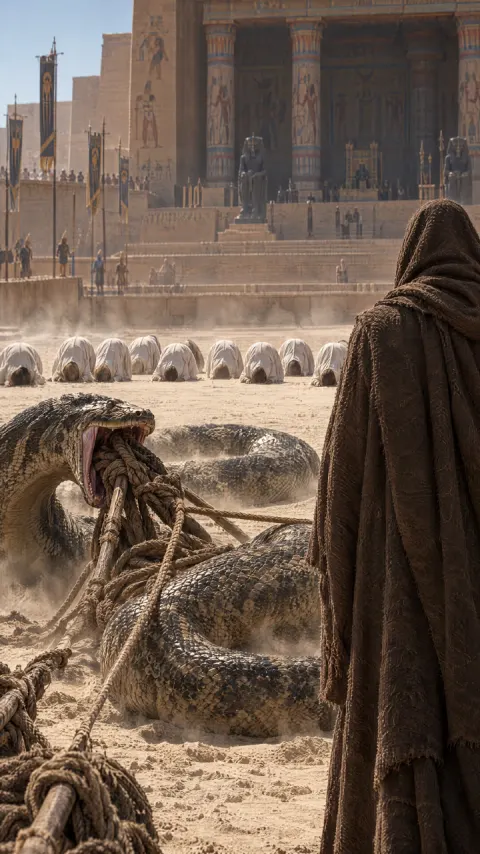
The story of Prophet Yunus, peace be upon him, is one of the shortest prophet stories in the Quran and one of the most loved. In a few ayat it takes us from a town that would not listen, to a ship in a storm, to the belly of a great fish in the deep sea, and back to a whole people who turned to Allah. Many people know it simply as "Yunus and the whale". The Quran gives him two titles that come from that moment: “the man of the fish [i.e., Jonah]”
(Quran 21:87), which is Dhun-Nun in Arabic, and “the companion of the fish [i.e., Jonah]”
(Quran 68:48), Sahib al-Hut.
The name Yunus appears four times in the Quran (4:163, 6:86, 10:98 and 37:139), and a whole surah, Surah Yunus, carries his name. The events of his story are told in three places: Surah al-Anbiya (21:87-88), Surah as-Saffat (37:139-148) and Surah al-Qalam (68:48-50). Surah Yunus adds one ayah about his people (10:98) that makes them unique in human history.
This article tells the complete story of Prophet Yunus in order, ayah by ayah, with the explanation of the classical tafsir: Ibn Kathir, al-Tabari, al-Sa'di and al-Tafsir al-Muyassar. It gives the du'a of Yunus its own section, because it is one of the most searched and most recited supplications in the world. Where the Quran is silent, for example on how many days he spent inside the fish, we say so plainly instead of filling the gap with stories.
Who was Prophet Yunus?
Prophet Yunus was a messenger of Allah sent to call a large people to worship Allah alone. The Quran states it directly: “And indeed, Jonah was among the messengers.”
(Quran 37:139) Allah also places him among the prophets He honoured, saying of him and others, “all [of them] We preferred over the worlds”
(Quran 6:86).
Al-Tafsir al-Muyassar names him Yunus ibn Matta under 21:87, and Ibn Kathir, citing the early scholar Qatadah under 10:98, says his people lived in Nineveh (Naynawa) in the land of Mosul. These details come from the tafsir and its reports, not from the Quran itself, which does not name the town. What the Quran does tell us is the number: he was sent to “a hundred thousand or more”
(Quran 37:147).
Al-Sa'di opens his commentary on Surah as-Saffat by calling 37:139 praise from Allah for His servant and messenger. That is the right place to begin. Whatever happened next, the Quran introduces Yunus first as a chosen messenger, and it ends his story by saying Allah chose him and made him one of the righteous.
Leaving his people in anger
Yunus called his people to Allah, they refused, and he left them in anger before Allah gave him permission to leave. The Quran describes the moment in two places. In Surah al-Anbiya it says he “went off in anger”
(Quran 21:87), and in Surah as-Saffat it uses a sharper word: “when he ran away to the laden ship”
(Quran 37:140).
﴿وَإِنَّ يُونُسَ لَمِنَ ٱلْمُرْسَلِينَ ١٣٩ إِذْ أَبَقَ إِلَى ٱلْفُلْكِ ٱلْمَشْحُونِ ١٤٠﴾(139) And indeed, Jonah was among the messengers. (140) [Mention] when he ran away to the laden ship.
At whom was he angry? The ayah does not say, so we follow the tafsir. Ibn Kathir reports from the early scholar ad-Dahhak that his anger was towards his people, because they kept refusing after he had warned them. Al-Tafsir al-Muyassar explains it the same way: he called them, they did not believe, he warned them of punishment and they did not turn back, and he left them "angry with them, his chest tight because of their disobedience", without the patience Allah had asked of him. Al-Sa'di adds that he left before Allah commanded him to.
The word in 37:140, abaqa, is used in Arabic for a servant who leaves without his master's permission. That matches what al-Sa'di says: Yunus left his mission before Allah commanded him to. Al-Sa'di makes a wise point here: Allah did not tell us the details of what Yunus was angry about, because knowing them would not benefit us. What matters is the lesson that follows.
What does "fa-zanna an lan naqdira 'alayh" mean?
It means Yunus thought Allah would not constrict him or hold him to account for leaving, not that he doubted Allah's power. This phrase is often misunderstood, so it deserves care. The Arabic is fa-zanna an lan naqdira 'alayh. In Arabic the verb qadara 'ala can mean "to restrict, to make narrow", and that is how the scholars read it here.
Ibn Kathir reports from Ibn 'Abbas, Mujahid and ad-Dahhak that it means "We would not constrict him in the belly of the fish." He adds that Ibn Jarir al-Tabari preferred this meaning and supported it with another ayah where the same verb clearly means restricted provision: “he whose provision is restricted”
(Quran 65:7). Al-Tafsir al-Muyassar says the same: he thought Allah would not put him in hardship or take him to account for this. Ibn Kathir also mentions a second reading from 'Atiyyah al-'Awfi, "We would not decree against him", which is the sense the Saheeh International translation follows. Neither reading means that a prophet of Allah doubted Allah's ability. A prophet knows his Lord better than that.
The ship and the casting of lots
Yunus boarded a fully laden ship, and when it was in danger the passengers drew lots to lighten it, and the lot fell on him. The Quran tells it in four words: “And he drew lots and was among the losers.”
(Quran 37:141)
﴿فَسَاهَمَ فَكَانَ مِنَ ٱلْمُدْحَضِينَ ١٤١ فَٱلْتَقَمَهُ ٱلْحُوتُ وَهُوَ مُلِيمٌ ١٤٢﴾(141) And he drew lots and was among the losers. (142) Then the fish swallowed him, while he was blameworthy.
Al-Tafsir al-Muyassar explains that great waves surrounded the ship, and the passengers drew lots to lighten its load out of fear of sinking. Al-Sa'di describes the ship as so full of passengers and cargo that it became too heavy, and since no passenger had a better claim to stay than any other, they cast lots so the choice would be fair. The one the lot fell on would go into the sea. Ibn Kathir explains al-mudhadin as "those who were overcome", the losers of the draw.
Al-Sa'di draws a quiet lesson from this scene: when Allah wills a matter, He prepares its causes. A full ship, a storm, a casting of lots: each step led Yunus exactly to the place where he would turn back to his Lord.
The Quran does not describe the storm in detail, the names of the sailors, or what was said on deck. Some books add dialogue and scenes here. We leave them out, because the Quran gives us everything we need.

Swallowed by the great fish
When Yunus went into the sea, a great fish swallowed him whole. The Quran says: “Then the fish swallowed him, while he was blameworthy.”
(Quran 37:142) The Arabic verb iltaqamahu means it took him in one mouthful, like a single morsel.
Was it a whale? The Quran uses the word al-hut, which in Arabic means a large fish. It does not name the species. In English the story is usually called "Yunus and the whale", and that is fine as a popular name, but the Quran's own word is simply "the great fish". Ibn Kathir notes in his account that the fish swallowed him without harming his flesh or bones. Allah had not sent the fish to destroy him, but to hold him.
What does "blameworthy" (mulim) mean? Al-Tafsir al-Muyassar explains it as "having done something for which he is blamed", meaning his leaving his people without patience and without permission. Al-Sa'di explains it the same way: he had done something that deserves blame. This is the Quran's own description, and it is followed straight away by his repentance and by Allah's choice of him. A prophet's slip is mentioned in the Quran to teach us, never to lower his rank.
The du'a in the darknesses
Inside the fish, in layer upon layer of darkness, Yunus called on Allah with the words: “There is no deity except You; exalted are You. Indeed, I have been of the wrongdoers.”
(Quran 21:87) This is the heart of the story, and Allah answered him immediately in the very next ayah.
﴿وَذَا ٱلنُّونِ إِذ ذَّهَبَ مُغَـٰضِبًا فَظَنَّ أَن لَّن نَّقْدِرَ عَلَيْهِ فَنَادَىٰ فِى ٱلظُّلُمَـٰتِ أَن لَّآ إِلَـٰهَ إِلَّآ أَنتَ سُبْحَـٰنَكَ إِنِّى كُنتُ مِنَ ٱلظَّـٰلِمِينَ ٨٧ فَٱسْتَجَبْنَا لَهُۥ وَنَجَّيْنَـٰهُ مِنَ ٱلْغَمِّ ۚ وَكَذَٰلِكَ نُـۨجِى ٱلْمُؤْمِنِينَ ٨٨﴾(87) And [mention] the man of the fish [i.e., Jonah], when he went off in anger and thought that We would not decree [anything] upon him. And he called out within the darknesses, "There is no deity except You; exalted are You. Indeed, I have been of the wrongdoers." (88) So We responded to him and saved him from the distress. And thus do We save the believers.
The Quran says he called out “within the darknesses”
(Quran 21:87), in the plural. Ibn Kathir reports from 'Abdullah ibn Mas'ud that these were three darknesses: the darkness of the fish's belly, the darkness of the sea, and the darkness of the night. Ibn Kathir adds that the same was reported from Ibn 'Abbas, Sa'id ibn Jubayr, Qatadah, al-Hasan and others. Al-Tafsir al-Muyassar names the same three: the darkness of the night, the sea and the belly of the fish.
In Surah al-Qalam the Quran adds how he felt: he called out “while he was distressed”
(Quran 68:48). Ibn Kathir cites Ibn 'Abbas, Mujahid and as-Suddi that makzum means full of distress. Al-Sa'di offers two meanings: that he was shut in, held inside the fish, or that he was filled with grief while he confessed his wrong. Both describe a man at the lowest point a human being can reach, and still his first words were about Allah, not about himself.

The dua of Yunus: meaning of each phrase
The dua of Yunus is La ilaha illa anta, subhanaka, inni kuntu minaz-zalimin: “There is no deity except You; exalted are You. Indeed, I have been of the wrongdoers.”
(Quran 21:87) It is found in Surah al-Anbiya, 21:87, and it has three parts. Al-Sa'di describes them in his commentary on that ayah: Yunus affirmed that Allah alone is God, declared Him free of every flaw, and admitted that he had wronged himself.
1. La ilaha illa anta: the oneness of Allah. This is tawhid, the oneness of Allah. Before asking for anything, Yunus declared that only Allah deserves worship. Notice that he speaks to Allah directly, in the second person, as someone who knows his Lord is near, even at the bottom of the sea.
2. Subhanaka: glorifying Allah. This is tasbih, declaring Allah far above any fault or injustice. In effect Yunus is saying: whatever has happened to me, You have not wronged me. This matters, because the Quran ties his rescue to exactly this quality. It says that “had he not been of those who exalt Allāh,”
(Quran 37:143) he would have stayed in the fish until the Day of Resurrection.
3. Inni kuntu minaz-zalimin: confessing the wrong. This is confession. Yunus does not blame his people, the sailors or the storm. Al-Tafsir al-Muyassar explains that he admitted his wrong in leaving the patience he owed his people. Al-Sa'di likewise explains it as Yunus admitting that he had wronged himself, tied to that one act of leaving.
What is remarkable is what the du'a does not contain: there is no direct request. Yunus does not say "save me" or "get me out". He praises Allah, clears Allah of any blame, blames himself, and leaves the rest to his Lord. And the answer came at once: “So We responded to him and saved him from the distress.”
(Quran 21:88)
Is the dua of Yunus only for Yunus?
No. The ayah ends with a promise to every believer: “And thus do We save the believers.”
(Quran 21:88) Ibn Kathir explains that Allah saves the believers when they are in hardship and call on Him turning back to Him, especially when they use this very supplication in a time of trial.
Under this ayah Ibn Kathir also cites an authentic hadith, recorded by Imam Ahmad, at-Tirmidhi and an-Nasa'i, in which the Prophet Muhammad ﷺ said that this is the supplication of Dhun-Nun in the belly of the fish, and that no Muslim calls on his Lord with it for anything without Allah answering him. This is why Muslims recite it in times of worry, debt, illness and grief.
When to recite the dua of Yunus
There is no fixed time or count for it. Ibn Kathir's words point to "a time of hardship", so it is especially suited to moments of distress. Many Muslims say it after their prayers, in their personal du'a, at night, or whenever they feel trapped by a situation. Say it with presence of heart: the three parts are not a formula, they are three things you mean.
 Watch this story in QASASYunus and the WhaleWhy did the whale swallow Prophet Yunus but not harm him?Open on Google Play →
Saved because he glorified Allah
The Quran says Yunus was saved because he was one of those who glorify Allah, and without that he would have remained in the fish until the Day of Resurrection.
﴿فَلَوْلَآ أَنَّهُۥ كَانَ مِنَ ٱلْمُسَبِّحِينَ ١٤٣ لَلَبِثَ فِى بَطْنِهِۦٓ إِلَىٰ يَوْمِ يُبْعَثُونَ ١٤٤﴾(143) And had he not been of those who exalt Allāh, (144) He would have remained inside its belly until the Day they are resurrected.
The scholars explain this "glorification" in two ways, and both are reported by Ibn Kathir. The first, which Ibn Jarir al-Tabari preferred, is that it refers to the worship and good deeds Yunus had done before, in times of ease; Ibn Kathir names ad-Dahhak, Abu al-'Aliyah and Qatadah among those who held it. The second, held by Sa'id ibn Jubayr and others, is that it refers to the du'a he made in the darkness. Al-Tafsir al-Muyassar combines both: his great worship and righteous deeds before he fell into the fish, and his tasbih inside it.
Al-Sa'di describes Yunus as someone known for a great deal of worship, tasbih and praise of his Lord. The lesson is clear: the remembrance you build in easy days is what carries you through the hard ones.
How long was Yunus in the whale?
The Quran does not say how long Yunus stayed inside the fish, and no authentic text fixes it. Ibn Kathir lists the different opinions of early scholars: three days, seven days, forty days, or from morning until evening. He ends with "Allah knows best how long exactly it was." Since the Quran did not tell us, this is not a detail we need. The ayat focus on what saved him, not on the calendar.
Cast onto the shore and the gourd plant
Allah commanded the fish to cast Yunus onto a bare shore, weak and ill, and made a gourd plant grow over him to shelter him while he recovered.
﴿۞ فَنَبَذْنَـٰهُ بِٱلْعَرَآءِ وَهُوَ سَقِيمٌ ١٤٥ وَأَنۢبَتْنَا عَلَيْهِ شَجَرَةً مِّن يَقْطِينٍ ١٤٦﴾(145) But We threw him onto the open shore while he was ill. (146) And We caused to grow over him a gourd vine.
The Quran says Allah threw him “onto the open shore while he was ill”
(Quran 37:145). Ibn Kathir reports from Ibn 'Abbas and others that al-'ara' is open land with no plants and no buildings. Al-Tafsir al-Muyassar describes it as a land empty and bare of trees and buildings, and says he was weak in body. Al-Sa'di gives a gentle picture: he was weak like a newly hatched chick with no feathers.
Then Allah made “a gourd vine”
(Quran 37:146) grow over him. The Arabic word is yaqtin. Ibn Kathir reports from Ibn Mas'ud, Ibn 'Abbas and others that it is the squash or gourd plant. Al-Tafsir al-Muyassar calls it the qar' (gourd) that shaded him and that he benefited from. Ibn Kathir and al-Sa'di both mention its qualities: it grows quickly, its broad leaves give cool shade, and flies do not settle on it. Al-Sa'di calls it a sign of Allah's gentleness and kindness to His servant.
Surah al-Qalam shows how close this was to being a very different ending: “If not that a favor [i.e., mercy] from his Lord overtook him, he would have been thrown onto the naked shore while he was censured.”
(Quran 68:49) Because of that favour, he was cast ashore not as one blamed, but as one forgiven.

Sent to 100,000 or more, and they all believed
After he recovered, Allah sent Yunus to a people of a hundred thousand or more, and they believed, so Allah let them enjoy life for a time.
﴿وَأَرْسَلْنَـٰهُ إِلَىٰ مِا۟ئَةِ أَلْفٍ أَوْ يَزِيدُونَ ١٤٧ فَـَٔامَنُوا۟ فَمَتَّعْنَـٰهُمْ إِلَىٰ حِينٍ ١٤٨﴾(147) And We sent him to [his people of] a hundred thousand or more. (148) And they believed, so We gave them enjoyment [of life] for a time.
Ibn Kathir understands this to mean that Yunus was sent back to the same people he had first been sent to, and that this time they all believed. On the words "or more", he reports that Ibn Jarir al-Tabari read the "or" as meaning "and more": not less than a hundred thousand, but more. Al-Sa'di calls this sending a great additional favour from Allah to His prophet.
The only town whose faith benefited it
Surah Yunus tells us something that happened to no other nation: the people of Yunus believed when they saw the punishment approaching, and their faith was accepted.
﴿فَلَوْلَا كَانَتْ قَرْيَةٌ ءَامَنَتْ فَنَفَعَهَآ إِيمَـٰنُهَآ إِلَّا قَوْمَ يُونُسَ لَمَّآ ءَامَنُوا۟ كَشَفْنَا عَنْهُمْ عَذَابَ ٱلْخِزْىِ فِى ٱلْحَيَوٰةِ ٱلدُّنْيَا وَمَتَّعْنَـٰهُمْ إِلَىٰ حِينٍ ٩٨﴾(98) Then has there not been a [single] city that believed so its faith benefited it except the people of Jonah? When they believed, We removed from them the punishment of disgrace in worldly life and gave them enjoyment [i.e., provision] for a time.
The ayah asks why no town believed in time for its faith to benefit it, “except the people of Jonah”
(Quran 10:98). Al-Tafsir al-Muyassar explains that when they became certain the punishment was coming, they repented to Allah with sincere repentance, and when the truth of their repentance became clear, Allah removed the punishment after it had come close. Ibn Kathir cites Qatadah that after their prophet had left them, Allah placed repentance in their hearts and they cried out to Allah with their families. Ibn Kathir explains that Allah lifted the punishment when He saw the truth in their hearts.
Why was their faith accepted when others' was not? Al-Sa'di explains that faith forced only by seeing punishment is usually not real faith, and such people would go back to disbelief once the danger passed. The people of Yunus were the exception, and he says the full wisdom is with Allah, but that Allah knew their faith would last, and it did. Both prophet and people were saved by the same thing: turning back to Allah sincerely.
The lesson of Surah al-Qalam: patience
Surah al-Qalam uses the story of Yunus as a lesson in patience for whoever carries Allah's message: be patient with Allah's decision and do not leave your post in anger.
﴿فَٱصْبِرْ لِحُكْمِ رَبِّكَ وَلَا تَكُن كَصَاحِبِ ٱلْحُوتِ إِذْ نَادَىٰ وَهُوَ مَكْظُومٌ ٤٨ لَّوْلَآ أَن تَدَٰرَكَهُۥ نِعْمَةٌ مِّن رَّبِّهِۦ لَنُبِذَ بِٱلْعَرَآءِ وَهُوَ مَذْمُومٌ ٤٩ فَٱجْتَبَـٰهُ رَبُّهُۥ فَجَعَلَهُۥ مِنَ ٱلصَّـٰلِحِينَ ٥٠﴾(48) Then be patient for the decision of your Lord, [O Muḥammad], and be not like the companion of the fish [i.e., Jonah] when he called out while he was distressed. (49) If not that a favor [i.e., mercy] from his Lord overtook him, he would have been thrown onto the naked shore while he was censured. (50) And his Lord chose him and made him of the righteous.
Al-Sa'di explains that once the harm of a people becomes clear, the one who calls to Allah has nothing left but patience: to keep calling, to bear what they do, and not to meet Allah's decree with anger or despair. Yunus is mentioned here as the example of what happens when that patience runs short.
But notice how Surah al-Qalam ends the story: “And his Lord chose him and made him of the righteous.”
(Quran 68:50) The story of Yunus does not end with the mistake, or even with the fish. It ends with Allah choosing him. Al-Tafsir al-Muyassar explains it as Allah choosing him for His message and placing him among the righteous whose intentions, words and deeds are sound. That is the final word on Prophet Yunus, peace be upon him.
For a story about a prophet who showed the patience Yunus is remembered for learning, read the story of Prophet Nuh and the Ark, who called his people for nine hundred and fifty years.
Timeline of the story of Prophet Yunus
| Stage | What happens | Ayat |
|---|---|---|
| The mission | Yunus is sent as a messenger to a people of 100,000 or more | 37:139, 37:147 |
| Leaving in anger | His people refuse; he leaves them in anger before being permitted | 21:87, 37:140 |
| The laden ship | He boards a full ship; lots are drawn to lighten it and he loses | 37:140-141 |
| The great fish | A great fish swallows him while he is blameworthy | 37:142 |
| The du'a | In the darknesses he calls on Allah with tawhid, tasbih and confession | 21:87, 68:48 |
| The answer | Allah responds and saves him from distress | 21:88, 37:143-144 |
| The shore | He is cast onto a bare shore, ill, and a gourd plant grows over him | 37:145-146, 68:49 |
| His people | His people repent when they see the punishment; it is lifted | 10:98, 37:148 |
| The ending | Allah chooses him and makes him one of the righteous | 68:50 |
Lessons from the story of Prophet Yunus
The story of Yunus is short, but its lessons reach into every life. Here are ten that come straight from the ayat and the tafsir.
- Patience is part of the mission. Surah al-Qalam turns the story into a command to be patient with Allah's decision, especially with people who do not listen.
- No darkness is too deep for Allah. Yunus was under three darknesses, and his voice still reached his Lord.
- Admitting a mistake opens the door. His confession came before the rescue, not after it.
- Praise before you ask. The du'a of Yunus begins with tawhid and tasbih, and asks for nothing directly, yet it was answered at once.
- What you do in ease helps you in hardship. Al-Tabari and others explain that his earlier worship was a reason he was saved.
- Allah's promise is for every believer. The words
“thus do We save the believers”
(Quran 21:88) mean the way out is open to anyone who turns back to Allah. - Repentance can change a whole community's fate. The people of Yunus are the only town whose late faith benefited them, because it was sincere.
- Allah arranges the causes. Al-Sa'di notes that the full ship and the lots were steps in Allah's plan, not accidents.
- Mercy continues after rescue. Allah did not only save Yunus; He sheltered him under a gourd plant while he healed.
- A slip does not erase honour. The Quran ends with Allah choosing Yunus and making him one of the righteous.
Telling the story of Yunus to children
The story of Yunus is perfect for children because it is short, visual and ends in hope. A great fish, a stormy sea and a quiet beach are images children remember for years. The prophet Yunus story for kids works best when you keep three ideas at the centre: Yunus made a mistake, he said sorry to Allah, and Allah answered him.
For young children (4-7), tell it simply: Yunus was sad that his people would not listen, so he left without waiting for Allah's permission. He got on a boat, there was a storm, and he ended up in the sea, where a big fish swallowed him. It was very dark, but Yunus remembered Allah and said a special du'a. Allah told the fish to put him on the beach, and a plant grew to give him shade. Then teach them the du'a; even small children can learn La ilaha illa anta, subhanaka, inni kuntu minaz-zalimin.
For older children (8-12), add the meaning of the three parts of the du'a and the story of his people, who turned to Allah when they saw the punishment coming. Ask questions: Why did Yunus not ask for anything in his du'a? What does the promise at the end of 21:88 mean for you? Be honest when they ask "How many days was he in the whale?": the Quran does not tell us, and that teaches them to trust the Quran and not stories that add to it.
Avoid scary details or invented dialogue. The Quran's version is already dramatic enough, and it is gentle: the fish did not harm him, and the ending is full of mercy. Islamic stories for kids are most powerful when children can see them as well as hear them, which is why short illustrated versions work so well at bedtime. The story of Prophet Yusuf and the story of Musa and Pharaoh are good next stories for the same age.
Watch and read the story of Yunus in QASAS
QASAS is a free prophet stories app that tells this story as a short cinematic episode, "Yunus and the Whale". You can watch it or read it page by page, from the stormy night at sea to the gourd plant on the shore, and then check what you remember with a quick quiz at the end. It is a Quran stories app built to be calm and respectful: no faces of prophets, no ads, no account and no tracking, in 11 languages.
When you want to go deeper than the story, QASAS has the full mushaf with tafsir (al-Muyassar and Ibn Kathir), so you can open Surah as-Saffat or Surah al-Anbiya and read the ayat in this article with their explanation. The app also includes prayer times with the adhan, the qibla direction with nearby mosques, a 3D tasbih for your daily dhikr, adhkar and du'as, and reminders. QASAS is live on Google Play for Android, and the iPhone version is coming soon.
Watch this story in QASASYunus and the WhaleWhy did the whale swallow Prophet Yunus but not harm him?Open on Google Play →Frequently asked questions
What is the story of Prophet Yunus in short?
Prophet Yunus left his people in anger before Allah permitted him, was swallowed by a great fish, repented in the darkness, and was saved. He boarded a laden ship, lost a casting of lots and went into the sea. Inside the fish he called on Allah with the du'a of tawhid and repentance (Quran 21:87). Allah cast him ashore under a gourd plant, and his people of 100,000 or more believed.
How long was Prophet Yunus in the belly of the whale?
The Quran does not say how long Yunus stayed inside the fish. Ibn Kathir lists the opinions of early scholars, ranging from part of a day to three, seven or forty days, and concludes that Allah knows best. Because the Quran left it out, it is not a detail we need to know.
What is the dua of Prophet Yunus?
The dua of Yunus is "La ilaha illa anta, subhanaka, inni kuntu minaz-zalimin": “There is no deity except You; exalted are You. Indeed, I have been of the wrongdoers.”
(Quran 21:87) It combines tawhid, glorification of Allah and confession of one's own wrong. Ibn Kathir cites an authentic hadith, recorded by Ahmad, at-Tirmidhi and an-Nasa'i, that no Muslim calls on Allah with it for anything without being answered.
Why is Prophet Yunus called Dhun-Nun?
Yunus is called Dhun-Nun because nun is an Arabic word for fish, so the title means "the man of the fish". The Quran calls him by this name in Surah al-Anbiya (21:87), and "the companion of the fish" (Sahib al-Hut) in Surah al-Qalam (68:48). Both titles come from his time inside the great fish.
Was it a whale or a fish that swallowed Yunus?
The Quran calls it al-hut, a great fish, and does not name its species. "Yunus and the whale" is the popular English name for the story. Ibn Kathir notes that the fish swallowed him without harming his flesh or bones.
What does "fa-zanna an lan naqdira 'alayh" mean?
It means Yunus thought Allah would not constrict him or hold him to account for leaving, not that he doubted Allah's power. Ibn Kathir reports this meaning from Ibn 'Abbas and Mujahid, and says al-Tabari preferred it, supporting it with 65:7 where the same verb means "restricted". Al-Tafsir al-Muyassar explains it the same way.
Where is the story of Yunus in the Quran?
The story of Yunus is told in Surah al-Anbiya (21:87-88), Surah as-Saffat (37:139-148) and Surah al-Qalam (68:48-50). Surah Yunus (10:98) speaks about his people's faith, and he is named among the prophets in 4:163 and 6:86. Surah Yunus, the tenth surah, is named after him.
What plant grew over Prophet Yunus?
Allah made a yaqtin plant grow over him, which Ibn Kathir reports from Ibn Mas'ud and Ibn 'Abbas to be the gourd or squash plant (Quran 37:146). Its broad leaves shaded him while he recovered on the bare shore. Al-Sa'di describes it as a sign of Allah's gentleness and kindness to him.
Sources
Quran: Surah al-Anbiya 21:87-88, Surah as-Saffat 37:139-148, Surah al-Qalam 68:48-50, Surah Yunus 10:98, an-Nisa 4:163, al-An'am 6:86, at-Talaq 65:7 (Uthmani text and Saheeh International translation). Tafsir: Ibn Kathir (Tafsir al-Quran al-'Azim), al-Tabari (as reported by Ibn Kathir), al-Sa'di (Taysir al-Karim al-Rahman) and al-Tafsir al-Muyassar (King Fahd Complex).
Updated: · By QASAS