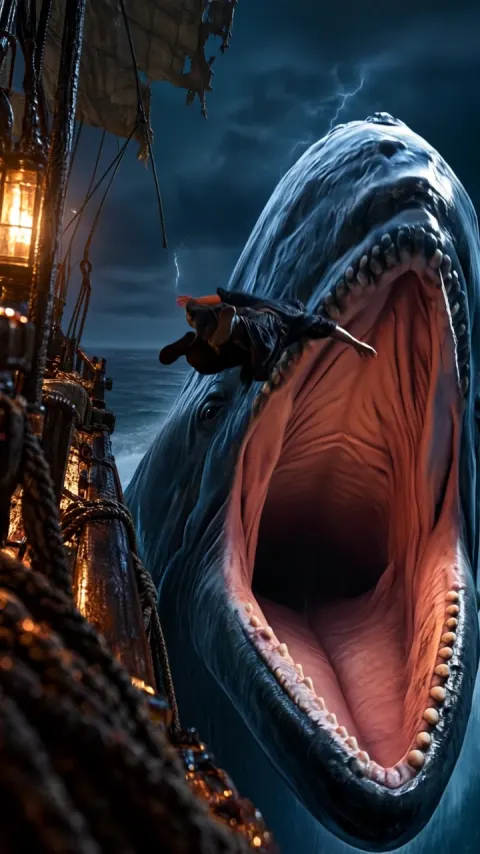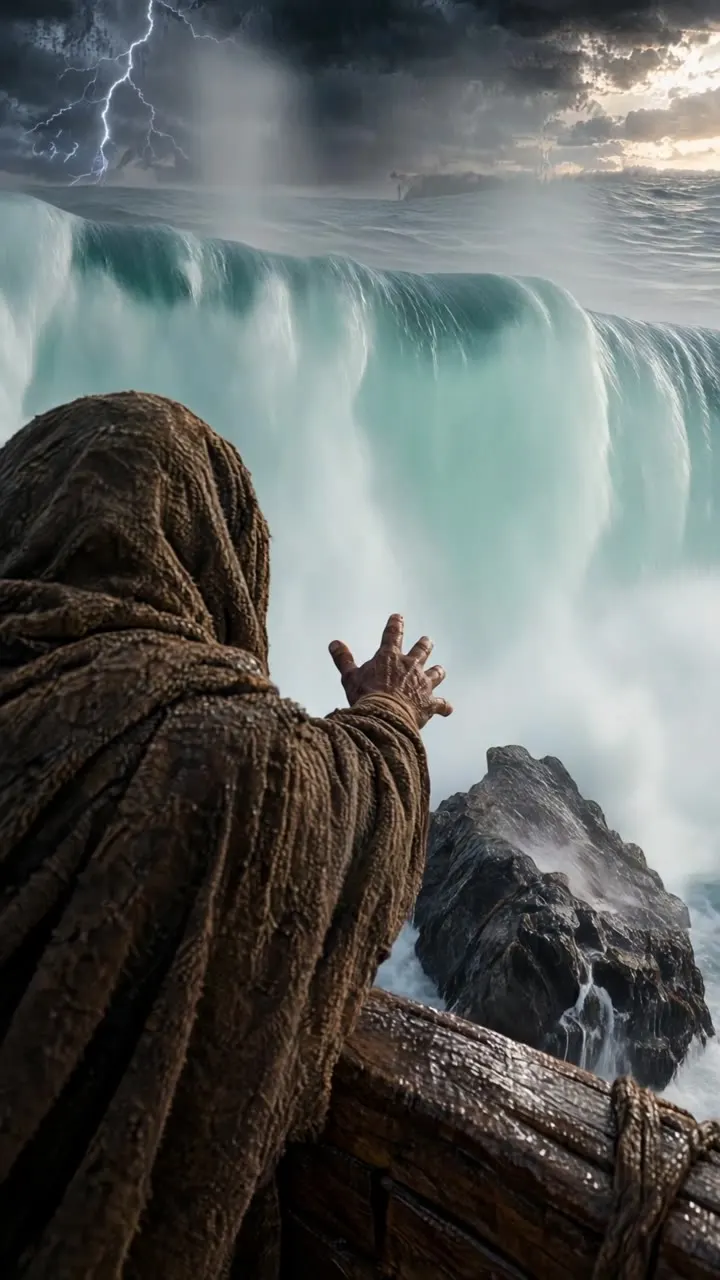
The story of Prophet Nuh (peace be upon him), known in English as Noah, is one of the longest and most moving stories in the Quran. It is the story of a prophet who called his people for nine and a half centuries, of a ship built by Allah's command while the chiefs laughed, of a flood that came from the sky and from the earth at once, and of a father who called out to his son across the waves.
The Quran tells it in many places. A whole surah carries his name, Surah Nuh (71), and the story is told in detail in Surah Hud (11:25-49). It also appears in Surah al-A'raf (7:59-64), Surah al-Mu'minun (23:23-30), Surah ash-Shu'ara' (26:105-122), Surah al-'Ankabut (29:14-15) and Surah al-Qamar (54:9-15). Each passage shows a different side of the same events, so reading them together gives the full picture.
In this article we follow the story in order, using only the ayat of the Quran and the explanations of the trusted tafsir scholars: Ibn Kathir, al-Sa'di, al-Tafsir al-Muyassar and, through Ibn Kathir, al-Tabari. Where people often repeat details that the Quran does not give, such as the size of the Ark or the name of Nuh's son, we say so clearly.
Who was Prophet Nuh?
Prophet Nuh (peace be upon him) was a messenger whom Allah sent to his own people to warn them and to call them to worship Allah alone. The Quran opens Surah Nuh with this mission:
﴿ إِنَّآ أَرْسَلْنَا نُوحًا إِلَىٰ قَوْمِهِۦٓ أَنْ أَنذِرْ قَوْمَكَ مِن قَبْلِ أَن يَأْتِيَهُمْ عَذَابٌ أَلِيمٌ ١ قَالَ يَـٰقَوْمِ إِنِّى لَكُمْ نَذِيرٌ مُّبِينٌ ٢ أَنِ ٱعْبُدُوا۟ ٱللَّهَ وَٱتَّقُوهُ وَأَطِيعُونِ ٣ يَغْفِرْ لَكُم مِّن ذُنُوبِكُمْ وَيُؤَخِّرْكُمْ إِلَىٰٓ أَجَلٍ مُّسَمًّى ۚ إِنَّ أَجَلَ ٱللَّهِ إِذَا جَآءَ لَا يُؤَخَّرُ ۖ لَوْ كُنتُمْ تَعْلَمُونَ ٤﴾(1) Indeed, We sent Noah to his people, [saying], "Warn your people before there comes to them a painful punishment." (2) He said, "O my people, indeed I am to you a clear warner - (3) To worship Allāh, fear Him and obey me. (4) He [i.e., Allāh] will forgive you of your sins and delay you for a specified term. Indeed, the time [set by] Allāh, when it comes, will not be delayed, if you only knew."
His message was simple and the same message every prophet brought: worship Allah, fear Him, and follow the messenger. In return, Allah would forgive their sins and give them respite until an appointed time. Al-Tafsir al-Muyassar explains that Nuh was warning them clearly of Allah's punishment if they continued to disobey, and promising them forgiveness if they responded.
The Quran calls him “Our servant”
(Quran 54:9), and in Surah ash-Shu'ara' it calls him “their brother Noah”
(Quran 26:106). He was one of them, a man they knew, not a stranger. That is exactly what made their rejection so stubborn.
How did idol worship begin among the people of Nuh?
The people of Nuh worshipped idols, and the Quran even records the names of five of them. Near the end of Surah Nuh, Nuh describes how the chiefs held on to their gods:
﴿قَالَ نُوحٌ رَّبِّ إِنَّهُمْ عَصَوْنِى وَٱتَّبَعُوا۟ مَن لَّمْ يَزِدْهُ مَالُهُۥ وَوَلَدُهُۥٓ إِلَّا خَسَارًا ٢١ وَمَكَرُوا۟ مَكْرًا كُبَّارًا ٢٢ وَقَالُوا۟ لَا تَذَرُنَّ ءَالِهَتَكُمْ وَلَا تَذَرُنَّ وَدًّا وَلَا سُوَاعًا وَلَا يَغُوثَ وَيَعُوقَ وَنَسْرًا ٢٣ وَقَدْ أَضَلُّوا۟ كَثِيرًا ۖ وَلَا تَزِدِ ٱلظَّـٰلِمِينَ إِلَّا ضَلَـٰلًا ٢٤﴾(21) Noah said, "My Lord, indeed they have disobeyed me and followed him whose wealth and children will not increase him except in loss. (22) And they conspired an immense conspiracy (23) And said, 'Never leave your gods and never leave Wadd or Suwāʿ or Yaghūth and Yaʿūq and Nasr.' (24) And already they have misled many. And, [my Lord], do not increase the wrongdoers except in error."
Al-Tafsir al-Muyassar and Ibn Kathir both explain that Wadd, Suwa', Yaghuth, Ya'uq and Nasr were originally the names of righteous men among the people of Nuh. After they died, Shaytan whispered to the people to set up images and statues of them, supposedly to remind them to worship. When that generation passed and knowledge faded, those who came later were led to worship the statues themselves.
This explanation matters for understanding the whole story. Idol worship did not begin with people who hated goodness. It began with love for good people that crossed a line, and over a long time it turned into worship of something other than Allah. Nuh's call was to bring them back to pure worship of their Creator.
Nuh's call: night and day, in public and in secret
Prophet Nuh called his people in every way he could, by day and by night, openly and in private. In Surah Nuh he describes his own efforts to his Lord:
﴿قَالَ رَبِّ إِنِّى دَعَوْتُ قَوْمِى لَيْلًا وَنَهَارًا ٥ فَلَمْ يَزِدْهُمْ دُعَآءِىٓ إِلَّا فِرَارًا ٦ وَإِنِّى كُلَّمَا دَعَوْتُهُمْ لِتَغْفِرَ لَهُمْ جَعَلُوٓا۟ أَصَـٰبِعَهُمْ فِىٓ ءَاذَانِهِمْ وَٱسْتَغْشَوْا۟ ثِيَابَهُمْ وَأَصَرُّوا۟ وَٱسْتَكْبَرُوا۟ ٱسْتِكْبَارًا ٧ ثُمَّ إِنِّى دَعَوْتُهُمْ جِهَارًا ٨ ثُمَّ إِنِّىٓ أَعْلَنتُ لَهُمْ وَأَسْرَرْتُ لَهُمْ إِسْرَارًا ٩﴾(5) He said, "My Lord, indeed I invited my people [to truth] night and day. (6) But my invitation increased them not except in flight [i.e., aversion]. (7) And indeed, every time I invited them that You may forgive them, they put their fingers in their ears, covered themselves with their garments, persisted, and were arrogant with [great] arrogance. (8) Then I invited them publicly. (9) Then I announced to them and [also] confided to them secretly
The picture is painful. Every time he invited them to be forgiven, they pushed their fingers into their ears so they would not hear him, and pulled their garments over their heads so they would not see him. Ibn Kathir explains that they did this so they could not hear his call at all, and that Nuh tried several methods, sometimes speaking openly among the people and sometimes in private conversations.
Nuh also spoke to their hearts and to their worldly hopes. He told them that seeking forgiveness would bring them blessings in this world:
﴿فَقُلْتُ ٱسْتَغْفِرُوا۟ رَبَّكُمْ إِنَّهُۥ كَانَ غَفَّارًا ١٠ يُرْسِلِ ٱلسَّمَآءَ عَلَيْكُم مِّدْرَارًا ١١ وَيُمْدِدْكُم بِأَمْوَٰلٍ وَبَنِينَ وَيَجْعَل لَّكُمْ جَنَّـٰتٍ وَيَجْعَل لَّكُمْ أَنْهَـٰرًا ١٢﴾(10) And said, 'Ask forgiveness of your Lord. Indeed, He is ever a Perpetual Forgiver. (11) He will send [rain from] the sky upon you in [continuing] showers (12) And give you increase in wealth and children and provide for you gardens and provide for you rivers.
Ibn Kathir explains that "midrar" means continuous rain, and that if people repent, seek forgiveness and obey, Allah increases their provision, wealth and children. Then Nuh turned their eyes to the signs around them, asking “What is [the matter] with you that you do not attribute to Allāh [due] grandeur”
(Quran 71:13), and pointing to the stages of their own creation, the seven heavens, the moon, the sun and the wide earth (71:14-20).
How did his people answer him?
His people answered with arrogance, mockery and threats. The chiefs, the eminent and powerful among them, led the rejection. The Quran records several of their replies across different surahs:
﴿فَقَالَ ٱلْمَلَأُ ٱلَّذِينَ كَفَرُوا۟ مِن قَوْمِهِۦ مَا نَرَىٰكَ إِلَّا بَشَرًا مِّثْلَنَا وَمَا نَرَىٰكَ ٱتَّبَعَكَ إِلَّا ٱلَّذِينَ هُمْ أَرَاذِلُنَا بَادِىَ ٱلرَّأْىِ وَمَا نَرَىٰ لَكُمْ عَلَيْنَا مِن فَضْلٍۭ بَلْ نَظُنُّكُمْ كَـٰذِبِينَ ٢٧﴾(27) So the eminent among those who disbelieved from his people said, "We do not see you but as a man like ourselves, and we do not see you followed except by those who are the lowest of us [and] at first suggestion. And we do not see in you over us any merit; rather, we think you are liars."
They said he was only a man like them, that only the weakest people followed him, and that he was a liar. In Surah al-A'raf they told him “Indeed, we see you in clear error.”
(Quran 7:60) In Surah al-Mu'minun they said “This is not but a man like yourselves”
(Quran 23:24), claimed he only wanted to rise above them, and called him a madman. In Surah al-Qamar the Quran says they called him “A madman”
(Quran 54:9) and that he was driven back with threats.
Nuh answered every accusation with patience. He told them he asked for no payment: “My payment is only from the Lord of the worlds”
(Quran 26:109). When they demanded that he drive away the poor believers who followed him, he refused: “I am not one to drive away those who have believed”
(Quran 11:29). Al-Tafsir al-Muyassar explains that he would not expel the friends of Allah just because the chiefs looked down on them.
In the end, they mocked him and dared him: “bring us what you threaten us, if you should be of the truthful”
(Quran 11:32). In Surah ash-Shu'ara' they went further and threatened him: “If you do not desist, O Noah, you will surely be of those who are stoned”
(Quran 26:116).
How long did Prophet Nuh preach? 950 years
Prophet Nuh remained among his people for a thousand years less fifty, which is 950 years. This number is stated directly in the Quran:
﴿وَلَقَدْ أَرْسَلْنَا نُوحًا إِلَىٰ قَوْمِهِۦ فَلَبِثَ فِيهِمْ أَلْفَ سَنَةٍ إِلَّا خَمْسِينَ عَامًا فَأَخَذَهُمُ ٱلطُّوفَانُ وَهُمْ ظَـٰلِمُونَ ١٤﴾(14) And We certainly sent Noah to his people, and he remained among them a thousand years minus fifty years, and the flood seized them while they were wrongdoers.
Ibn Kathir explains this as the length of time he stayed among his people calling them. Al-Tafsir al-Muyassar adds that through all this time he called them to tawhid and forbade them from shirk, but they did not respond. People sometimes ask about Nuh's total age; the Quran gives only this period among his people, and the reports about his full lifespan are not something we need to rely on.
Think of the patience this requires. Nine and a half centuries of calling, and the Quran tells us the result: “But none had believed with him, except a few.”
(Quran 11:40) Al-Tafsir al-Muyassar notes that only a few believed despite how long he stayed among them.
The command to build the Ark
After this long call, Allah revealed to Nuh that no one else from his people would believe, and commanded him to build the Ark. Nuh had turned to his Lord and said “Indeed, I am overpowered, so help.”
(Quran 54:10) Ibn Kathir explains that the following ayat came in response to his supplication:
﴿وَأُوحِىَ إِلَىٰ نُوحٍ أَنَّهُۥ لَن يُؤْمِنَ مِن قَوْمِكَ إِلَّا مَن قَدْ ءَامَنَ فَلَا تَبْتَئِسْ بِمَا كَانُوا۟ يَفْعَلُونَ ٣٦ وَٱصْنَعِ ٱلْفُلْكَ بِأَعْيُنِنَا وَوَحْيِنَا وَلَا تُخَـٰطِبْنِى فِى ٱلَّذِينَ ظَلَمُوٓا۟ ۚ إِنَّهُم مُّغْرَقُونَ ٣٧﴾(36) And it was revealed to Noah that, "No one will believe from your people except those who have already believed, so do not be distressed by what they have been doing. (37) And construct the ship under Our observation and Our inspiration and do not address Me concerning those who have wronged; indeed, they are [to be] drowned."
Al-Tafsir al-Muyassar explains “under Our observation”
(Quran 11:37) as building it under Allah's sight, by His command and with His help, while Nuh was in His protection. Allah also told him not to plead any longer for the wrongdoers, because their end had been decreed.
Surah Nuh also records his du'a against those who persisted: “My Lord, do not leave upon the earth from among the disbelievers an inhabitant”
(Quran 71:26). In the next ayah Nuh himself gives the reason: if they were left, they would mislead Allah's servants. Al-Tafsir al-Muyassar says he made this du'a after he had lost all hope in his people. He also prayed for the believers: “My Lord, forgive me and my parents and whoever enters my house a believer”
(Quran 71:28).
Mocked while building the Ark
While Nuh built the Ark, the chiefs of his people mocked him every time they passed by. The Quran describes the scene:
﴿وَيَصْنَعُ ٱلْفُلْكَ وَكُلَّمَا مَرَّ عَلَيْهِ مَلَأٌ مِّن قَوْمِهِۦ سَخِرُوا۟ مِنْهُ ۚ قَالَ إِن تَسْخَرُوا۟ مِنَّا فَإِنَّا نَسْخَرُ مِنكُمْ كَمَا تَسْخَرُونَ ٣٨ فَسَوْفَ تَعْلَمُونَ مَن يَأْتِيهِ عَذَابٌ يُخْزِيهِ وَيَحِلُّ عَلَيْهِ عَذَابٌ مُّقِيمٌ ٣٩﴾(38) And he constructed the ship, and whenever an assembly of the eminent of his people passed by him, they ridiculed him. He said, "If you ridicule us, then we will ridicule you just as you ridicule. (39) And you are going to know who will get a punishment that will disgrace him [on earth] and upon whom will descend an enduring punishment [in the Hereafter]."
Al-Tafsir al-Muyassar explains Nuh's answer: if you mock us today because you do not know that Allah's promise is true, we will see you mocked tomorrow when the drowning comes. Ibn Kathir describes these words as a severe threat and warning.
The Quran tells us the Ark was made of “planks and nails”
(Quran 54:13). Ibn Kathir reports that many early scholars said the word "dusur" here means nails, and that Ibn Jarir al-Tabari preferred this view. That is all the Quran says about how it was built.
What about the size of the Ark, the type of wood, or how many decks it had? Ibn Kathir does quote some reports about these, but he introduces them as narrations taken from the earlier scriptures. They are not in the Quran and are not established, so we leave them aside. The Quran tells us what we need: it was built by Allah's command and under His care.
The flood: water from the sky and water from the earth
The flood began when Allah's command came: the sky opened with pouring rain and the earth burst open with springs. Surah al-Qamar describes it in two short ayat:
﴿فَفَتَحْنَآ أَبْوَٰبَ ٱلسَّمَآءِ بِمَآءٍ مُّنْهَمِرٍ ١١ وَفَجَّرْنَا ٱلْأَرْضَ عُيُونًا فَٱلْتَقَى ٱلْمَآءُ عَلَىٰٓ أَمْرٍ قَدْ قُدِرَ ١٢﴾(11) Then We opened the gates of the heaven with rain pouring down (12) And caused the earth to burst with springs, and the waters met for a matter already predestined.
Al-Tafsir al-Muyassar explains that the water of the sky and the water of the earth met to carry out the destruction Allah had decreed. Ibn Kathir notes that "munhamir" means abundant, pouring rain, and that the springs burst from every part of the earth.
Surah Hud gives the sign that marked the start: “the oven overflowed”
(Quran 11:40). The word in Arabic is "tannur". Al-Tafsir al-Muyassar explains it as the place where bread is baked, from which water gushed strongly as a sign that the punishment had come. Al-Sa'di explains that the whole earth burst into springs until even ovens, normally places of fire, gushed with water. Ibn Kathir records several opinions and prefers the view of most early scholars that "tannur" here means the face of the earth, which became gushing springs. All of these explanations agree on the main point: water came from where no one expected it.
Who boarded the Ark?
Allah commanded Nuh to carry on the Ark a pair of every kind, his family except those already judged, and the believers. Here is the command and Nuh's words as they boarded:
﴿حَتَّىٰٓ إِذَا جَآءَ أَمْرُنَا وَفَارَ ٱلتَّنُّورُ قُلْنَا ٱحْمِلْ فِيهَا مِن كُلٍّ زَوْجَيْنِ ٱثْنَيْنِ وَأَهْلَكَ إِلَّا مَن سَبَقَ عَلَيْهِ ٱلْقَوْلُ وَمَنْ ءَامَنَ ۚ وَمَآ ءَامَنَ مَعَهُۥٓ إِلَّا قَلِيلٌ ٤٠ ۞ وَقَالَ ٱرْكَبُوا۟ فِيهَا بِسْمِ ٱللَّهِ مَجْر۪ىٰهَا وَمُرْسَىٰهَآ ۚ إِنَّ رَبِّى لَغَفُورٌ رَّحِيمٌ ٤١﴾(40) [So it was], until when Our command came and the oven overflowed, We said, "Load upon it [i.e., the ship] of each [creature] two mates and your family, except those about whom the word [i.e., decree] has preceded, and [include] whoever has believed." But none had believed with him, except a few. (41) And [Noah] said, "Embark therein; in the name of Allāh [are] its course and its anchorage. Indeed, my Lord is Forgiving and Merciful."
Al-Sa'di explains “two mates”
(Quran 11:40) as a male and a female of every kind of creature, so that each kind would continue. Al-Tafsir al-Muyassar explains that “those about whom the word [i.e., decree] has preceded”
(Quran 11:40) were the members of his family who did not believe, naming his son and his wife.
How many people were on the Ark? The Quran says only that few believed. Ibn Kathir lists several differing reports about the number and does not settle between them, so the honest answer is that the Quran does not specify it. The same is true of which animals boarded first or last: these details are not in the Quran.
Nuh boarded with the words “in the name of Allāh [are] its course and its anchorage”
(Quran 11:41). In Surah al-Mu'minun, Allah taught him what to say once aboard: “Praise to Allāh who has saved us from the wrongdoing people”
(Quran 23:28), and to ask “My Lord, let me land at a blessed landing place”
(Quran 23:29).
Nuh calls his son to the Ark
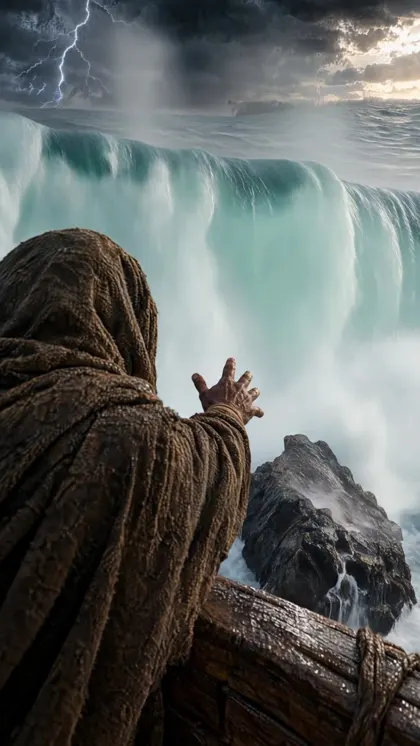
As the Ark sailed through waves like mountains, Nuh called out to his son, who had kept himself apart, but the son refused and drowned. This is the most moving scene in the story, and it is told in two ayat:
﴿وَهِىَ تَجْرِى بِهِمْ فِى مَوْجٍ كَٱلْجِبَالِ وَنَادَىٰ نُوحٌ ٱبْنَهُۥ وَكَانَ فِى مَعْزِلٍ يَـٰبُنَىَّ ٱرْكَب مَّعَنَا وَلَا تَكُن مَّعَ ٱلْكَـٰفِرِينَ ٤٢ قَالَ سَـَٔاوِىٓ إِلَىٰ جَبَلٍ يَعْصِمُنِى مِنَ ٱلْمَآءِ ۚ قَالَ لَا عَاصِمَ ٱلْيَوْمَ مِنْ أَمْرِ ٱللَّهِ إِلَّا مَن رَّحِمَ ۚ وَحَالَ بَيْنَهُمَا ٱلْمَوْجُ فَكَانَ مِنَ ٱلْمُغْرَقِينَ ٤٣﴾(42) And it sailed with them through waves like mountains, and Noah called to his son who was apart [from them], "O my son, come aboard with us and be not with the disbelievers." (43) [But] he said, "I will take refuge on a mountain to protect me from the water." [Noah] said, "There is no protector today from the decree of Allāh, except for whom He gives mercy." And the waves came between them, and he was among the drowned.
Al-Tafsir al-Muyassar explains that the son was in a place where he had separated himself from the believers. Nuh begged him to board and not to stay with the disbelievers and drown with them. The son was sure a mountain would save him. Nuh answered that today nothing could protect anyone from Allah's command except His mercy. Al-Sa'di notes that the Quran describes the Ark's sailing as if we were watching it, and that Allah was protecting the ship and those on it.
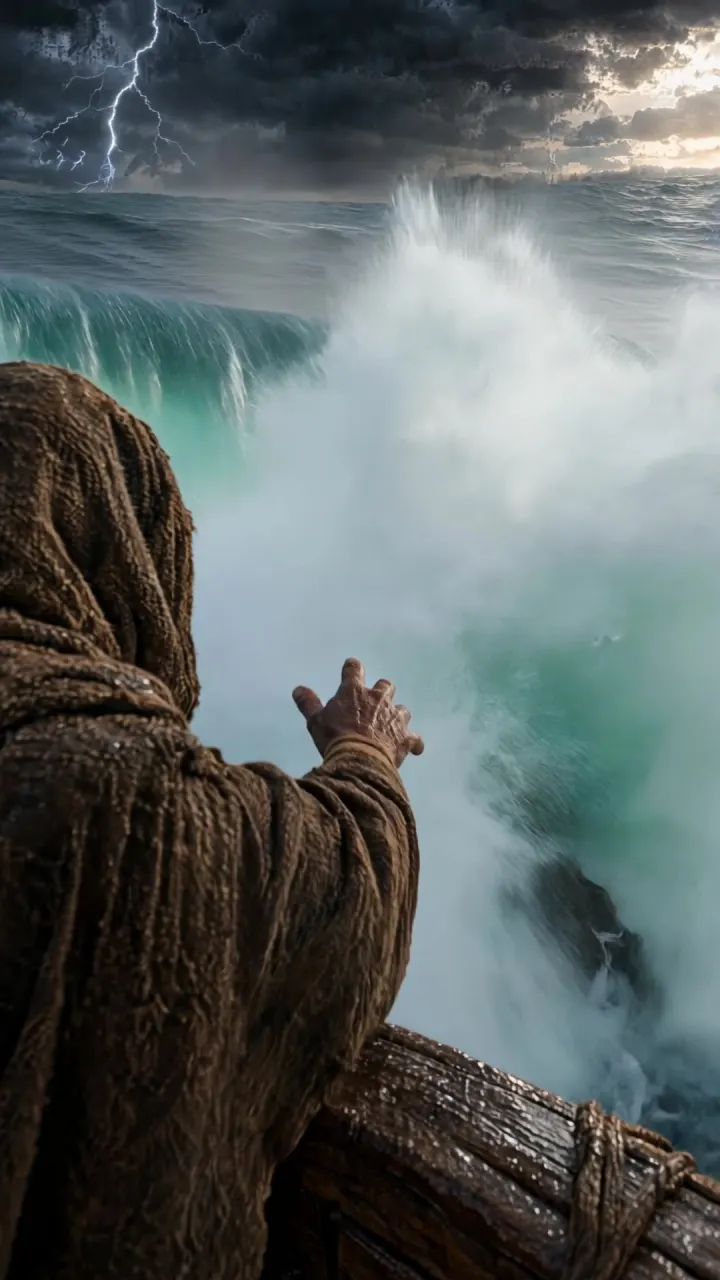
Why did Nuh's son refuse to board the Ark? The Quran shows that he did not believe, and that he trusted in what he could see, a high mountain, more than in the command of Allah. Al-Tafsir al-Muyassar adds that Nuh was in effect telling him: believe, and come aboard with us. Then a single wave came between father and son.
What was his name? The Quran does not name him. Ibn Kathir mentions the name Yam in his tafsir, and other reports give the name Kan'an. Neither name is in the Quran, and knowing it adds nothing to the lesson. The Quran calls him only "his son", which keeps our attention on what matters: faith, not lineage.
 Watch this story in QASASNuh and His SonHe called his son to the Ark. His son refused.Open on Google Play →
Not of your family: Nuh's question about his son
After the flood, Nuh asked his Lord about his son, and Allah answered that the son was not of his family. The conversation is told with great gentleness:
﴿وَنَادَىٰ نُوحٌ رَّبَّهُۥ فَقَالَ رَبِّ إِنَّ ٱبْنِى مِنْ أَهْلِى وَإِنَّ وَعْدَكَ ٱلْحَقُّ وَأَنتَ أَحْكَمُ ٱلْحَـٰكِمِينَ ٤٥ قَالَ يَـٰنُوحُ إِنَّهُۥ لَيْسَ مِنْ أَهْلِكَ ۖ إِنَّهُۥ عَمَلٌ غَيْرُ صَـٰلِحٍ ۖ فَلَا تَسْـَٔلْنِ مَا لَيْسَ لَكَ بِهِۦ عِلْمٌ ۖ إِنِّىٓ أَعِظُكَ أَن تَكُونَ مِنَ ٱلْجَـٰهِلِينَ ٤٦ قَالَ رَبِّ إِنِّىٓ أَعُوذُ بِكَ أَنْ أَسْـَٔلَكَ مَا لَيْسَ لِى بِهِۦ عِلْمٌ ۖ وَإِلَّا تَغْفِرْ لِى وَتَرْحَمْنِىٓ أَكُن مِّنَ ٱلْخَـٰسِرِينَ ٤٧﴾(45) And Noah called to his Lord and said, "My Lord, indeed my son is of my family; and indeed, Your promise is true; and You are the most just of judges!" (46) He said, "O Noah, indeed he is not of your family; indeed, he is [one whose] work was other than righteous, so ask Me not for that about which you have no knowledge. Indeed, I advise you, lest you be among the ignorant." (47) [Noah] said, "My Lord, I seek refuge in You from asking that of which I have no knowledge. And unless You forgive me and have mercy upon me, I will be among the losers."
Ibn Kathir explains that Nuh's words were a question, asking about the fate of his son, because Allah had promised to save his family. Allah's reply means that the son was not among the family He had promised to save. That promise was for those of his family who believed. Ibn Kathir also states that the son really was Nuh's own son, but that he opposed his father in his deeds and intention.
The words “he is [one whose] work was other than righteous”
(Quran 11:46) are explained in two ways by the tafsir scholars. Al-Tafsir al-Muyassar and Ibn Kathir explain it as describing the son, because of his disbelief and his deeds. Al-Sa'di explains it as describing the request itself: asking for the rescue of someone who did not believe was not a righteous request. Both explanations point to the same truth, that salvation depends on faith.
Look at how Nuh responded. He did not argue. He immediately sought refuge in Allah from asking about what he had no knowledge of, and begged for forgiveness and mercy. Al-Sa'di explains that Allah's advice to him was a gentle admonition that would raise him among the most complete of His servants.
The Ark comes to rest on Mount al-Judi
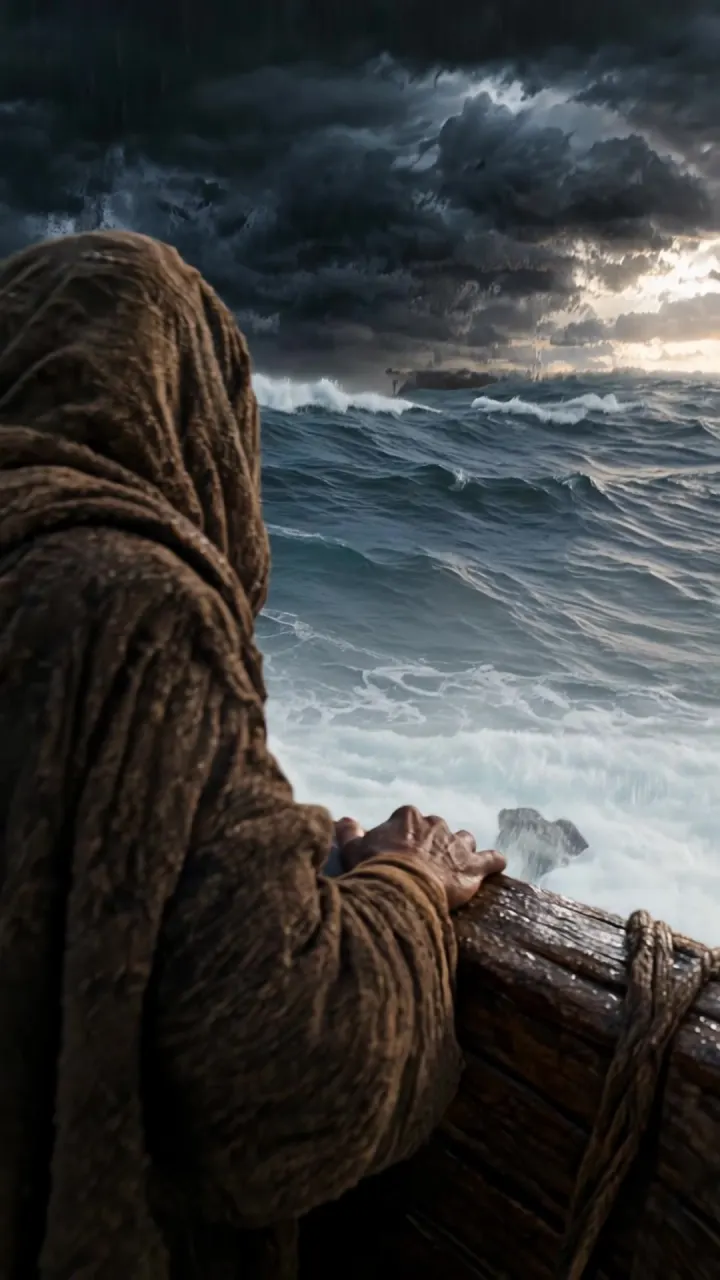
When the punishment was complete, Allah commanded the earth to swallow its water and the sky to hold back its rain, and the Ark came to rest on al-Judi:
﴿وَقِيلَ يَـٰٓأَرْضُ ٱبْلَعِى مَآءَكِ وَيَـٰسَمَآءُ أَقْلِعِى وَغِيضَ ٱلْمَآءُ وَقُضِىَ ٱلْأَمْرُ وَٱسْتَوَتْ عَلَى ٱلْجُودِىِّ ۖ وَقِيلَ بُعْدًا لِّلْقَوْمِ ٱلظَّـٰلِمِينَ ٤٤﴾(44) And it was said, "O earth, swallow your water, and O sky, withhold [your rain]." And the water subsided, and the matter was accomplished, and it [i.e., the ship] came to rest on the [mountain of] Jūdiyy. And it was said, "Away with the wrongdoing people."
Al-Sa'di explains that the earth and the sky obeyed immediately, the water sank away, the matter was settled with the destruction of the deniers and the rescue of the believers, and the Ark settled on al-Judi, which he describes as a well-known mountain in the region of Mosul. Ibn Kathir reports from Mujahid that al-Judi is a mountain in al-Jazirah, the land of northern Mesopotamia. The Quran itself names the mountain and does not describe it further.
Then came the command to leave the Ark: “O Noah, disembark in security from Us and blessings upon you”
(Quran 11:48). Al-Tafsir al-Muyassar explains this as descending from the ship onto the land with safety and security from Allah, with blessings on Nuh and on the nations that would come from those with him.
The Ark was left as a sign for all the worlds
The Quran says Allah left the story of the Ark as a sign, so that people after Nuh would remember and take heed:
﴿وَحَمَلْنَـٰهُ عَلَىٰ ذَاتِ أَلْوَٰحٍ وَدُسُرٍ ١٣ تَجْرِى بِأَعْيُنِنَا جَزَآءً لِّمَن كَانَ كُفِرَ ١٤ وَلَقَد تَّرَكْنَـٰهَآ ءَايَةً فَهَلْ مِن مُّدَّكِرٍ ١٥﴾(13) And We carried him on a [construction of] planks and nails, (14) Sailing under Our observation as reward for he who had been denied. (15) And We left it as a sign, so is there any who will remember?
In Surah al-'Ankabut Allah says He saved Nuh and the people of the ship, and “We made it a sign for the worlds”
(Quran 29:15). The scholars explain "it" in more than one way. Al-Tafsir al-Muyassar explains it as the story of Nuh and his people, kept as a lesson and a proof of Allah's power. Ibn Kathir reports from Qatadah that the ship itself was kept on al-Judi for a long time as a sign, and then adds his own understanding that Allah made ships in general a sign, reminding people of how He carried them on the water. Each of these views is a reminder, and the question that ends the passage is addressed to every reader: is there anyone who will remember?
The wife of Nuh: an example in the Quran
The Quran mentions the wife of Nuh as an example of someone who was close to a prophet but did not benefit from that closeness, because she did not believe. This is in Surah at-Tahrim:
﴿ضَرَبَ ٱللَّهُ مَثَلًا لِّلَّذِينَ كَفَرُوا۟ ٱمْرَأَتَ نُوحٍ وَٱمْرَأَتَ لُوطٍ ۖ كَانَتَا تَحْتَ عَبْدَيْنِ مِنْ عِبَادِنَا صَـٰلِحَيْنِ فَخَانَتَاهُمَا فَلَمْ يُغْنِيَا عَنْهُمَا مِنَ ٱللَّهِ شَيْـًٔا وَقِيلَ ٱدْخُلَا ٱلنَّارَ مَعَ ٱلدَّٰخِلِينَ ١٠﴾(10) Allāh presents an example of those who disbelieved: the wife of Noah and the wife of Lot. They were under two of Our righteous servants but betrayed them, so they [i.e., those prophets] did not avail them from Allāh at all, and it was said, "Enter the Fire with those who enter."
It is important to understand this "betrayal" correctly. Ibn Kathir states clearly that it was not about chastity at all. It was a betrayal in religion: she refused to follow her husband's faith. Al-Tafsir al-Muyassar says the same, that both wives were disbelievers, and concludes that closeness to the prophets and the righteous brings no benefit without one's own faith and deeds. Ibn Kathir also notes that the wives of the prophets were protected from immorality out of honour for the prophets. The Quran gives no further details about her, and we do not need any.
Was the flood of Nuh global?
Whether the flood covered the whole earth or only the land of Nuh's people is a question Muslim scholars have discussed and differed over. The Quran tells us that Allah drowned those who denied His signs (7:64), that water came from the sky and the earth, and that Nuh prayed that no disbeliever be left on the earth (71:26). The Quran does not state the extent of the flood in a way that ends the discussion, so we leave it where the scholars left it. What the Quran is clear about is the lesson: the deniers drowned, and the believers were saved.
Timeline of the story of Prophet Nuh
| Stage | What happens | Ayat |
|---|---|---|
| The mission | Allah sends Nuh to warn his people and call them to worship Allah alone | 71:1-4, 7:59 |
| The call | He calls them night and day, in public and in private, promising forgiveness and rain | 71:5-20 |
| The rejection | The chiefs call him a liar and a madman, mock the poor believers and threaten him | 11:27-32, 23:24-25, 26:111-116 |
| 950 years | He remains among them a thousand years less fifty; only a few believe | 29:14, 11:40 |
| The command | Allah tells him no one else will believe and commands him to build the Ark | 11:36-37, 23:27 |
| The mockery | The chiefs mock him whenever they pass by the Ark | 11:38-39 |
| The flood | The sky pours rain, the earth bursts with springs, the oven overflows | 54:11-12, 11:40 |
| Boarding | Pairs of every kind, his believing family and the believers board in Allah's name | 11:40-41, 23:28-29 |
| His son | Nuh calls his son, who refuses and drowns | 11:42-43 |
| The end of the flood | The earth swallows its water and the Ark rests on al-Judi | 11:44 |
| The conversation | Nuh asks about his son; Allah answers; Nuh seeks forgiveness | 11:45-47 |
| Disembarking | Nuh descends in security with blessings; the Ark is left as a sign | 11:48, 29:15, 54:15 |
Lessons from the story of Prophet Nuh
The story of Nuh is full of lessons for anyone who calls others to good, for parents, and for every believer who feels alone.
- Patience has no expiry date. Nuh called his people for 950 years without giving up, which teaches us that our job is to keep calling, and the results belong to Allah.
- Use every gentle way to reach people. He spoke in public and in private, by night and by day, and appealed to both their hearts and their minds.
- Seeking forgiveness opens doors. Nuh linked istighfar with rain, wealth, children, gardens and rivers, as Ibn Kathir explains in his tafsir of 71:10-12.
- Do not judge people by status. The chiefs despised the poor believers, but Nuh refused to drive them away, because Allah knows what is in hearts.
- Obey Allah even when people laugh. Nuh kept building while the chiefs mocked him, trusting a promise he could not yet see.
- There is no shelter from Allah except His mercy. The son trusted a mountain, but
“There is no protector today from the decree of Allāh, except for whom He gives mercy”
(Quran 11:43). - Family ties do not replace faith. Being the son or the wife of a prophet did not save anyone. Each person answers for their own belief and deeds.
- A good person returns quickly to Allah. When Nuh was corrected, he immediately sought refuge and forgiveness instead of arguing.
- Small beginnings of shirk grow over time. Statues made to honour righteous men later became idols, so guarding pure tawhid matters in every generation.
- The best outcome belongs to the righteous. The few who believed were saved, and blessings were placed on the nations that came from them.
How to tell the story of Nuh to children
The story of Nuh is a wonderful story to share with children, as long as it is told with care. For young children, focus on the parts they can understand and love: a kind prophet who kept inviting people to Allah for a very long time, a big ship built because Allah told him to, the animals coming in pairs, and Allah keeping the believers safe on the water.
The scene with Nuh's son needs gentle handling. You can tell children that Nuh loved his son and called him to come aboard, but the son thought a mountain would save him instead of Allah. The lesson for a child is simple: our trust is in Allah, and listening to good advice is a blessing. There is no need to dwell on the drowning itself.
Children often ask questions like "How big was the ship?" or "What was the son's name?" This is a good chance to teach them an important habit: the Quran tells us everything we need, and when it does not mention something, we do not invent it. Older children can read the ayat with you, especially 11:42-43, and talk about why Nuh's son refused.
QASAS was made for exactly these moments. It is a free prophet stories app where children and parents can watch the story of Nuh as a short cinematic film or read it page by page, with the ayah under each chapter, and then answer a short quiz together: How long did Nuh remain among his people? Where did his son want to take refuge? On which mountain did the ship come to rest? Islamic stories for kids work best when the family experiences them together, and when they come straight from the Quran.
If your children enjoy this story, they may also like the story of Prophet Yunus and the whale, another prophet who called his people, or the story of Musa and Pharaoh, where Allah again saves the believers through water. The story of Prophet Yusuf is a beautiful companion for older children, showing patience inside a family.
Read and watch the story of Nuh in QASAS
In QASAS, the story "Nuh and His Son" follows the events in this article in seven illustrated chapters: the 950 years, the building of the ship, the oven that gushed, the pairs boarding, the call to the son, the earth swallowing its water, and the descent in peace. Each chapter is tied to the ayat it comes from, so you can always go back to the Quran itself.
Alongside the stories, QASAS is a full Quran stories app with a complete mushaf with tafsir (al-Muyassar and Ibn Kathir), recitation, translation and word by word, plus accurate prayer times calculated on your device, the qibla direction, a 3D tasbih, adhkar and reminders. It is free, has no ads, needs no account and does not track you. It is available now on Android through Google Play, and the iPhone version is coming soon.
Frequently asked questions
How long did Prophet Nuh preach to his people?
Prophet Nuh remained among his people for 950 years. The Quran states that he stayed among them a thousand years less fifty (29:14), and al-Tafsir al-Muyassar explains that he spent this time calling them to worship Allah alone, yet only a few believed.
Why did Nuh's son refuse to board the Ark?
Nuh's son refused because he did not believe and thought a mountain would protect him from the water (11:43). Nuh told him that on that day nothing could protect anyone from Allah's command except His mercy, and then a wave came between them and the son drowned.
What was the name of Prophet Nuh's son who drowned?
The Quran does not name him. Ibn Kathir mentions the name Yam, and other reports call him Kan'an, but neither name comes from the Quran, so it is not established. The Quran simply calls him "his son", keeping the focus on faith rather than names.
Where did Noah's Ark land according to the Quran?
The Ark came to rest on al-Judi, according to Surah Hud 11:44. Al-Sa'di describes al-Judi as a well-known mountain in the region of Mosul, and Ibn Kathir reports from Mujahid that it is a mountain in al-Jazirah in northern Mesopotamia.
How many people were on Nuh's Ark?
The Quran does not give a number; it says only that few believed with him (11:40). Ibn Kathir lists several different reports about the number without deciding between them, so the exact figure is not established.
Was the flood of Nuh a worldwide flood?
Muslim scholars have discussed and differed over whether the flood covered the whole earth or the land of Nuh's people. The Quran makes clear that the deniers were drowned and the believers saved, and it does not settle the extent of the flood in a way that ends the discussion.
What happened to the wife of Prophet Nuh?
The Quran mentions her as an example of a disbeliever whom closeness to a prophet did not save (66:10). Ibn Kathir explains that her "betrayal" was in religion, refusing to follow her husband's faith, and not in chastity; al-Tafsir al-Muyassar lists her among the family members who did not believe.
What is the tannur (oven) in the story of Nuh?
It was the sign that the flood had begun (11:40). Al-Tafsir al-Muyassar explains the "tannur" as the oven where bread is baked, from which water gushed, while Ibn Kathir prefers the view that it means the face of the earth, which burst into springs.
Sources
The Quran: Surah Nuh (71:1-28), Surah Hud (11:25-48), Surah al-A'raf (7:59-64), Surah al-Mu'minun (23:23-30), Surah ash-Shu'ara' (26:105-122), Surah al-'Ankabut (29:14-15), Surah al-Qamar (54:9-15) and Surah at-Tahrim (66:10). Tafsir: Ibn Kathir (Tafsir al-Quran al-'Azim), al-Sa'di (Taysir al-Karim al-Rahman), al-Tafsir al-Muyassar (King Fahd Complex), and al-Tabari as cited by Ibn Kathir. English meanings of the ayat: Saheeh International.
Updated: · By QASAS