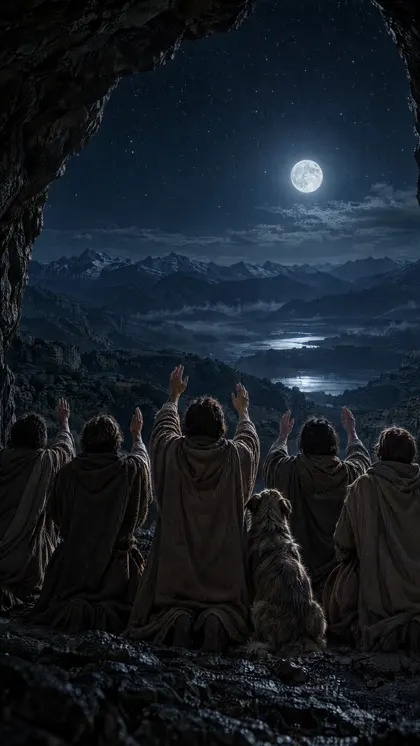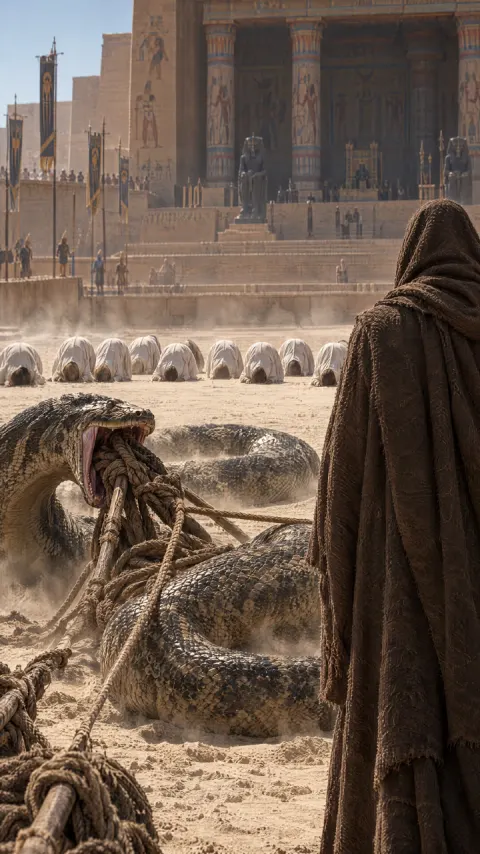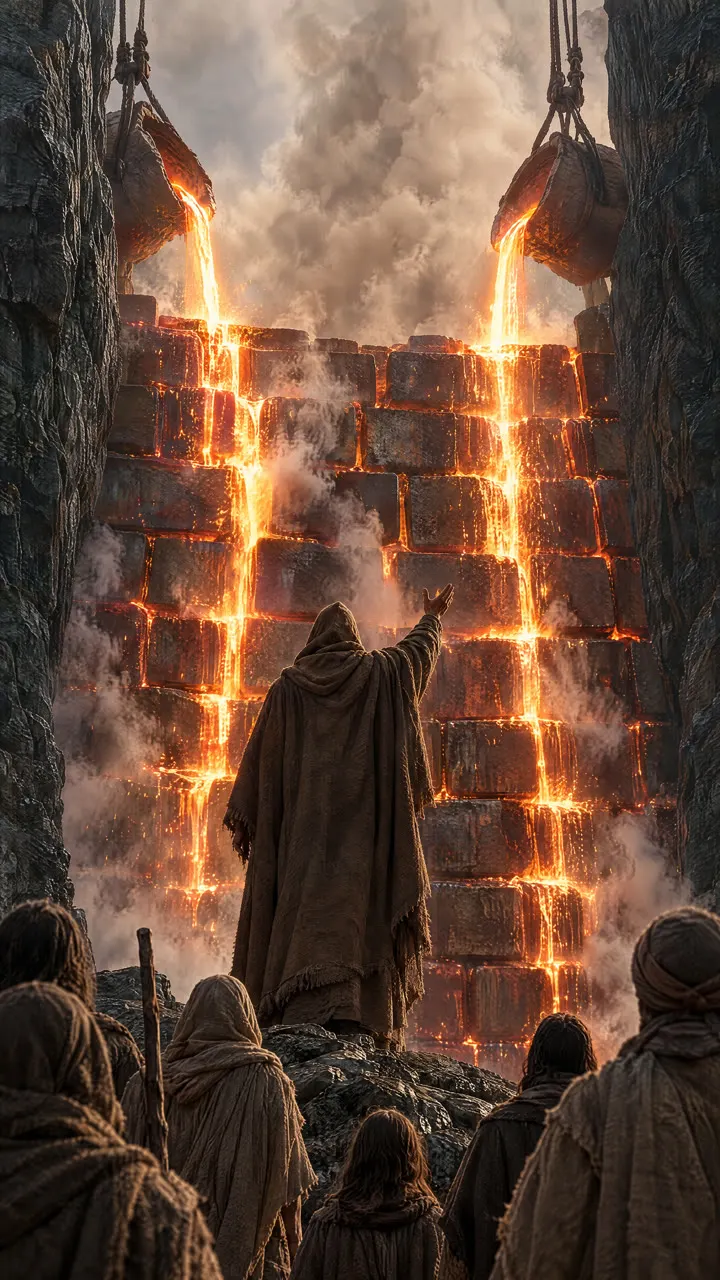
The story of Dhul-Qarnayn is the last of the four stories of Surah al-Kahf, and the Quran tells it in sixteen ayat, 18:83 to 18:98. It is the story of a man who was given power on a scale few people in history have held, and who used it to establish justice, to protect the weak, and to point to his Lord every step of the way.
The surah introduces him as the answer to a question that was asked about him, and the answer is not a biography: “I will recite to you about him a report.”
(Quran 18:83) The Quran gives "a report", and al-Tafsir al-Muyassar explains that this means an account to remember and to learn from. In other words, the Quran gives us the parts of his story that carry a lesson, and leaves the rest.
This article follows the ayat in order, explains them with the classical tafsir of Ibn Kathir, al-Tabari, al-Sa'di and al-Tafsir al-Muyassar, and answers the questions people most often ask: who Dhul-Qarnayn was, whether he was a prophet, whether he was Alexander the Great, where his wall is, and who Ya'juj and Ma'juj are. Where the Quran and the tafsir are silent, we say so.
Who was Dhul-Qarnayn?
Dhul-Qarnayn was a believing, just ruler whom Allah established on the earth and gave the means to reach his goals; the Quran does not give his personal name, his country or his dates. Al-Tafsir al-Muyassar calls him "the righteous king" in its explanation of 18:83, and that is the description every mainstream tafsir agrees on.
﴿وَيَسْـَٔلُونَكَ عَن ذِى ٱلْقَرْنَيْنِ ۖ قُلْ سَأَتْلُوا۟ عَلَيْكُم مِّنْهُ ذِكْرًا ٨٣ إِنَّا مَكَّنَّا لَهُۥ فِى ٱلْأَرْضِ وَءَاتَيْنَـٰهُ مِن كُلِّ شَىْءٍ سَبَبًا ٨٤ فَأَتْبَعَ سَبَبًا ٨٥﴾(83) And they ask you, [O Muḥammad], about Dhul-Qarnayn. Say, "I will recite to you about him a report." (84) Indeed, We established him upon the earth, and We gave him from everything a way [i.e., means]. (85) So he followed a way
The name itself, "Dhul-Qarnayn", means "the one of two horns" (or "two generations" or "two ends"). Ibn Kathir lists several explanations that were passed down and does not settle on one. Among them is the view that he was called this because he reached the two ends of the earth, where the sun rises and where it sets, which is exactly what the story goes on to describe.
The key phrase in 18:84 is that Allah gave him "from everything a way", in Arabic sababan, a means. Ibn Kathir reports from Mujahid, Sa'id ibn Jubayr, Qatadah and other early commentators that this means knowledge, and that it also covers the ability and resources to subdue lands and defeat enemies. Al-Sa'di explains that Allah gave him kingship and made the regions of the earth yield to him, and then adds a point that applies to all of us: having the means is not enough on its own. In al-Sa'di's words, when the ability to use the true means and acting upon it come together, the goal is reached, and if either is missing, it is not. Dhul-Qarnayn had both: “So he followed a way”
(Quran 18:85), and al-Muyassar explains that he took those means with seriousness and effort.
Was Dhul-Qarnayn a prophet?
The Quran does not say that Dhul-Qarnayn was a prophet, and the classical tafsir does not establish it either. Ibn Kathir records the different reports that reached him: one that he was a king, another that he was a righteous servant who was sincere to Allah. What the Quran itself tells us is that Allah addressed him and gave him a choice (18:86), that he believed in his Lord, in the Hereafter and in Allah's promise (18:87-88, 18:98), and that he ruled with justice. Whether that address came by revelation or by inspiration is a matter the tafsir discusses without a decisive answer, and the lesson of the story does not depend on it.
What we can say with confidence is that he is presented in the Quran as a model of righteous power: someone who had the whole earth open before him and used it for Allah's sake.
Is Dhul-Qarnayn Alexander the Great?
The Quran does not identify Dhul-Qarnayn with any historical figure, and Ibn Kathir treats the Dhul-Qarnayn of the Quran as a different, earlier person than Alexander the Macedonian. Ibn Kathir describes Alexander son of Philip as the Greek king who lived about three hundred years before 'Isa (peace be upon him), whose minister was Aristotle, and he rejects the narration that makes the Quranic Dhul-Qarnayn a Greek, calling it weak, long and objectionable.
Since the Quran gives neither a name nor a date, the honest answer is that we do not know who he was in the books of history, and we do not need to know. The Quran deliberately recited only the part of his story that is "a report" to learn from, and the lessons are complete without a name.
The first journey: to the setting of the sun
Dhul-Qarnayn's first journey took him as far west as a person can travel, until he saw the sun appear to set into a dark, muddy body of water; there he found a people, and Allah gave him the choice of punishing them or treating them well.
﴿حَتَّىٰٓ إِذَا بَلَغَ مَغْرِبَ ٱلشَّمْسِ وَجَدَهَا تَغْرُبُ فِى عَيْنٍ حَمِئَةٍ وَوَجَدَ عِندَهَا قَوْمًا ۗ قُلْنَا يَـٰذَا ٱلْقَرْنَيْنِ إِمَّآ أَن تُعَذِّبَ وَإِمَّآ أَن تَتَّخِذَ فِيهِمْ حُسْنًا ٨٦ قَالَ أَمَّا مَن ظَلَمَ فَسَوْفَ نُعَذِّبُهُۥ ثُمَّ يُرَدُّ إِلَىٰ رَبِّهِۦ فَيُعَذِّبُهُۥ عَذَابًا نُّكْرًا ٨٧ وَأَمَّا مَنْ ءَامَنَ وَعَمِلَ صَـٰلِحًا فَلَهُۥ جَزَآءً ٱلْحُسْنَىٰ ۖ وَسَنَقُولُ لَهُۥ مِنْ أَمْرِنَا يُسْرًا ٨٨﴾(86) Until, when he reached the setting of the sun [i.e., the west], he found it [as if] setting in a body of dark water, and he found near it a people. We [i.e., Allāh] said, "O Dhul-Qarnayn, either you punish [them] or else adopt among them [a way of] goodness." (87) He said, "As for one who wrongs, we will punish him. Then he will be returned to his Lord, and He will punish him with a terrible punishment [i.e., Hellfire]. (88) But as for one who believes and does righteousness, he will have a reward of the best [i.e., Paradise], and we [i.e., Dhul-Qarnayn] will speak to him from our command with ease."
Ibn Kathir is clear that the sun did not literally set in a spring. He explains that Dhul-Qarnayn reached the furthest point westward that can be reached, and that the sun only appeared to him to sink into the water, just as anyone standing on a coast sees the sun seem to sink into the sea, while in reality it never leaves its fixed course. Al-Muyassar says the same: "he found it, to the eye, as if it were setting in a hot spring with black mud."
The word describing the spring is read in two ways by the reciters, hami'ah (muddy) and hamiyah (hot). Al-Tabari discusses both readings and says that each is well established and has a sound meaning, and that they do not contradict each other, because a spring can be both hot and muddy. Al-Muyassar combines them in its wording.
Near that water Dhul-Qarnayn found a people, and Allah said to him: “either you punish [them] or else adopt among them [a way of] goodness.”
(Quran 18:86) Al-Sa'di explains that he was given this choice because the people were, on the face of it, disbelievers or wrongdoers. Al-Tabari explains the two options as: to put them to death if they did not accept the oneness of Allah, or to take them and teach them guidance and show them the right way.
Dhul-Qarnayn's answer is a short constitution of just rule. For the one who wrongs, meaning, as al-Muyassar explains, the one who wrongs himself by disbelieving in his Lord, there would be punishment in this world and a worse punishment with Allah in the next. For the one who believes and does good, there would be the best reward from Allah, and from Dhul-Qarnayn himself gentle words and easy treatment. Al-Muyassar explains the last phrase as: "we will be good to him, speak softly to him and make his affairs easy." Power in his hands was not a licence to do as he pleased. It was a trust, exercised according to the standard of faith and justice.
The second journey: to the rising of the sun
Dhul-Qarnayn then travelled in the opposite direction until he reached the far east, where he found the sun rising on a people who had nothing to shelter them from it.
﴿ثُمَّ أَتْبَعَ سَبَبًا ٨٩ حَتَّىٰٓ إِذَا بَلَغَ مَطْلِعَ ٱلشَّمْسِ وَجَدَهَا تَطْلُعُ عَلَىٰ قَوْمٍ لَّمْ نَجْعَل لَّهُم مِّن دُونِهَا سِتْرًا ٩٠ كَذَٰلِكَ وَقَدْ أَحَطْنَا بِمَا لَدَيْهِ خُبْرًا ٩١﴾(89) Then he followed a way (90) Until, when he came to the rising of the sun [i.e., the east], he found it rising on a people for whom We had not made against it any shield. (91) Thus. And We had encompassed [all] that he had in knowledge.
Al-Muyassar explains that these were a people with no buildings to cover them and no trees to shade them from the sun. Ibn Kathir quotes Qatadah that they lived in a land where nothing grew, and that when the sun rose they went into tunnels until it had passed its highest point, then came out to earn their living. The Quran gives no more than this, and we add nothing.
The ayah that closes this journey is important: “And We had encompassed [all] that he had in knowledge.”
(Quran 18:91) Ibn Kathir explains, from Mujahid and al-Suddi, that Allah knew everything about Dhul-Qarnayn and his forces, and nothing about him was hidden from Allah even though his armies came from many nations. Al-Muyassar adds that Allah's knowledge encompassed the good and the great means he had, wherever he turned and travelled. The point is quietly made before the greatest achievement of the story: whatever Dhul-Qarnayn did, Allah's knowledge was over it and Allah's giving was behind it.
The third journey: the people between two mountains
On his third journey Dhul-Qarnayn reached a pass between two mountains, where he found a people who could hardly understand speech, and who were living in fear of Ya'juj and Ma'juj.
﴿ثُمَّ أَتْبَعَ سَبَبًا ٩٢ حَتَّىٰٓ إِذَا بَلَغَ بَيْنَ ٱلسَّدَّيْنِ وَجَدَ مِن دُونِهِمَا قَوْمًا لَّا يَكَادُونَ يَفْقَهُونَ قَوْلًا ٩٣ قَالُوا۟ يَـٰذَا ٱلْقَرْنَيْنِ إِنَّ يَأْجُوجَ وَمَأْجُوجَ مُفْسِدُونَ فِى ٱلْأَرْضِ فَهَلْ نَجْعَلُ لَكَ خَرْجًا عَلَىٰٓ أَن تَجْعَلَ بَيْنَنَا وَبَيْنَهُمْ سَدًّا ٩٤﴾(92) Then he followed a way. (93) Until, when he reached [a pass] between two mountains, he found beside them a people who could hardly understand [his] speech. (94) They said, "O Dhul-Qarnayn, indeed Gog and Magog are [great] corrupters in the land. So may we assign for you an expenditure that you might make between us and them a barrier?"
Al-Muyassar explains "between the two barriers" as the space between two mountains that walled off whatever lay beyond them, and "could hardly understand speech" as a people who barely knew the language of others. Ibn Kathir says they were so cut off from other nations that their speech was hard to follow.
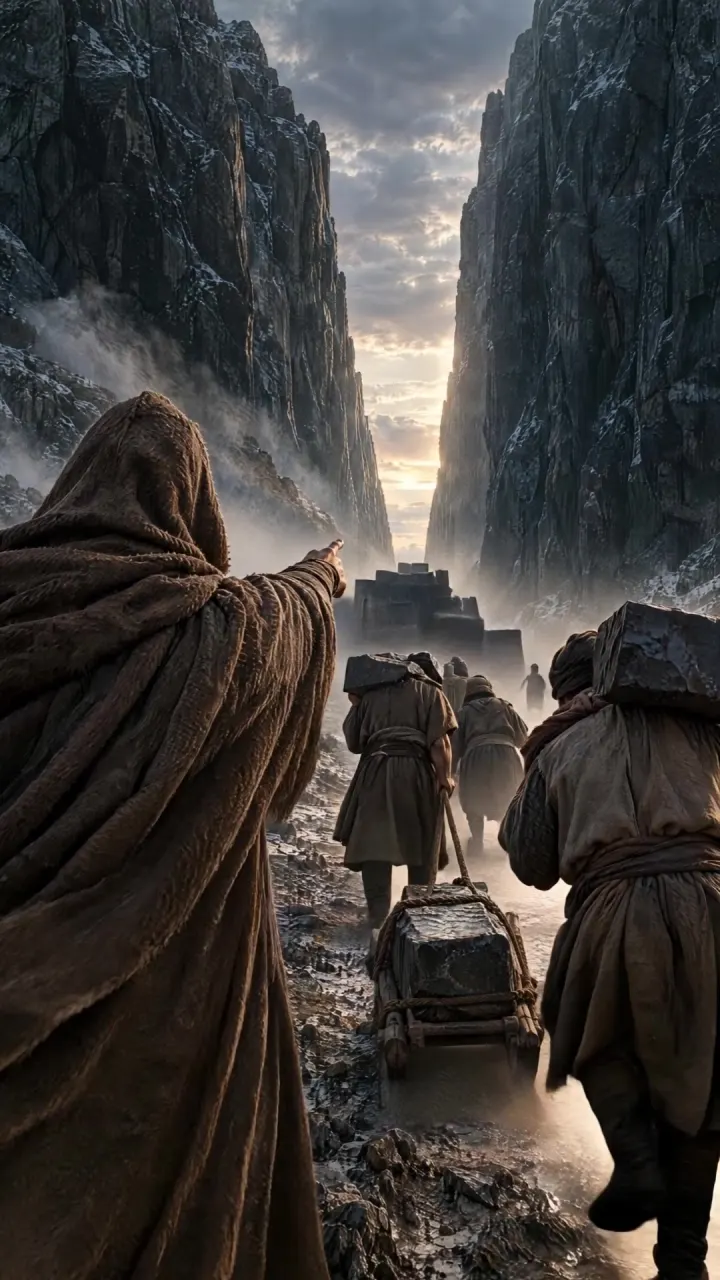
Yet they made themselves understood, because fear is a language everyone speaks. They told him that Ya'juj and Ma'juj were "corrupters in the land", and they offered him money, a tribute collected among themselves, if he would build a barrier between them and their enemies. Ibn Kathir explains the offer as a great reward they wanted to gather for him.
Who are Ya'juj and Ma'juj?
Ya'juj and Ma'juj (Gog and Magog) are two great nations of the children of Adam who spread corruption in the land, and whom Allah will release before the Day of Resurrection. That is what the Quran and the tafsir say, and it is all we need.
Al-Muyassar explains at 18:94 that they are "two great nations from the children of Adam, corrupting the earth by destroying crops and offspring." Ibn Kathir likewise states that they are among the descendants of Adam. The Quran mentions them in only one other place, Surah al-Anbiya', where their release is tied to the approach of the Hour:
﴿حَتَّىٰٓ إِذَا فُتِحَتْ يَأْجُوجُ وَمَأْجُوجُ وَهُم مِّن كُلِّ حَدَبٍ يَنسِلُونَ ٩٦ وَٱقْتَرَبَ ٱلْوَعْدُ ٱلْحَقُّ فَإِذَا هِىَ شَـٰخِصَةٌ أَبْصَـٰرُ ٱلَّذِينَ كَفَرُوا۟ يَـٰوَيْلَنَا قَدْ كُنَّا فِى غَفْلَةٍ مِّنْ هَـٰذَا بَلْ كُنَّا ظَـٰلِمِينَ ٩٧﴾(96) Until when [the dam of] Gog and Magog has been opened and they, from every elevation, descend (97) And [when] the true promise [i.e., the resurrection] has approached; then suddenly the eyes of those who disbelieved will be staring [in horror, while they say], "O woe to us; we had been unmindful of this; rather, we were wrongdoers."
Al-Muyassar explains that when the wall of Ya'juj and Ma'juj is opened and they rush down from the high places of the earth, the Day of Resurrection has drawn near. Beyond this, the Quran does not describe their appearance, their numbers or their land, and popular stories that add such details are not from the Quran.
Why did Dhul-Qarnayn refuse their payment?
Dhul-Qarnayn refused the people's money because what Allah had given him was better than anything they could offer, and he asked them for their strength instead.
﴿قَالَ مَا مَكَّنِّى فِيهِ رَبِّى خَيْرٌ فَأَعِينُونِى بِقُوَّةٍ أَجْعَلْ بَيْنَكُمْ وَبَيْنَهُمْ رَدْمًا ٩٥﴾(95) He said, "That in which my Lord has established me is better [than what you offer], but assist me with strength [i.e., manpower]; I will make between you and them a dam.
Al-Muyassar explains his answer: "What my Lord has given me of kingship and power is better for me than your wealth, so help me with strength from among you and I will build a barrier between you and them." Ibn Kathir compares his reply to that of Prophet Sulayman (peace be upon him), who said to the envoys of Saba' that what Allah had given him was better than their gift (27:36). A ruler who sees his power as a gift from Allah does not sell his service to the frightened.
Note also what he asked for. He did not build the wall for them while they watched. He asked them to work with him, to bring their strength and their materials. Al-Sa'di explains the word radm (a barrier) as something that would prevent Ya'juj and Ma'juj from crossing over to them. The protection would be theirs, built with their own hands under his direction.
How was the wall of Dhul-Qarnayn built?
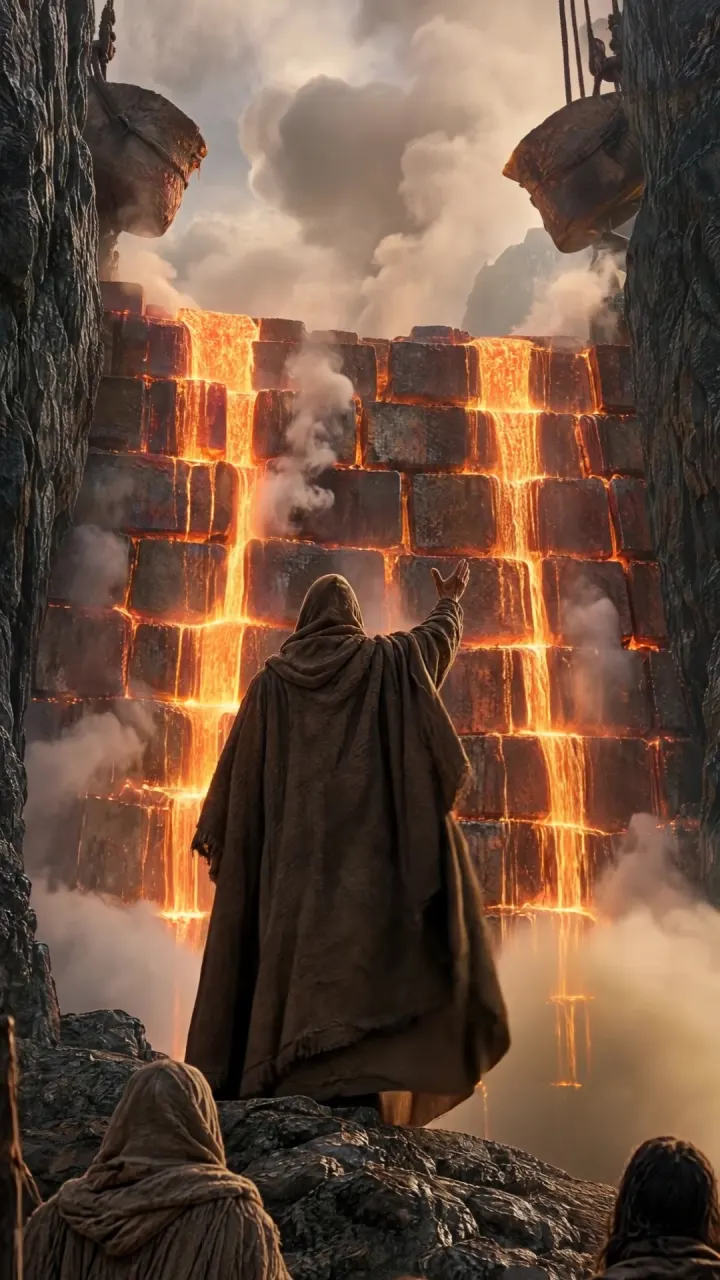
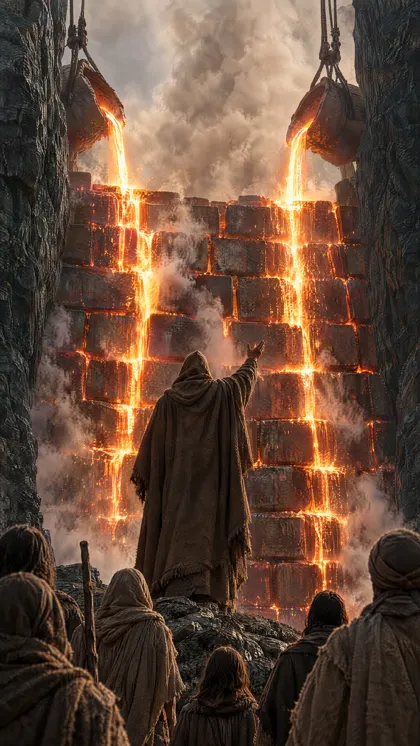
The wall was built from blocks of iron stacked between the two mountain walls, heated with fire until the whole mass glowed, and then sealed by pouring molten copper over it.
﴿ءَاتُونِى زُبَرَ ٱلْحَدِيدِ ۖ حَتَّىٰٓ إِذَا سَاوَىٰ بَيْنَ ٱلصَّدَفَيْنِ قَالَ ٱنفُخُوا۟ ۖ حَتَّىٰٓ إِذَا جَعَلَهُۥ نَارًا قَالَ ءَاتُونِىٓ أُفْرِغْ عَلَيْهِ قِطْرًا ٩٦﴾(96) Bring me bars of iron" - until, when he had leveled [them] between the two mountain walls, he said, "Blow [with bellows]," until when he had made it [like] fire, he said, "Bring me, that I may pour over it molten copper."
The Quran gives the method in four commands. First: "Bring me bars of iron." Ibn Kathir explains, from Mujahid, Qatadah and others, that zubar means pieces or blocks of iron, and that the blocks were laid from the ground up until they filled the gap between the two mountains. Al-Muyassar says the pieces were placed until they were level with the two sides of the mountains.
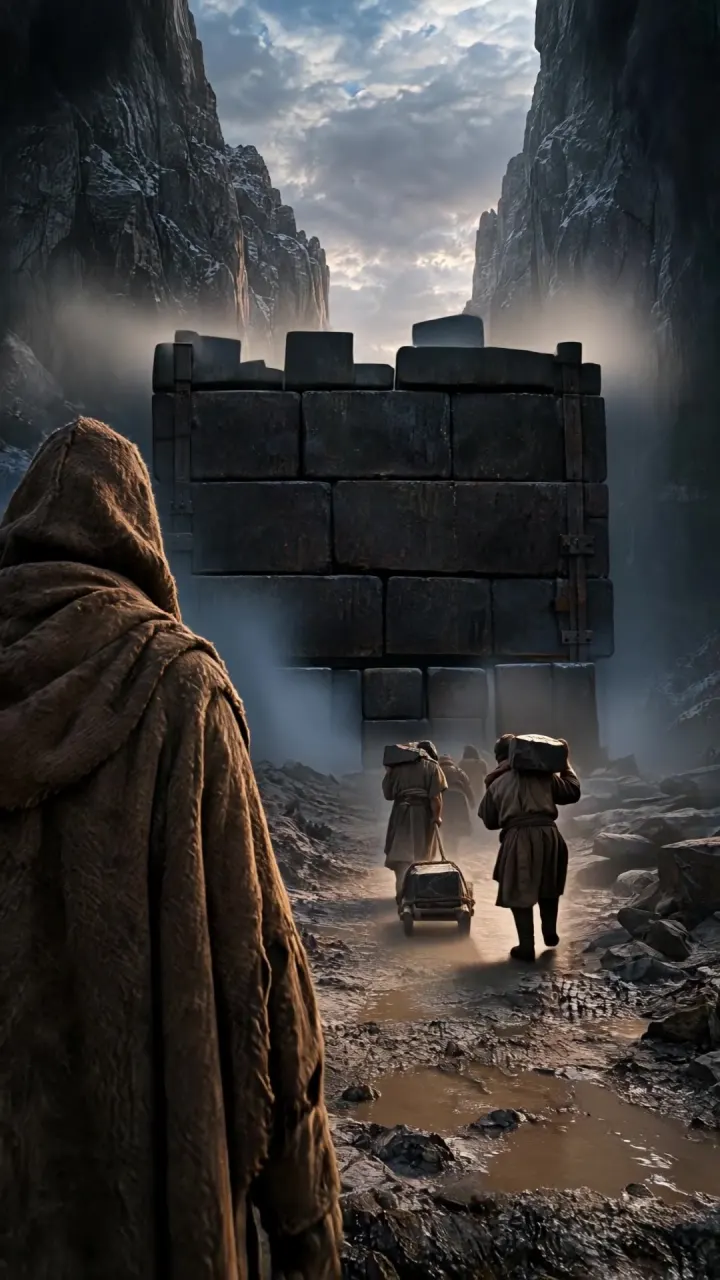
Second: "Blow." Fires were lit along the iron and bellows were worked until, in the words of the ayah, he had made it like fire. Al-Muyassar explains: he said to the workers, "Kindle the fire," until all the iron became like fire.
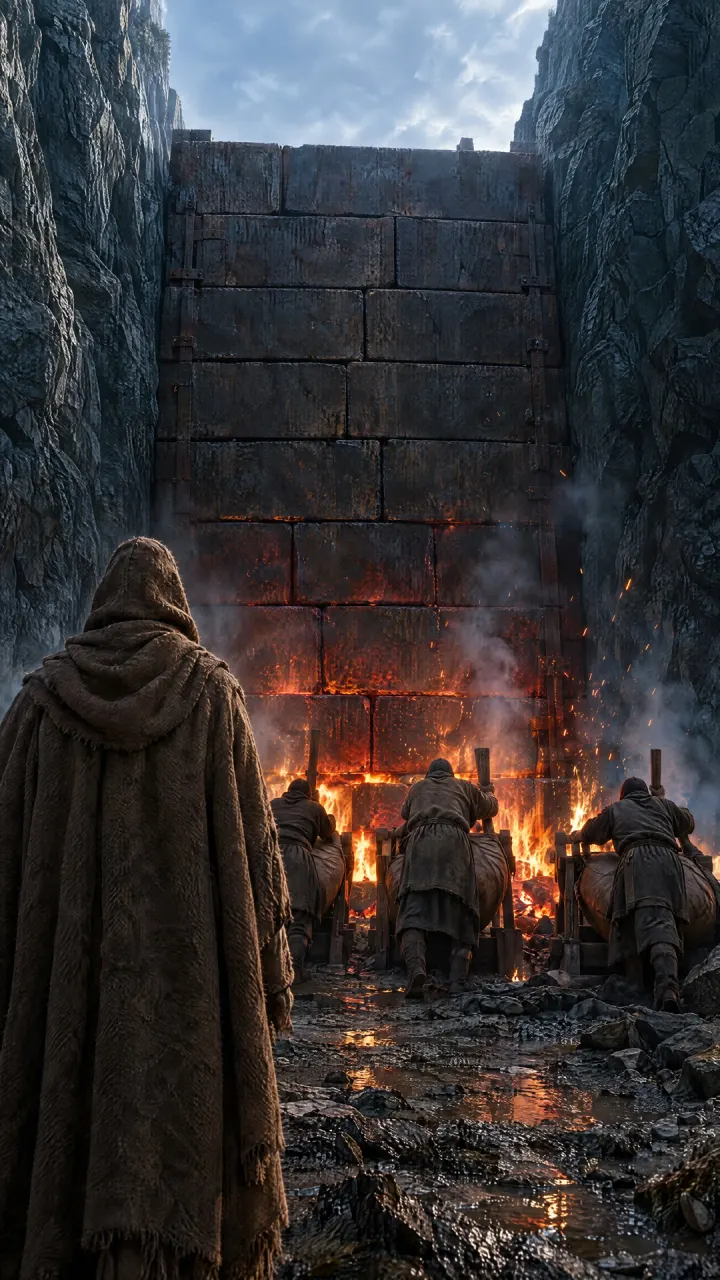
Third and fourth: "Bring me, that I may pour over it molten copper." Ibn Kathir reports from Mujahid, Qatadah and others that qitr here is copper, and some of them said molten copper. Al-Muyassar says the same: "Give me copper to pour over it." The copper filled every crack between the iron blocks and bound the whole into one smooth mass.
 Watch this story in QASASDhul-Qarnayn's WallHow did Dhul-Qarnayn build a wall Gog and Magog could not break?Open on Google Play →
Ibn Kathir notes that scholars differed about the exact height and width of the wall, and the Quran does not give measurements. The description in the ayah is enough to know that it was an extraordinary piece of engineering for its time.
"This is a mercy from my Lord"
The wall held: Ya'juj and Ma'juj could neither climb over it nor dig through it, and Dhul-Qarnayn gave the credit to Allah alone.
﴿فَمَا ٱسْطَـٰعُوٓا۟ أَن يَظْهَرُوهُ وَمَا ٱسْتَطَـٰعُوا۟ لَهُۥ نَقْبًا ٩٧ قَالَ هَـٰذَا رَحْمَةٌ مِّن رَّبِّى ۖ فَإِذَا جَآءَ وَعْدُ رَبِّى جَعَلَهُۥ دَكَّآءَ ۖ وَكَانَ وَعْدُ رَبِّى حَقًّا ٩٨﴾(97) So they [i.e., Gog and Magog] were unable to pass over it, nor were they able [to effect] in it any penetration. (98) [Dhul-Qarnayn] said, "This is a mercy from my Lord; but when the promise of my Lord comes [i.e., approaches], He will make it level, and ever is the promise of my Lord true."
Al-Muyassar explains the two failures: they could not climb the wall because of its height and smoothness, and they could not break through it from below because of its thickness and strength. Ibn Kathir points out that the Quran uses two different verb forms for the two attempts, reflecting how hard each one was.
Then comes the sentence that gives the story its meaning. Standing before the greatest construction in the story, Dhul-Qarnayn did not say "look what I have built." He said: “This is a mercy from my Lord”
(Quran 18:98). Ibn Kathir explains that the wall was a mercy and a protection for people, stopping Ya'juj and Ma'juj from spreading corruption. Al-Sa'di draws out the character behind the words: righteous rulers, when Allah gives them great blessings, grow in gratitude, and he gives the example of Prophet Sulayman, who said of the throne of Bilqis that it was from the favour of his Lord (27:40). The arrogant grow in pride instead, and al-Sa'di gives the example of Qarun, who said his wealth came from his own knowledge (28:78).
Dhul-Qarnayn then said something no builder says about his work: it will not last. “but when the promise of my Lord comes [i.e., approaches], He will make it level, and ever is the promise of my Lord true.”
(Quran 18:98) Al-Muyassar explains that when Allah's promise of the release of Ya'juj and Ma'juj comes, He will make the wall flattened and level with the ground. Ibn Kathir explains the word dakka' as flattened ground, and says the promise will certainly come to pass. The strongest wall ever built was, in its builder's own eyes, temporary. Only Allah's promise is permanent.
What happens when the wall is opened
The Quran continues straight from the wall to the Day of Resurrection, so that no reader can separate the story from its purpose.
﴿۞ وَتَرَكْنَا بَعْضَهُمْ يَوْمَئِذٍ يَمُوجُ فِى بَعْضٍ ۖ وَنُفِخَ فِى ٱلصُّورِ فَجَمَعْنَـٰهُمْ جَمْعًا ٩٩﴾(99) And We will leave them that day surging over each other, and [then] the Horn will be blown, and We will assemble them in [one] assembly.
Al-Muyassar explains that on the day Allah's promise comes, Ya'juj and Ma'juj will surge over one another in their great numbers, then the Horn will be blown for the resurrection and all creation will be gathered for the reckoning. Ibn Kathir places their release among the signs before the Day of Resurrection and cross-references Surah al-Anbiya' 21:96-97, quoted above. The Quran gives no date and no description beyond this, and we leave it there.
Timeline of the story of Dhul-Qarnayn
| Stage | What happens | Ayat |
|---|---|---|
| The question | The Quran is asked about Dhul-Qarnayn and promises a report to learn from | 18:83 |
| The gift | Allah establishes him on the earth and gives him the means to reach every goal | 18:84-85 |
| The west | He reaches the setting of the sun, finds a people, and rules with justice | 18:86-88 |
| The east | He reaches the rising of the sun and a people with no shelter from it | 18:89-91 |
| The two mountains | He finds a people who hardly understand speech, afraid of Ya'juj and Ma'juj | 18:92-94 |
| The refusal | He refuses their money and asks for their strength instead | 18:95 |
| The wall | Iron blocks, fire and bellows, molten copper | 18:96 |
| The result | Ya'juj and Ma'juj cannot climb or pierce it; "a mercy from my Lord" | 18:97-98 |
| The promise | The wall will be levelled when Allah's promise comes; the Horn is blown | 18:98-99 |
Lessons from the story of Dhul-Qarnayn
- Power is a gift and a trust. The story opens with
“We established him upon the earth”
(Quran 18:84). Everything Dhul-Qarnayn had, he had from Allah, and he never forgot it.
- Take the means, then act. Allah gave him "a way to everything", and he followed it. Al-Sa'di's comment is the lesson: the means and the action must come together, or the goal is not reached.
- Justice does not change with the audience. In the far west, among a people who had no power over him, he announced the same rule for the wrongdoer and the believer that applies everywhere.
- Gentleness is part of justice. He promised the believers among them not only reward but "ease" from his own command: soft words and easy dealing.
- A ruler who fears Allah does not sell protection. He refused a tribute from a frightened people, because what his Lord had given him was better.
- Help people to help themselves. "Assist me with strength." He directed the work, but the people built their own wall.
- Excellence in work is worship. Iron, fire, bellows, copper: the Quran records the method step by step, because doing a thing well matters.
- Give the credit to Allah. "This is a mercy from my Lord." This is the sentence the whole story was leading to.
- Nothing we build lasts; Allah's promise does. He said of his own wall that it would be levelled, and that Allah's promise is true.
- Allah's knowledge encompasses everything. Before the wall, the Quran reminds us that Allah knew all that Dhul-Qarnayn had. No achievement is ever outside Allah's knowledge and will.
How to tell the story of Dhul-Qarnayn to children
Children love this story because it has a wall, fire, molten metal and a people in need of help, and because its hero is strong without being proud. Start with the gift: Allah gave a good king the power to travel the whole earth. Ask your child: if you had that power, what would you do with it?
Then follow the three journeys. In the west he found people and ruled them fairly: the bad would be punished, the good would be treated kindly. In the east he found people with no houses and no trees to hide from the sun. Between two mountains he found scared people who could hardly understand him, and they asked him to build a wall to keep Ya'juj and Ma'juj out. They offered him money. He said no: what Allah gave me is better. Instead, he said: help me.
Describe the building in order, because children remember steps: blocks of iron, fire and blowing until it glowed, then melted copper poured over the top. Then the best part: Ya'juj and Ma'juj could not climb it and could not dig through it. And what did the king say? Not "I did it", but "this is a mercy from my Lord."
Keep to what the Quran says. If your child asks where the wall is, or what Ya'juj and Ma'juj look like, the honest answer is that the Quran does not tell us, and that we do not need to know to learn the lesson. The QASAS app has this story as a short cinematic episode, "Dhul-Qarnayn's Wall", that children can watch and then read page by page, with the ayah on screen and a three-question quiz at the end. For another story from the same surah, read the story of the People of the Cave.
Read and watch the story of Dhul-Qarnayn in QASAS
QASAS is a free prophet stories app with no ads and no account. "Dhul-Qarnayn's Wall" is told only from the ayat above, with face-free scenes and the Quran text on screen, and can be watched or read page by page with a quiz. The app also has a full mushaf with recitation, al-Muyassar and Ibn Kathir tafsir, translation and word by word, so you can open Surah al-Kahf 83-98 and read the tafsir of every ayah in this article yourself. Surah al-Kahf is read every Friday, and the app can remind you. Prayer times with adhan, a qibla compass, a 3D tasbih and adhkar are all included. It is live on Google Play, and the iPhone version is coming soon.
For the stories that share Dhul-Qarnayn's lesson about power, read the story of Musa and Pharaoh, where a king who claimed power for himself met the opposite end, and patience in the stories of the prophets.
Frequently asked questions
Who was Dhul-Qarnayn in the Quran?
Dhul-Qarnayn was a righteous, just ruler whom Allah established on the earth and gave the means to reach his goals, as Surah al-Kahf 18:83-98 describes. Al-Tafsir al-Muyassar calls him "the righteous king". The Quran does not give his personal name, his country or his dates, and the tafsir does not establish them.
Was Dhul-Qarnayn a prophet?
The Quran does not say he was a prophet, and the mainstream tafsir does not establish it. Ibn Kathir records reports that he was a king and reports that he was a righteous servant of Allah. What the Quran states is that he believed in Allah and the Hereafter, that Allah addressed him with a choice, and that he ruled with justice.
Is Dhul-Qarnayn Alexander the Great?
No, not according to the classical tafsir. Ibn Kathir treats the Dhul-Qarnayn of the Quran as a different and earlier person than Alexander the Macedonian, whom he dates to about three hundred years before 'Isa (peace be upon him), and he calls the narration that makes the Quranic Dhul-Qarnayn a Greek weak and objectionable. The Quran itself names no historical figure.
Did the sun really set in a muddy spring?
No. Ibn Kathir explains that Dhul-Qarnayn reached the furthest point west a person can travel and that the sun only appeared to him to set in the water, as it appears to anyone on a coast, while it never leaves its course. Al-Tafsir al-Muyassar says he "found it, to the eye, as if it were setting" in a hot, muddy spring.
Who are Ya'juj and Ma'juj (Gog and Magog)?
They are two great nations of the children of Adam who spread corruption in the land, as al-Tafsir al-Muyassar explains at 18:94 and as Ibn Kathir states. The Quran mentions them in Surah al-Kahf and in Surah al-Anbiya' 21:96, where their release is tied to the approach of the Hour. The Quran does not describe their appearance or numbers.
Where is the wall of Dhul-Qarnayn today?
The Quran does not say where it is, and the tafsir does not establish a location. It describes the wall as built between two mountains, of iron and molten copper, and says it will be levelled when Allah's promise comes. Modern claims about a specific place are not from the Quran or the classical tafsir.
What was the wall of Dhul-Qarnayn made of?
It was made of blocks of iron laid between the two mountain walls, heated with fire and bellows until the whole mass glowed, and then covered with molten copper (18:96). Ibn Kathir reports from Mujahid, Qatadah and other early commentators that zubar means pieces of iron and qitr means copper.
What does "This is a mercy from my Lord" teach?
It teaches that a believer attributes every success to Allah, not to himself. Al-Sa'di explains that righteous rulers grow in gratitude when Allah blesses them, as Prophet Sulayman did, while the arrogant grow in pride, as Qarun did. Dhul-Qarnayn added that even his wall would be levelled when Allah's promise comes, because only Allah's promise lasts.
Sources
Quran: Surah al-Kahf 18:83-99, Surah al-Anbiya' 21:96-97, Surah an-Naml 27:36, 27:40, Surah al-Qasas 28:78. Tafsir: al-Tafsir al-Muyassar (18:83-99, 21:96); Tafsir Ibn Kathir (18:83-99); Tafsir al-Tabari (18:86); Taysir al-Karim al-Rahman by al-Sa'di (18:84-88, 18:95, 18:98).
Updated: · By QASAS