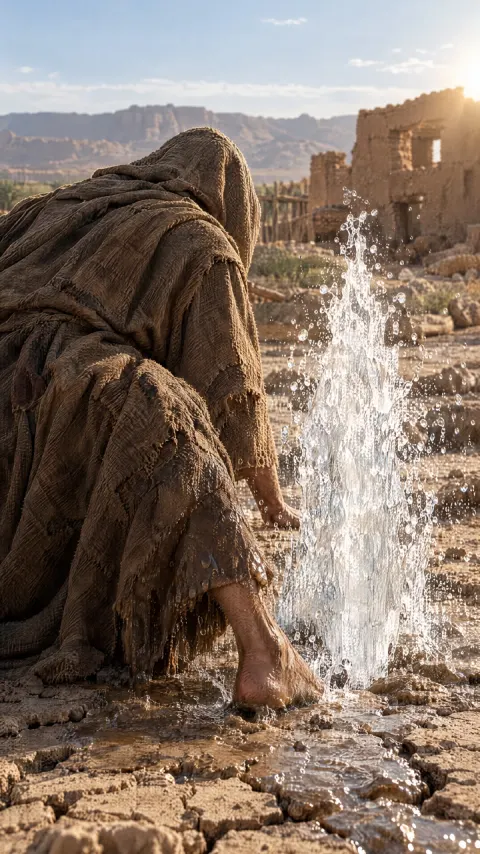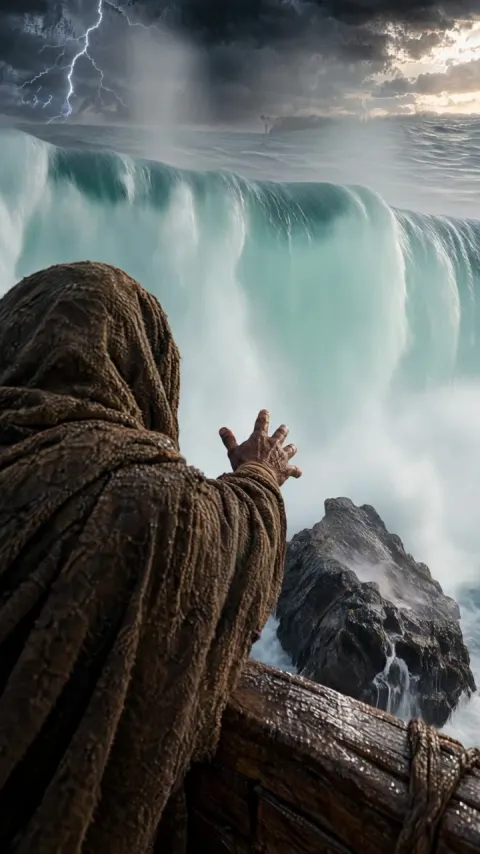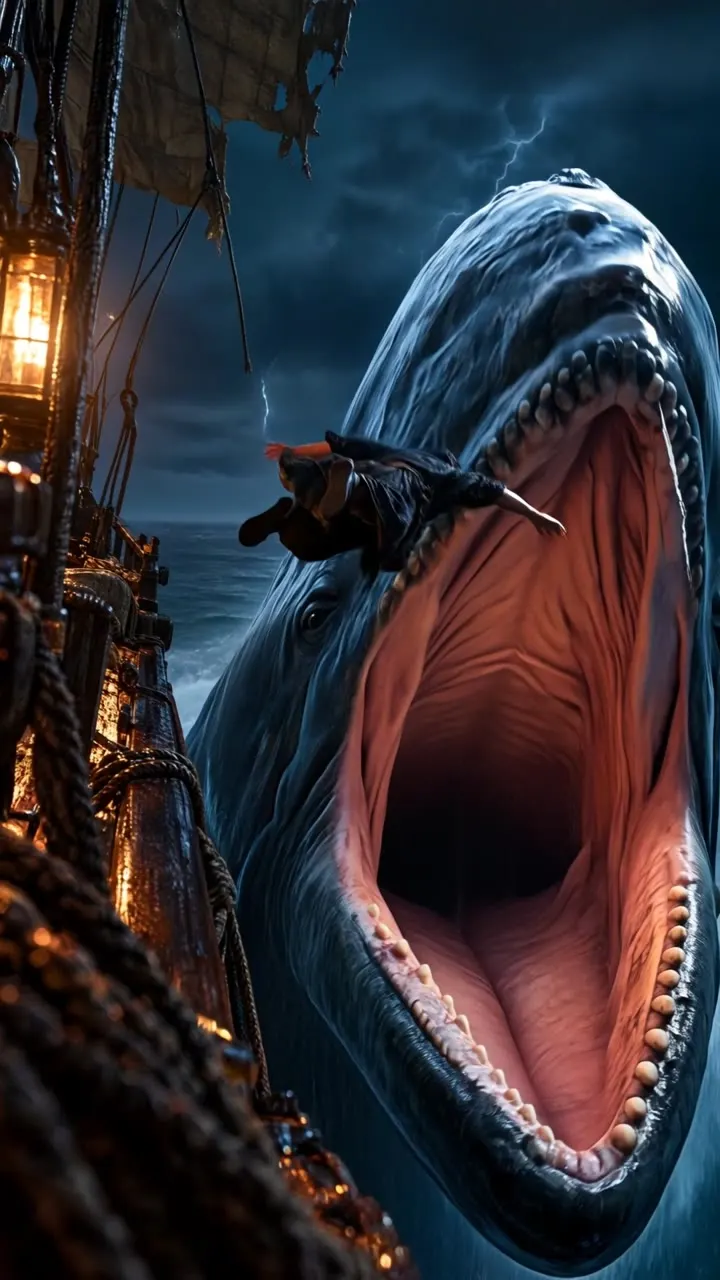
This is the story of Prophet Yunus for kids, told the way the Quran tells it: short, gentle and full of hope. Most children know it as "Yunus and the whale". It has a storm, a big fish, a very dark place, a quiet beach and a happy ending. At its heart is one short du'a that even a four-year-old can learn.
Everything on this page comes from the Quran (Surah as-Saffat 37:139-148, Surah al-Anbiya 21:87-88, Surah al-Qalam 68:48-50 and Surah Yunus 10:98) and from the classical tafsir of Ibn Kathir, al-Sa'di and al-Tafsir al-Muyassar. We have not added names, numbers of days or made-up conversations, because children deserve the true story. Where the Quran is quiet, we say so, and that is a lesson in itself.
If you want every ayah with the full tafsir discussion, read our complete story of Prophet Yunus and the whale. This page is the one to read aloud.
How to use this page
Read the story section aloud, one part at a time, and stop at the pictures. The sentences are short on purpose, so you can read them slowly and let your child look. Each ayah box shows the Arabic with its English meaning; you can read the English and, if your child is learning Quran, point to the Arabic.
After the story there is a moral in one sentence, three questions to talk about, a guide for different ages, the du'a of Yunus to memorise together, and honest answers to the questions children ask most. Parents and teachers can use the FAQ at the end for the questions that come up in class.
The story of Prophet Yunus for children
A prophet and a town that would not listen
A long time ago, Allah chose a man called Yunus to be one of His messengers. The Quran says: “And indeed, Jonah was among the messengers.”
(Quran 37:139) Jonah is the English name for Yunus.
Allah sent Yunus to a very big town. There were “a hundred thousand or more”
(Quran 37:147) people living there. That is more people than a huge football stadium can hold.
Yunus told the people: worship Allah alone. But the people did not listen. Al-Tafsir al-Muyassar explains that he called them to Allah and they did not believe, and he warned them that a punishment could come and they still did not turn back.
Yunus became angry with his people. So he walked away from the town and went to the sea. But there was a problem: Allah had not told him to leave yet. The Quran says he “went off in anger”
(Quran 21:87).
﴿وَإِنَّ يُونُسَ لَمِنَ ٱلْمُرْسَلِينَ ١٣٩ إِذْ أَبَقَ إِلَى ٱلْفُلْكِ ٱلْمَشْحُونِ ١٤٠﴾(139) And indeed, Jonah was among the messengers. (140) [Mention] when he ran away to the laden ship.
Al-Sa'di explains that Yunus left before Allah commanded him to. The Quran does not tell us what exactly made him so upset that day, and al-Sa'di says that knowing it would not help us. What matters is what happened next.
The ship and the storm
Yunus came to the sea and climbed onto a ship. The ship was full. It was full of people and full of heavy things.
Out on the sea, big waves came. Al-Tafsir al-Muyassar says great waves surrounded the ship. The ship was too heavy and everyone was afraid it would sink. The people on the ship decided that someone would have to go into the sea so the ship could float. To choose fairly, they drew lots, which is like picking a name out of a hat. Al-Sa'di explains that no passenger had a better right to stay than another, so they let the lots decide.
The lot fell on Yunus.
﴿فَسَاهَمَ فَكَانَ مِنَ ٱلْمُدْحَضِينَ ١٤١﴾(141) And he drew lots and was among the losers.
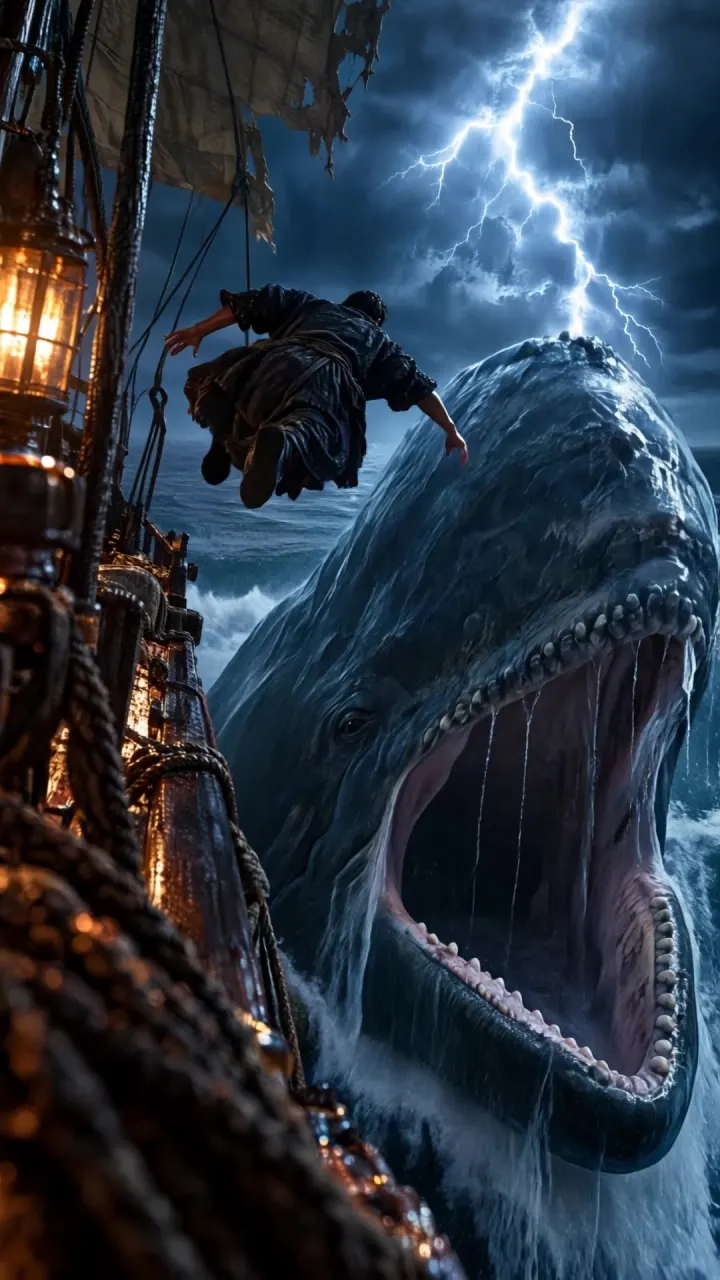
A note for parents: the Quran does not tell us the sailors' names, what they said or how many times they drew lots. Many storybooks add those things. We leave them out, and if your child asks, the honest answer is: "The Quran does not tell us, and we do not need to know."
The big fish
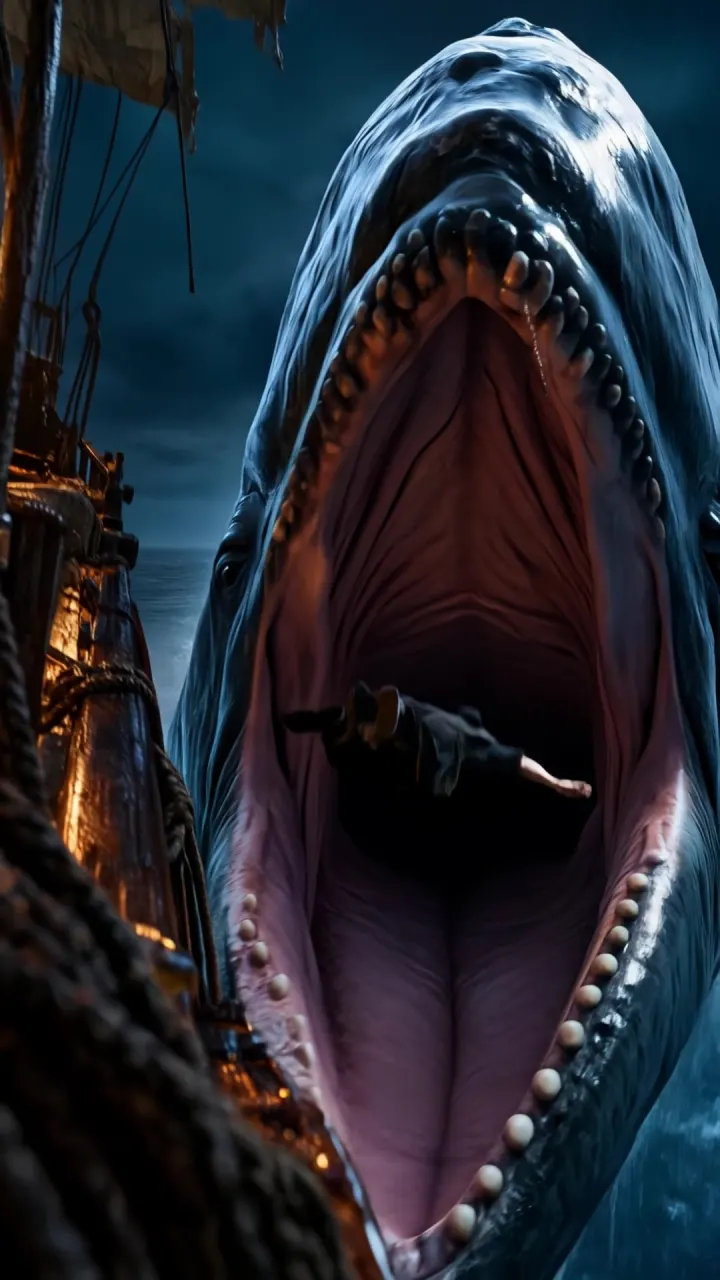
Yunus went into the dark sea. Then a great fish came and swallowed him whole, in one gulp.
﴿فَٱلْتَقَمَهُ ٱلْحُوتُ وَهُوَ مُلِيمٌ ١٤٢﴾(142) Then the fish swallowed him, while he was blameworthy.
Did the fish hurt him? No. Ibn Kathir explains that Allah commanded the fish not to crush his flesh or break his bones. The fish was not a monster. It was a safe place that Allah made for Yunus in the middle of the sea.
The Quran calls it al-hut, which means a great fish. Many people call it a whale, and that is fine as a name. The Quran does not tell us exactly what kind of fish it was.
The du'a in the dark
Inside the fish it was dark. It was the dark of the fish's belly, and the dark of the deep sea, and the dark of the night. Ibn Kathir reports that these were three darknesses, one inside the other.
Yunus did not give up. He talked to Allah. The Quran tells us exactly what he said:
﴿وَذَا ٱلنُّونِ إِذ ذَّهَبَ مُغَـٰضِبًا فَظَنَّ أَن لَّن نَّقْدِرَ عَلَيْهِ فَنَادَىٰ فِى ٱلظُّلُمَـٰتِ أَن لَّآ إِلَـٰهَ إِلَّآ أَنتَ سُبْحَـٰنَكَ إِنِّى كُنتُ مِنَ ٱلظَّـٰلِمِينَ ٨٧﴾(87) And [mention] the man of the fish [i.e., Jonah], when he went off in anger and thought that We would not decree [anything] upon him. And he called out within the darknesses, "There is no deity except You; exalted are You. Indeed, I have been of the wrongdoers."
His du'a has three parts, and each part is something you can say to a child in plain words:
- "There is no deity except You." Only Allah is God. Only Allah can help me.
- "Exalted are You." Allah is perfect. Allah has done nothing wrong.
- "Indeed, I have been of the wrongdoers." I am the one who made the mistake. I am sorry.
Notice something special: Yunus did not say "get me out". He did not ask for anything. He praised Allah and said sorry. Al-Sa'di explains that in this du'a Yunus affirmed that Allah alone is God, declared Him free of every flaw, and admitted that he had wronged himself.

Allah answers
Allah heard Yunus, even at the bottom of the sea, inside a fish, in the dark. And Allah answered him straight away.
﴿فَٱسْتَجَبْنَا لَهُۥ وَنَجَّيْنَـٰهُ مِنَ ٱلْغَمِّ ۚ وَكَذَٰلِكَ نُـۨجِى ٱلْمُؤْمِنِينَ ٨٨﴾(88) So We responded to him and saved him from the distress. And thus do We save the believers.
Allah told the fish to put Yunus on the beach. The fish did what Allah said.

Yunus lay on the sand. He was very weak and ill. Al-Sa'di explains that he was like a small chick taken out of its egg too early. There were no trees and no houses on that beach, just open land. So Allah made a plant grow right over him. It was a gourd plant, the kind with big wide leaves, and it gave him cool shade while he got better.
﴿۞ فَنَبَذْنَـٰهُ بِٱلْعَرَآءِ وَهُوَ سَقِيمٌ ١٤٥ وَأَنۢبَتْنَا عَلَيْهِ شَجَرَةً مِّن يَقْطِينٍ ١٤٦﴾(145) But We threw him onto the open shore while he was ill. (146) And We caused to grow over him a gourd vine.
Al-Tafsir al-Muyassar says the plant was a gourd (qar') that shaded him and that he benefited from. Al-Sa'di calls it a sign of Allah's gentleness and kindness to His servant. Think about that: Allah did not only save Yunus. He also looked after him while he was weak.

Back to his people
After that, Allah sent Yunus back to his people, the same big town with a hundred thousand people or more. And this time, something wonderful happened.
﴿وَأَرْسَلْنَـٰهُ إِلَىٰ مِا۟ئَةِ أَلْفٍ أَوْ يَزِيدُونَ ١٤٧ فَـَٔامَنُوا۟ فَمَتَّعْنَـٰهُمْ إِلَىٰ حِينٍ ١٤٨﴾(147) And We sent him to [his people of] a hundred thousand or more. (148) And they believed, so We gave them enjoyment [of life] for a time.
They believed. All of them. The Quran tells us in Surah Yunus that his people had seen the punishment coming close, and they turned to Allah with their whole hearts, so Allah took the punishment away. Al-Tafsir al-Muyassar explains that when they were sure the punishment was about to fall, they repented sincerely, and when the truth of their repentance was clear, Allah removed it. The Quran says no other town's faith helped it in that way, “except the people of Jonah”
(Quran 10:98).
And Allah's last word about Yunus in the Quran is a beautiful one: “And his Lord chose him and made him of the righteous.”
(Quran 68:50) The story does not end with the mistake. It does not end with the fish. It ends with Allah choosing Yunus.
 Watch this story in QASASYunus and the WhaleWhy did the whale swallow Prophet Yunus but not harm him?Open on Google Play →
The moral of the story of Yunus for kids
The moral of the story of Yunus is this: when you make a mistake, turn to Allah straight away, say sorry, and He will answer you. That is the one sentence to leave your child with. The Quran itself turns the rescue into a promise for everyone: “And thus do We save the believers.”
(Quran 21:88) Al-Tafsir al-Muyassar explains that this means Allah saves those who believe and act on His guidance.
There are a few smaller lessons inside the big one, and each is easy to say in a child's words:
- Allah can always hear you. Yunus was inside a fish, under the sea, at night, and Allah still heard him. There is no place too dark and no voice too small.
- Saying sorry is strong, not weak. Yunus was a prophet, and he still said "I was wrong". Big people say sorry too.
- Praise Allah before you ask. Yunus started with "there is no god but You" and "You are perfect". He did not even get to the asking part, and Allah already answered.
- Do not walk away in anger. Yunus left before Allah told him to. Surah al-Qalam uses his story to teach patience with Allah's decision (68:48-50). When we are angry, we wait and we ask Allah for help, instead of running off.
- Allah is kind after the hard part too. He did not just get Yunus out of the fish. He grew a plant to shade him. Allah looks after us while we heal.
- It is never too late to come back. His whole town turned to Allah and was forgiven. Anyone can turn back to Allah.
Three questions to talk about after the story
Talking about the story is where the lesson sticks. Here are three questions for children, with what to listen for and a short true answer you can give if they get stuck.
1. Why did Yunus leave the town? Listen for: he was angry because the people would not listen, and he left before Allah told him to. If your child says "because the people were mean", gently add the second half: the people did not listen, but Yunus also left too early, and that is the part he said sorry for. The Quran says he “went off in anger”
(Quran 21:87), and al-Sa'di explains that he left before Allah commanded him to. Follow-up: "What do you do when you feel really angry? What could you do instead of walking away?"
2. What did Yunus say inside the fish, and what did he not say? Listen for: he said there is no god but Allah, Allah is perfect, and I was wrong. He did not say "get me out". Children are often surprised that he asked for nothing. Follow-up: "If you were in the dark and scared, what would you say to Allah first?" This is a natural moment to practise the du'a together (see below).
3. Why did the fish put Yunus on the beach? Listen for: because Allah answered his du'a and told the fish to let him go. The fish only ever did what Allah said. Some children think the fish was a punishment that "ate" him; the true answer is that the fish was a safe place Allah made, and Ibn Kathir explains that it was commanded not to hurt him. Follow-up: "What did Allah do for Yunus after he got out?" (He grew a plant to give him shade.) This shows that Allah's kindness keeps going after the rescue.
Telling the story of Yunus by age
The story of Prophet Yunus works for every age, as long as you choose what to focus on. The facts stay the same; what changes is how much you explain.
Ages 4 to 6. Keep it to five beats: Yunus told the people about Allah, they did not listen, he left too early and got on a boat, a big fish swallowed him, he said sorry to Allah and Allah told the fish to put him on the beach. Use the pictures. Say the du'a in Arabic once, slowly, and let them repeat the last word, az-zalimin. Do not explain "three darknesses" or "lots"; "they picked who would go into the sea" is enough. End on the plant: "Allah even gave him a leafy plant for shade."
Ages 7 to 9. Add the three parts of the du'a and let them learn the whole thing with its meaning. Add the people of Yunus turning to Allah and being forgiven, which children love, because it means the story has two happy endings. Explain "drawing lots" as a fair way to choose. Ask all three questions above.
Ages 10 to 12. Add Surah al-Qalam's lesson about patience with Allah's decision (68:48-50), and the idea that a prophet can slip and still be chosen by Allah. Be honest about what the Quran does not say (how many days, the sailors' words, the kind of fish) and why the tafsir scholars say "Allah knows best". Older children can open the ayat themselves in a mushaf with tafsir and compare al-Muyassar's words with the story they just heard. For a longer read at this age, go to the complete story of Yunus with tafsir.
For every age: no scary voices for the storm, no made-up dialogue, and no pictures of faces. The Quran's version is already exciting, and it is gentle: the fish did not hurt him, and the ending is all mercy.
Teach your child the du'a of Yunus
The du'a of Yunus is the one thing from this story that your child can carry for life. It is short, it is in the Quran word for word, and it fits every hard moment: before a test, when they are scared at night, when they have done something wrong.
The Arabic is in the ayah above (21:87), and in transliteration it is: La ilaha illa anta, subhanaka, inni kuntu minaz-zalimin. The meaning: “There is no deity except You; exalted are You. Indeed, I have been of the wrongdoers.”
(Quran 21:87)
A simple way to teach it over one week:
- Days 1 and 2. Say it once each night at bedtime, in Arabic, then in English. Let them listen only.
- Days 3 and 4. Say it in three pieces and let them repeat each piece: La ilaha illa anta / subhanaka / inni kuntu minaz-zalimin.
- Days 5 to 7. Let them say the whole du'a on their own, then ask: "Which part is 'only Allah'? Which part is 'Allah is perfect'? Which part is 'I am sorry'?"
Tell them when to use it: "Whenever you feel stuck, like Yunus in the dark." The Quran's own promise follows it in the next ayah: “And thus do We save the believers.”
(Quran 21:88) Our full article explains each phrase of the du'a of Yunus in more depth for parents.
What the Quran does not tell us (and how to answer)
Children ask great questions, and the best answer to some of them is "the Quran does not say". Here is how to handle the most common ones without inventing anything.
- "How many days was he in the whale?" The Quran does not say. Ibn Kathir lists different opinions from early scholars, from part of a day to many days, and ends with "Allah knows best". Tell your child: "Nobody knows for sure, and the Quran did not tell us, so it is not something we need. What we do know is what he said in there."
- "What was the whale's name?" It has no name in the Quran. The Quran just calls it a great fish.
- "What did the sailors say to Yunus?" The Quran does not record any words. It says only that they drew lots and he lost.
- "Was Yunus a bad man?" No. He was a prophet of Allah. He made one mistake, leaving early, and he said sorry at once. The Quran ends his story by saying Allah chose him and made him one of the righteous.
- "Why did Allah let the fish swallow him?" So that Yunus could turn back to Allah. Al-Sa'di explains that when Allah wills something, He prepares its causes: the full ship, the storm and the lots all led Yunus to the exact place where he would call on his Lord.
Teaching a child to say "the Quran does not tell us" is a gift. It teaches them to love the Quran as it is, and not to mix it with stories that were added later.
The story at a glance
| Part | What happens | Where in the Quran |
|---|---|---|
| The town | Yunus is sent to a people of 100,000 or more; they do not listen | 37:139, 37:147 |
| Leaving | He leaves in anger before Allah tells him to | 21:87, 37:140 |
| The ship | The ship is full; they draw lots and Yunus loses | 37:140-141 |
| The fish | A great fish swallows him; it does not hurt him | 37:142 |
| The du'a | In the darkness he praises Allah and says sorry | 21:87 |
| The answer | Allah answers at once and saves him | 21:88 |
| The beach | The fish puts him on the shore; a gourd plant shades him | 37:145-146 |
| The people | He is sent back and the whole town believes | 37:147-148, 10:98 |
| The end | Allah chooses him and makes him of the righteous | 68:50 |
Watch and read Yunus and the whale in QASAS
QASAS is a free prophet stories app that tells this story as a short cinematic episode called "Yunus and the Whale": the stormy night, the great fish, the dark sea, the beach and the gourd plant. Your child can watch it, or read it page by page with you, and then answer a quick quiz at the end to see what they remember. There are no faces of prophets, no ads, no account and no tracking, and the stories come in 11 languages.
It is a calm way to do Islamic stories for kids at bedtime: watch the episode, read this page, ask the three questions, and say the du'a together. When your child is older, the same app has the full mushaf with tafsir, prayer times, the qibla, a 3D tasbih and adhkar. QASAS is live on Google Play for Android, and the iPhone version is coming soon.
Good stories to tell next, at the same age: the story of Prophet Nuh and the Ark, and for older children, patience in the stories of the prophets, which shows how Yunus, Ayyub and others learned to wait for Allah's help.
Watch this story in QASASYunus and the WhaleWhy did the whale swallow Prophet Yunus but not harm him?Open on Google Play →Frequently asked questions
What is the story of Prophet Yunus for kids in short?
Prophet Yunus was sent to a big town that would not listen, left in anger before Allah told him to, and was swallowed by a great fish. In the dark he praised Allah and said sorry, Allah answered him at once, the fish put him on the beach, a plant grew to shade him, and his whole town believed (Quran 37:139-148, 21:87-88).
What is the moral of the story of Yunus for children?
The moral is: when you make a mistake, turn to Allah straight away, say sorry, and He will answer you. The Quran turns Yunus's rescue into a promise for every believer: “And thus do We save the believers.”
(Quran 21:88) Smaller lessons are that Allah hears you anywhere, saying sorry is strong, and you should not walk away in anger.
What is the du'a of Yunus and can a small child learn it?
The du'a of Yunus is "La ilaha illa anta, subhanaka, inni kuntu minaz-zalimin": “There is no deity except You; exalted are You. Indeed, I have been of the wrongdoers.”
(Quran 21:87) Yes, it is short enough for a four-year-old to learn in a week by repeating it in three parts at bedtime.
How long was Yunus inside the whale? What do I tell my child?
The Quran does not say how long Yunus was inside the fish. Ibn Kathir lists different opinions from early scholars and concludes that Allah knows best. Tell your child honestly that the Quran did not tell us, so it is not something we need to know.
Did the whale hurt Prophet Yunus?
No. Ibn Kathir explains that Allah commanded the fish not to crush his flesh or break his bones. The fish was a safe place Allah made, not a punishment that ate him, and when Yunus called on Allah, the fish put him gently on the shore.
Was it a whale or a fish?
The Quran calls it al-hut, a great fish, and does not name its species. "Yunus and the whale" is the popular name of the story, and it is fine to use it with children as long as they know the Quran simply says "a great fish".
What age is the story of Yunus suitable for?
The story of Yunus suits children from about age 4, because it is short, visual and gentle: the fish does not hurt him and the ending is full of mercy. Younger children get five simple beats and the du'a; older children add the three parts of the du'a, the people's repentance and the lesson of patience.
Sources
Quran: Surah as-Saffat 37:139-148, Surah al-Anbiya 21:87-88, Surah al-Qalam 68:48-50, Surah Yunus 10:98 (Uthmani text and Saheeh International translation). Tafsir: Ibn Kathir (Tafsir al-Quran al-'Azim), al-Sa'di (Taysir al-Karim al-Rahman) and al-Tafsir al-Muyassar (King Fahd Complex).
Updated: · By QASAS