Reading Surah al-Kahf on Friday is one of the most widespread weekly habits in the Muslim world, and one of the most searched. People want to know the same few things: when exactly it should be read, where the practice comes from, whether listening to a recitation counts, and how to actually keep the habit when Friday is a working day. This guide answers all of that in plain language, with every religious claim taken from the Quran and the classical tafsir, and the practical fiqh positions attributed to the scholars who hold them.
One honest note before we begin. The questions "is it valid if I read it after Asr?" and "does listening earn the reward?" are questions of fiqh, and the scholars have discussed them. We report what Ibn Kathir, al-Nawawi, Ibn Hajar, Ibn Abidin and contemporary fatwa bodies say, and where they differ we say so. For a ruling that applies to your own situation, ask a scholar you trust.
What is Surah al-Kahf?
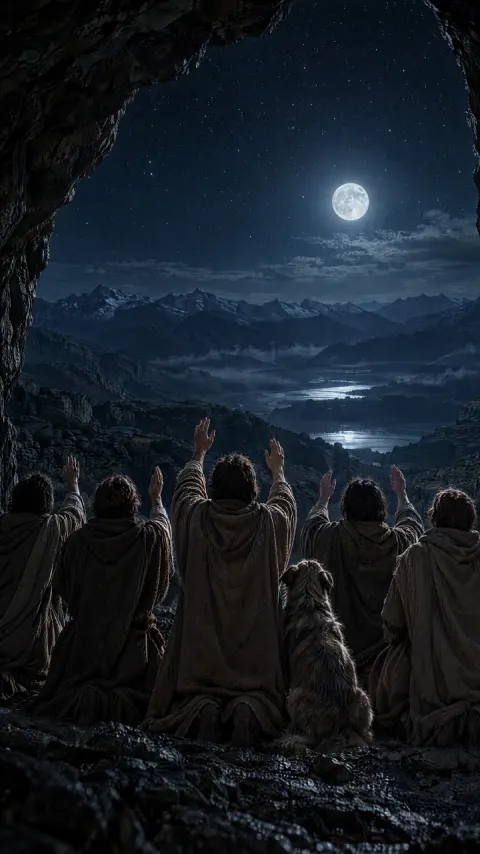
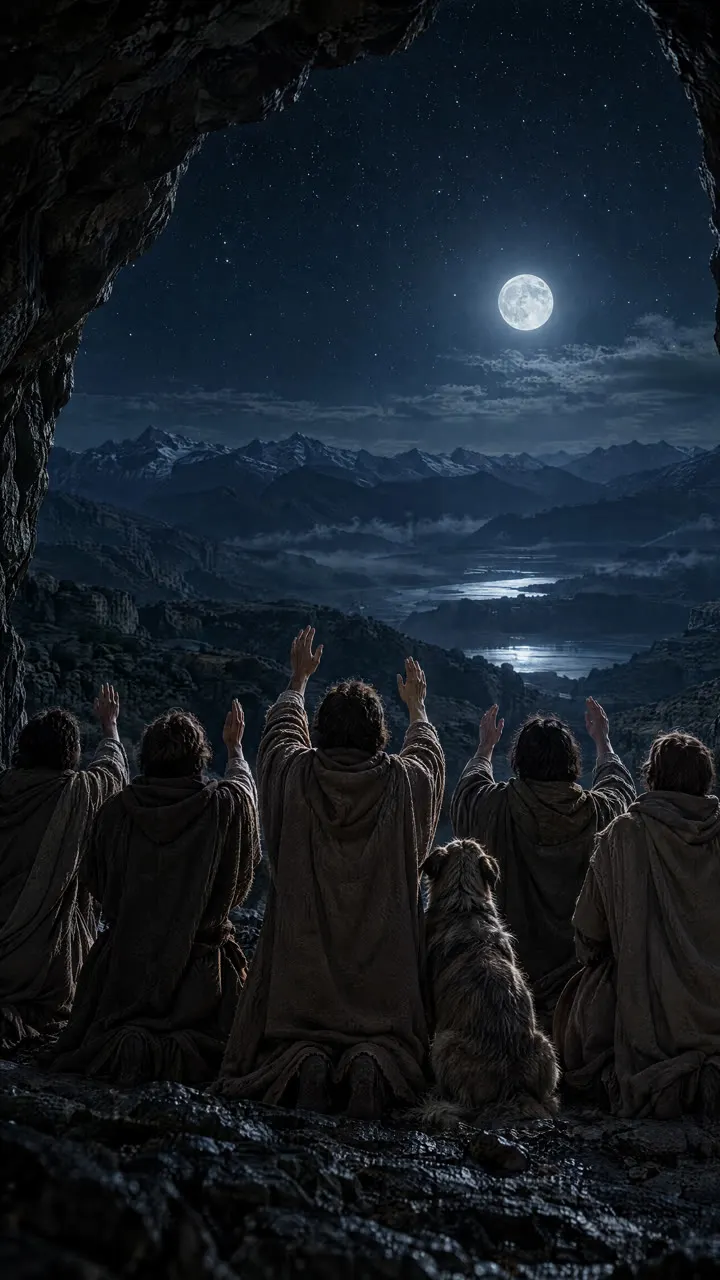
Surah al-Kahf ("The Cave") is the 18th surah of the Quran, a Makkan surah of 110 ayat, named after the story of the young believers who took refuge in a cave. It opens with praise of Allah for a Book without crookedness:
﴿ ٱلْحَمْدُ لِلَّهِ ٱلَّذِىٓ أَنزَلَ عَلَىٰ عَبْدِهِ ٱلْكِتَـٰبَ وَلَمْ يَجْعَل لَّهُۥ عِوَجَا ۜ ١ قَيِّمًا لِّيُنذِرَ بَأْسًا شَدِيدًا مِّن لَّدُنْهُ وَيُبَشِّرَ ٱلْمُؤْمِنِينَ ٱلَّذِينَ يَعْمَلُونَ ٱلصَّـٰلِحَـٰتِ أَنَّ لَهُمْ أَجْرًا حَسَنًا ٢ مَّـٰكِثِينَ فِيهِ أَبَدًا ٣﴾(1) [All] praise is [due] to Allāh, who has sent down upon His Servant [Muḥammad (ﷺ)] the Book and has not made therein any deviance. (2) [He has made it] straight, to warn of severe punishment from Him and to give good tidings to the believers who do righteous deeds that they will have a good reward [i.e., Paradise]. (3) In which they will remain forever
Al-Tafsir al-Muyassar explains the opening as praise of Allah by His attributes of perfection and by His open and hidden favours, the greatest of which is that He sent down the Quran and placed in it nothing that deviates from the truth; He made it a straight Book with no contradiction, to warn the disbelievers of a severe punishment and to give the believers who do good the glad tidings of a lasting reward, which is Paradise. Al-Sa'di adds that the two descriptions, no crookedness and straightness, mean that nothing the Book reports is false and nothing it commands is unjust, and that it commands and informs only of what is best and most beneficial. Ibn Kathir says that Allah praises Himself here for the greatest blessing given to the people of the earth, a Book that brings them out of darkness into light.
Between its opening and its closing ayat, the surah tells four stories, each about holding on to faith through a different kind of trial. We will come back to them, because reading Surah al-Kahf with its stories in mind is very different from reading it as a weekly task.
Why do Muslims read Surah al-Kahf on Friday?
Muslims read Surah al-Kahf on Friday because of narrations about its virtue which the classical scholars accepted as a basis for a recommended practice. Ibn Kathir opens his tafsir of the surah by collecting them. The two most relevant are:
- Light between the two Fridays. Ibn Kathir cites from al-Hakim's Mustadrak the narration that whoever reads Surah al-Kahf on the day of Friday is given a light from one Friday to the next, and he records al-Hakim's remark that its chain is authentic. Later scholars discussed this chain: Ibn Hajar graded it hasan and called it the strongest report on the subject, while al-Nawawi, in al-Majmu', noted a weakness in one chain and that it is also reported as the words of a Companion rather than of the Prophet ﷺ. Dar al-Ifta al-Misriyyah, citing al-Nawawi and Ibn al-Qayyim, still rules the reading recommended, on the basis that a Companion would not say such a thing from personal opinion.
- Protection from the Dajjal. Ibn Kathir also cites, from Sahih Muslim and the Sunan, that whoever memorises ten ayat from the beginning of Surah al-Kahf is protected from the Dajjal. This narration is authentic and is not tied to Friday; another wording in the same collection mentions the last ten ayat. It is the strongest single reason the surah has such a place in Muslim practice.
We mention these narrations because the whole practice rests on them, and we keep them short, attributed to their collections, and exactly as the tafsir cites them, which is the rule we follow on this site for anything outside the Quran and tafsir.
The day itself is singled out by the Quran. Surah al-Jumu'ah commands the believers to leave trade when the call to the Friday prayer is made:
﴿يَـٰٓأَيُّهَا ٱلَّذِينَ ءَامَنُوٓا۟ إِذَا نُودِىَ لِلصَّلَوٰةِ مِن يَوْمِ ٱلْجُمُعَةِ فَٱسْعَوْا۟ إِلَىٰ ذِكْرِ ٱللَّهِ وَذَرُوا۟ ٱلْبَيْعَ ۚ ذَٰلِكُمْ خَيْرٌ لَّكُمْ إِن كُنتُمْ تَعْلَمُونَ ٩ فَإِذَا قُضِيَتِ ٱلصَّلَوٰةُ فَٱنتَشِرُوا۟ فِى ٱلْأَرْضِ وَٱبْتَغُوا۟ مِن فَضْلِ ٱللَّهِ وَٱذْكُرُوا۟ ٱللَّهَ كَثِيرًا لَّعَلَّكُمْ تُفْلِحُونَ ١٠﴾(9) O you who have believed, when [the adhān] is called for the prayer on the day of Jumuʿah [Friday], then proceed to the remembrance of Allāh and leave trade. That is better for you, if you only knew. (10) And when the prayer has been concluded, disperse within the land and seek from the bounty of Allāh, and remember Allāh often that you may succeed.
Al-Tafsir al-Muyassar explains that this means going to hear the khutbah and pray, leaving buying, selling and everything that distracts from it, and that the ayah proves the obligation of attending the Friday prayer and listening to the khutbah. Reading Surah al-Kahf is not part of that obligation. It is a recommended act that the scholars attach to the same day, and it should never be confused with the prayer itself.
When should you read Surah al-Kahf on Friday?
Surah al-Kahf can be read at any time between sunset on Thursday and sunset on Friday, because in the Islamic calendar a day begins at sunset and "Friday" includes the night before it. This is the position of the fatwa bodies that have addressed the question directly. Islam Q&A, quoting al-Manawi's report of al-Shafi'i's view, says it is recommended to read it in the day or the night of Jumu'ah, and explains that Ibn Hajar reconciled the narrations that say "the night of Friday" with those that say "the day of Friday" by saying that each includes the other. Dar al-Ifta al-Misriyyah rules that it is recommended at any time of Friday or its night, not specifically before the prayer, and that it may be read quietly or aloud.
Is there a best time inside that window? The scholars say the earlier the better, simply so that it does not get forgotten. Dar al-Ifta cites Ibn Abidin, the Hanafi jurist, as saying that it is best to read it early in the day, hastening to the good and guarding against forgetting. The Shafi'i school, according to the same fatwa, considers it recommended on Friday and its night. And Shaykh Ibn Baz is recorded as saying that the whole of Friday is its time: reading it at the beginning, the middle or the end of the day is all good, and the matter is broad.
Here is the window in a form you can act on:
| Moment | Can I read it now? | Notes |
|---|---|---|
| Thursday before Maghrib | Not yet for the Friday reading | The night of Friday has not started |
| Thursday after Maghrib (night of Friday) | Yes | Many people read it after Maghrib or Isha on Thursday |
| Friday after Fajr | Yes, and encouraged | The quietest hour of the day for most people |
| Friday between Dhuhr and Asr | Yes | After the Jumu'ah prayer is a common time |
| Friday after Asr, before Maghrib | Yes | Still inside the day; do not leave it too close to sunset |
| Friday after Maghrib | The window has closed | It is Saturday night in the Islamic calendar |
Two practical cautions. First, Maghrib time changes every day of the year and from city to city, so "before sunset" means the actual sunset where you are, which a prayer times app calculates for your location. Second, if you only have a few minutes, read what you can with attention rather than racing through all 110 ayat; and if you have time later in the window, finish it then. The scholars who wrote about this surah wrote about reading it, not merely about completing it.
Can I listen to Surah al-Kahf instead of reading it?
Listening to a recitation of Surah al-Kahf on Friday is a good and permissible act, but the narrations mention reading, so the scholars advise that whoever can read should read. Islamweb's fatwa on the question says that listening to the surah before reciting it on Friday is permissible, because both listening to the Quran and reciting it are legislated acts of worship. Islam Q&A says the reward in the narrations is mentioned for the one who reads, and that someone who cannot read well may repeat after a reciter, which the scholars consider better when it is possible, and expresses the hope that one who listens because they cannot read will share in the reward.
For most people the best of both worlds is simple: open the mushaf, play a recitation you like, and follow the text with your eyes and lips. You hear a beautiful recitation, you read every ayah, and your pronunciation improves week by week. That is exactly how the mushaf in the QASAS app is designed to be used: tap an ayah to hear it recited, follow the Uthmani text, and open al-Tafsir al-Muyassar or Ibn Kathir under any ayah that makes you pause.
If you do not read Arabic yet, do not let that stop you. Listen with a translation open, read the translation of each passage as it is recited, and learn the first ten ayat gradually, a line a week. Every step toward reading the surah yourself is worth taking, and the step after it gets easier.
The four stories of Surah al-Kahf, and the trials behind them
Surah al-Kahf holds four stories, and reading it on Friday means revisiting all four every week: the People of the Cave (18:9-26), the man with two gardens (18:32-44), Musa and al-Khidr (18:60-82), and Dhul-Qarnayn (18:83-98). Teachers of the surah often summarise them as four trials: the trial of faith, the trial of wealth, the trial of knowledge, and the trial of power. That framing is a teaching summary rather than a tafsir ruling, but each story is exactly what the Quran says it is.
| Story | Ayat | What happens | Read it in full |
|---|---|---|---|
| The People of the Cave | 18:9-26 | Young believers flee their idol-worshipping people, pray for mercy, and sleep 309 years as a sign that Allah's promise is true | People of the Cave story |
| The man with two gardens | 18:32-44 | A man proud of his two gardens forgets that everything he has is from Allah, and loses it all | In the mushaf |
| Musa and al-Khidr | 18:60-82 | Prophet Musa travels to learn from a servant given knowledge from Allah, and sees three acts he cannot bear until their wisdom is revealed | The al-Khidr section of Patience in the stories of the prophets |
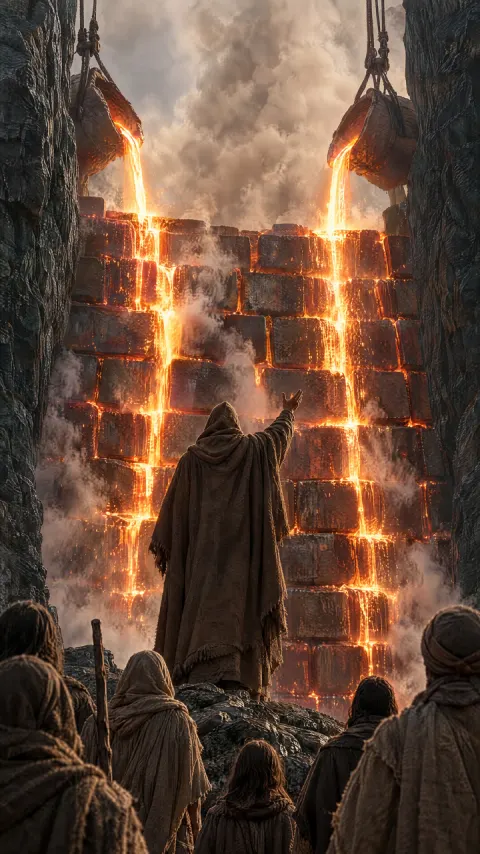
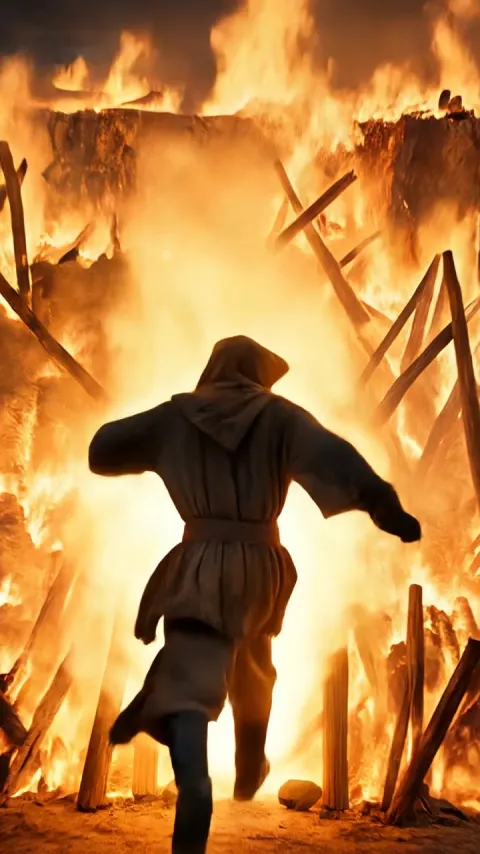
| Dhul-Qarnayn | 18:83-98 | A just ruler travels west and east and builds a wall of iron and copper against Ya'juj and Ma'juj, calling it a mercy from his Lord | Story of Dhul-Qarnayn |
The first story is the one that gives the surah its name. The young men asked their Lord for mercy and right guidance, and He answered with a sleep of centuries:
﴿إِذْ أَوَى ٱلْفِتْيَةُ إِلَى ٱلْكَهْفِ فَقَالُوا۟ رَبَّنَآ ءَاتِنَا مِن لَّدُنكَ رَحْمَةً وَهَيِّئْ لَنَا مِنْ أَمْرِنَا رَشَدًا ١٠﴾(10) [Mention] when the youths retreated to the cave and said, "Our Lord, grant us from Yourself mercy and prepare for us from our affair right guidance."
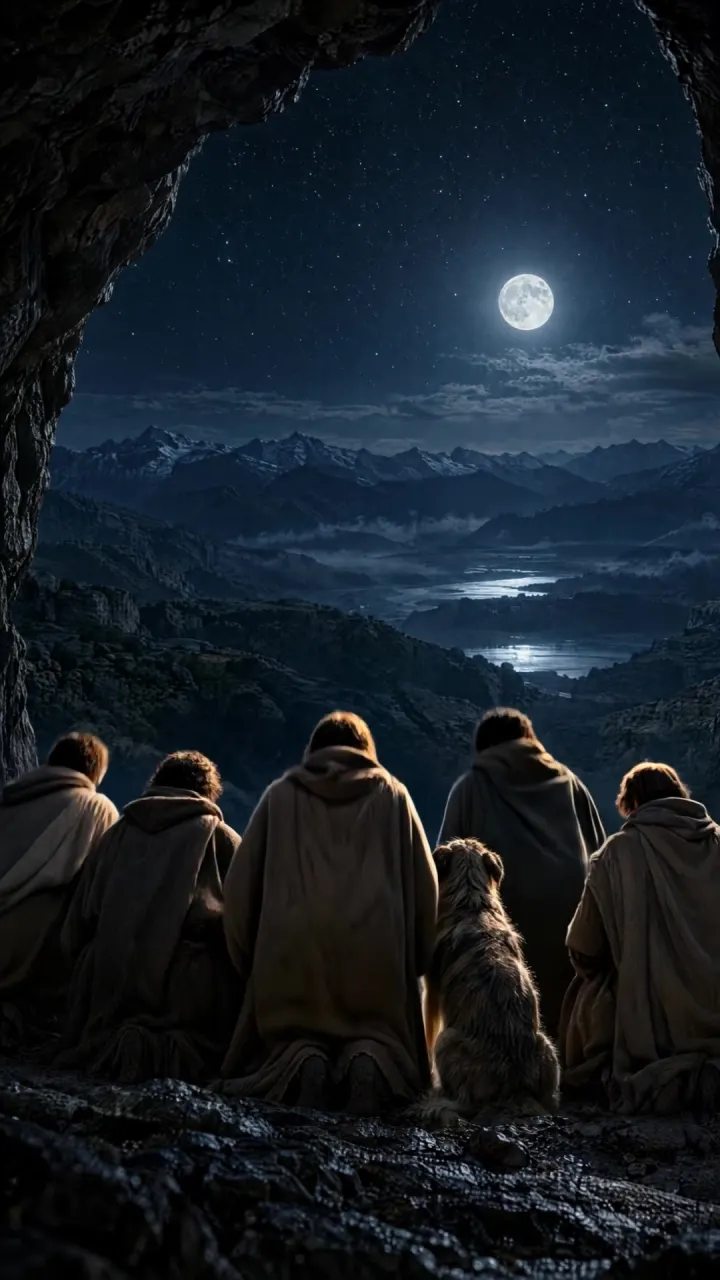
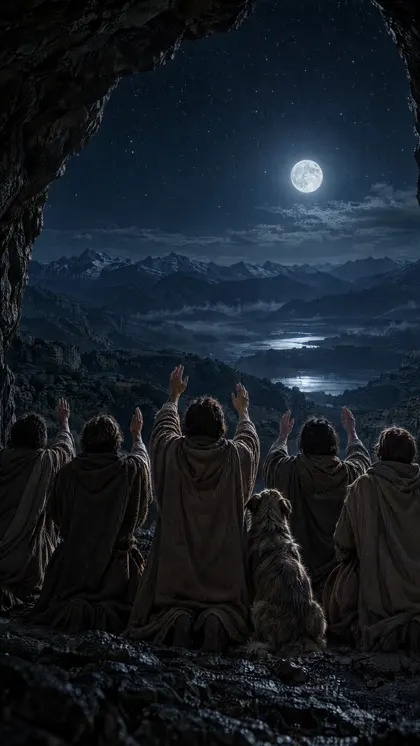 Watch this story in QASASThe Sleepers of the CaveYoung men fled a tyrant king and slept for 309 years.Open on Google Play →
Between the stories come ayat that are among the most quoted in the Quran. The parable of this life as rain that brings vegetation which then dries and scatters in the wind, followed by the reminder that wealth and children are the adornment of this life while the enduring good deeds are better with your Lord (18:45-46). The command to keep yourself patient with those who call on their Lord morning and evening (18:28). And the description of the greatest losers as those whose effort was wasted while they thought they were doing well (18:103-104).
Ayat to pause on each Friday
If you read Surah al-Kahf every week, a few of its ayat are worth slowing down for, because they are addressed to the reader as directly as to anyone in the stories.
The lesson of "in sha Allah." In the middle of the story of the cave, the Quran turns to the reader:
﴿وَلَا تَقُولَنَّ لِشَا۟ىْءٍ إِنِّى فَاعِلٌ ذَٰلِكَ غَدًا ٢٣ إِلَّآ أَن يَشَآءَ ٱللَّهُ ۚ وَٱذْكُر رَّبَّكَ إِذَا نَسِيتَ وَقُلْ عَسَىٰٓ أَن يَهْدِيَنِ رَبِّى لِأَقْرَبَ مِنْ هَـٰذَا رَشَدًا ٢٤﴾(23) And never say of anything, "Indeed, I will do that tomorrow," (24) Except [when adding], "If Allāh wills." And remember your Lord when you forget [it] and say, "Perhaps my Lord will guide me to what is nearer than this to right conduct."
Al-Tafsir al-Muyassar explains: do not say of something you intend to do "I will do it tomorrow" without tying it to the will of Allah by saying "in sha Allah"; remember your Lord when you forget; and ask Him to guide you to what is nearer to right guidance. For someone building a weekly habit, this is the ayah to remember. You intend to read the surah every Friday, in sha Allah.
Patience with the people of dhikr. The ayah that follows the story of the cave describes the company worth keeping:
﴿وَٱصْبِرْ نَفْسَكَ مَعَ ٱلَّذِينَ يَدْعُونَ رَبَّهُم بِٱلْغَدَوٰةِ وَٱلْعَشِىِّ يُرِيدُونَ وَجْهَهُۥ ۖ وَلَا تَعْدُ عَيْنَاكَ عَنْهُمْ تُرِيدُ زِينَةَ ٱلْحَيَوٰةِ ٱلدُّنْيَا ۖ وَلَا تُطِعْ مَنْ أَغْفَلْنَا قَلْبَهُۥ عَن ذِكْرِنَا وَٱتَّبَعَ هَوَىٰهُ وَكَانَ أَمْرُهُۥ فُرُطًا ٢٨﴾(28) And keep yourself patient [by being] with those who call upon their Lord in the morning and the evening, seeking His face [i.e., acceptance]. And let not your eyes pass beyond them, desiring adornments of the worldly life, and do not obey one whose heart We have made heedless of Our remembrance and who follows his desire and whose affair is ever [in] neglect.
Ibn Kathir explains that these are the people who remember Allah in the morning and the evening, rich or poor, strong or weak, who declare His oneness, praise Him and call on Him, and that the believer should not turn away from them toward people of wealth and status. Al-Sa'di draws out the lessons: the company of good people is beneficial even when they are poor; patience in obedience to Allah is the highest kind of patience; and dhikr and du'a at the two ends of the day are recommended because Allah praised those who do them. A Friday reading of al-Kahf, followed by the morning and evening adhkar, fits that description exactly.
The closing ayah. The surah ends with the whole religion in one sentence:
﴿قُلْ إِنَّمَآ أَنَا۠ بَشَرٌ مِّثْلُكُمْ يُوحَىٰٓ إِلَىَّ أَنَّمَآ إِلَـٰهُكُمْ إِلَـٰهٌ وَٰحِدٌ ۖ فَمَن كَانَ يَرْجُوا۟ لِقَآءَ رَبِّهِۦ فَلْيَعْمَلْ عَمَلًا صَـٰلِحًا وَلَا يُشْرِكْ بِعِبَادَةِ رَبِّهِۦٓ أَحَدًۢا ١١٠﴾(110) Say, "I am only a man like you, to whom has been revealed that your god is one God. So whoever would hope for the meeting with his Lord - let him do righteous work and not associate in the worship of his Lord anyone."
Al-Sa'di explains that whoever hopes to meet his Lord should do righteous deeds that follow His law and associate no one with Him in worship, and that this combination of sincerity and following the Shari'ah is the path to everything a person hopes for. The ayah before it reminds us that if the sea were ink for the words of our Lord, the sea would run out before His words did (18:109). It is a fitting ending for a weekly reading: however many Fridays you read this surah, you will not exhaust it.
A Friday routine for Surah al-Kahf that actually sticks
The habit survives when it is tied to something you already do every week. Here is a routine that works for most people, whether Friday is a day off or a working day:
- Set a reminder for Thursday evening. The window opens at Maghrib on Thursday. A reminder at Maghrib, or at Isha, gives you the longest possible runway. QASAS has a built-in Friday al-Kahf reminder; set it once and forget it.
- Pick your slot and protect it. The three slots that work best are after Isha on Thursday, after Fajr on Friday, and after the Jumu'ah prayer. Choose one as your default and the others as backups.
- Read with a recitation and the tafsir open. Follow the Uthmani text while a reciter reads, and when an ayah stops you, open al-Tafsir al-Muyassar under it. In QASAS this is one tap in the mushaf, and your position is bookmarked for you.
- Read the surah in two or three sittings if you must. Nothing in the narrations requires one sitting. If the stories are your natural breakpoints, read the cave and the two gardens in one sitting, and Musa, al-Khidr and Dhul-Qarnayn in the next, all inside the window.
- Memorise the first ten ayat, slowly. One ayah a week is enough. In ten weeks you will carry the ten ayat that the narration in Sahih Muslim ties to protection from the Dajjal.
- Check Maghrib time where you are. If Friday has run away from you, the prayer times screen tells you exactly how long you have left before sunset.
- Close with dhikr. The surah praises those who call on their Lord morning and evening. The 3D tasbih and the adhkar pages are made for this moment.
Give the routine four Fridays. By the fifth, the reminder will feel like a friend tapping you on the shoulder, not a task.
Reading Surah al-Kahf with children
Children can be part of the Friday reading from a very young age if you give them the stories first and the ayat second. Tell them that today is the day the family reads "the surah of the cave", and let them watch the story of the young men who slept 309 years, then the story of the king who built a wall of iron against a corrupting people. When they know the stories, the ayat stop being sounds and become scenes.
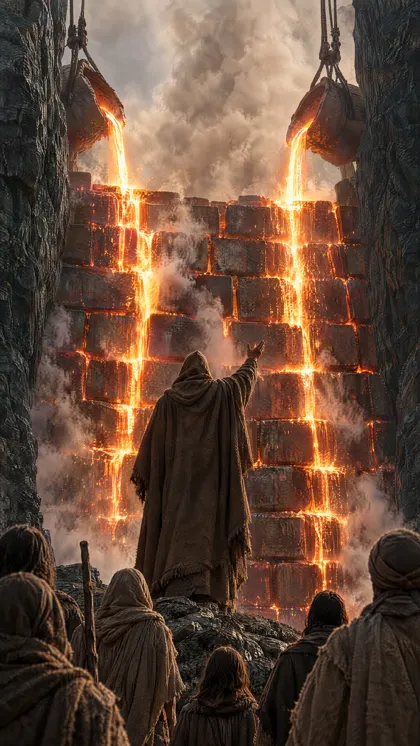 Watch this story in QASASDhul-Qarnayn's WallHow did Dhul-Qarnayn build a wall Gog and Magog could not break?Open on Google Play →
In QASAS, "The Sleepers of the Cave", "Musa and al-Khidr" and "Dhul-Qarnayn's Wall" are three of the app's cinematic stories, each told only from the ayat, with the Quran text on screen, no faces, and a short quiz at the end. Watch one of them with the children on Thursday evening, and on Friday read the matching ayat together in the mushaf. Older children can take one ayah of the first ten to memorise each week, and the whole family can recite them together before Maghrib. For more on telling Quran stories to children, see our guides to the story of Prophet Yunus for kids and the story of Prophet Nuh for kids.
Read Surah al-Kahf in QASAS
QASAS is a free Islamic app with no ads, no account and no tracking, built to make this exact habit easy. Its mushaf shows the full Uthmani text with recitation, al-Tafsir al-Muyassar and Ibn Kathir, translation and word by word, with bookmarks that remember where you stopped and a khatma tracker. Its reminders include one for Surah al-Kahf on Friday, alongside prayer reminders, the morning and evening adhkar, and the Monday and Thursday fasts. Prayer times with the adhan are calculated on your device, so you always know when Thursday's Maghrib opens the window and when Friday's Maghrib closes it; the qibla compass and nearby mosques help you get to the Jumu'ah prayer. And because it is first of all a Quran stories app, the stories of the surah are there to watch and read page by page. It is live on Google Play for Android; the iPhone version is coming soon.
Frequently asked questions
When should Surah al-Kahf be read on Friday?
Any time from sunset on Thursday to sunset on Friday. The scholars count the night of Friday as part of Friday, and Ibn Hajar explained that the narrations mentioning the night and the day each include the other. Reading it early in the window is encouraged so that it is not forgotten.
Why do Muslims read Surah al-Kahf on Friday?
Because of narrations that Ibn Kathir cites at the start of his commentary on the surah, most notably that whoever reads it on Friday is given a light from one Friday to the next (al-Hakim) and that memorising ten ayat from its beginning protects from the Dajjal (Sahih Muslim). The scholars count the Friday reading as recommended, not obligatory.
Is reading Surah al-Kahf on Friday obligatory?
No. It is a recommended act. What the Quran obliges on Friday is the Jumu'ah prayer and listening to the khutbah, as Surah al-Jumu'ah 62:9 commands; reading Surah al-Kahf is a separate, recommended practice attached to the same day.
Can I read Surah al-Kahf on Thursday night?
Yes. Thursday after Maghrib is the night of Friday in the Islamic calendar, and the scholars, including al-Shafi'i as reported by al-Manawi, consider the reading recommended on the day of Friday and its night. Many people read it after Maghrib or Isha on Thursday.
Does listening to Surah al-Kahf count instead of reading it?
Listening is permissible and rewarded as an act of worship, but the narrations mention reading, so whoever can read should read. The practical advice of the fatwa bodies is to follow the text while listening, and for someone who cannot read Arabic to repeat after the reciter and learn gradually.
What if I miss Friday?
The window closes at sunset on Friday, and the scholars do not transfer the reading to Saturday, since nothing in the narrations supports that. Read it at the next Friday, and set a reminder for Thursday evening so that it does not happen again.
Which ten ayat of Surah al-Kahf protect from the Dajjal?
The narration in Sahih Muslim, cited by Ibn Kathir, mentions ten ayat from the beginning of the surah (18:1-10); another wording in the same collection mentions the last ten ayat. The Quran and the tafsir do not describe the Dajjal in the surah itself, so we leave the matter at what the narration says.
How many ayat does Surah al-Kahf have and how long does it take to read?
Surah al-Kahf has 110 ayat. A measured reading takes most people between twenty and forty minutes depending on their speed, and it may be read in more than one sitting inside the Friday window.
Sources
Quran: Surah al-Kahf 18:1-3, 18:9-10, 18:23-24, 18:28, 18:45-46, 18:103-104, 18:109-110; Surah al-Jumu'ah 62:9-10. Tafsir: al-Tafsir al-Muyassar (18:1-3, 18:10, 18:23-24, 18:28, 62:9-10); Tafsir Ibn Kathir (introduction to Surah al-Kahf, 18:1-3, 18:27-28); Taysir al-Karim al-Rahman by al-Sa'di (18:1, 18:28, 18:110). Fiqh positions on timing and listening: Dar al-Ifta al-Misriyyah (fatwa 16151, citing al-Nawawi, Ibn al-Qayyim, Ibn Nujaym and Ibn Abidin), Islam Q&A (answer 10700, citing al-Manawi and Ibn Hajar), Islamweb (fatwa 128830), and the recorded answer of Shaykh Ibn Baz on the time of the reading.
Updated: · By QASAS