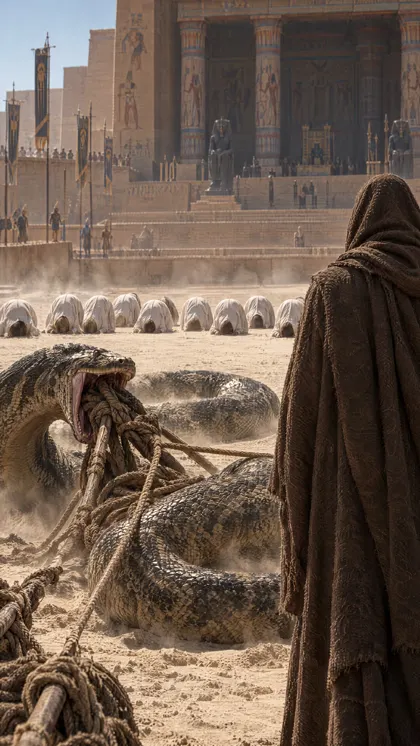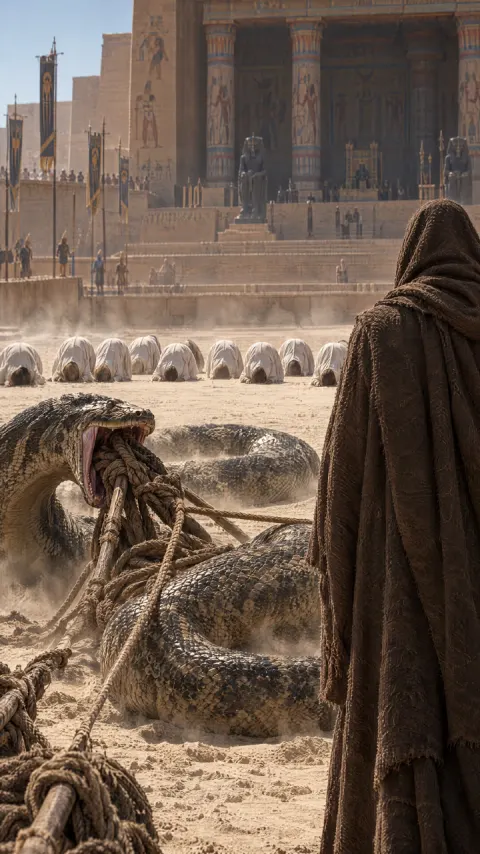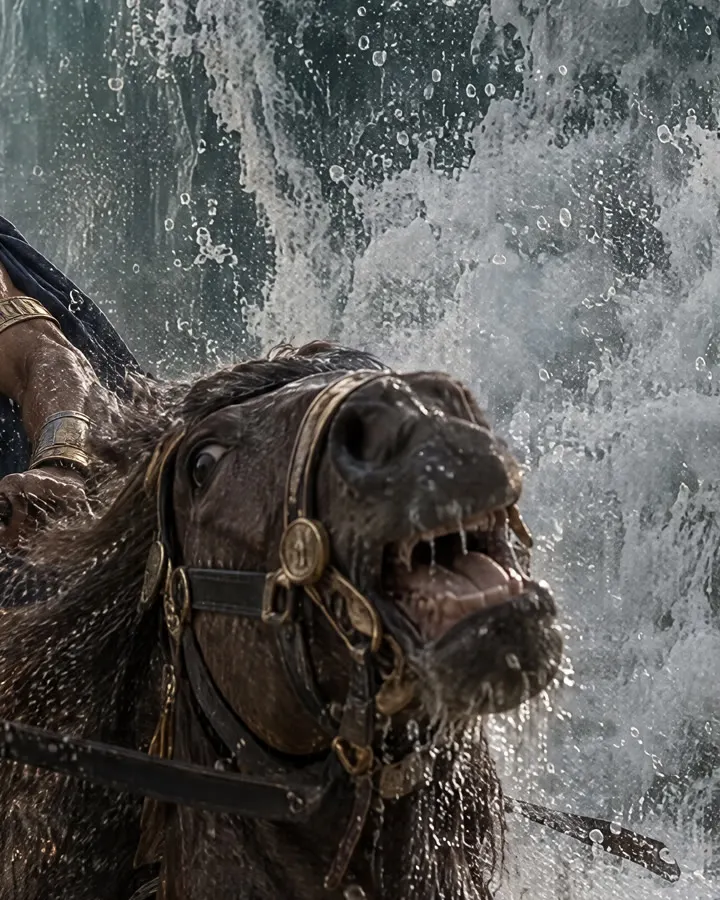
Why was Pharaoh's repentance not accepted? It is one of the most searched questions about the story of Musa (peace be upon him), and it is a fair one. Pharaoh said the words of faith. He said them out loud, in the middle of the sea, with nothing left to gain in this world. Allah is the Most Merciful, and the Quran promises forgiveness again and again. So why did these particular words of faith count for nothing?
The Quran answers the question itself, in the very next ayah, and it states the general rule behind the answer in at least three other surahs. This article walks through those ayat one by one and explains them with the classical tafsir: Ibn Kathir, al-Tabari, al-Sa'di and al-Tafsir al-Muyassar. Where the Quran and the tafsir are silent, we say so.
This article is about one question only. For the whole story, from the baby in the river to the parting of the sea, read our complete story of Musa and Pharaoh.
The short answer: he believed only when the punishment had already arrived
Pharaoh's faith was not accepted because he declared it only when the drowning had overtaken him, after he had disobeyed Allah knowingly for years. Here is the passage in full:
﴿۞ وَجَـٰوَزْنَا بِبَنِىٓ إِسْرَٰٓءِيلَ ٱلْبَحْرَ فَأَتْبَعَهُمْ فِرْعَوْنُ وَجُنُودُهُۥ بَغْيًا وَعَدْوًا ۖ حَتَّىٰٓ إِذَآ أَدْرَكَهُ ٱلْغَرَقُ قَالَ ءَامَنتُ أَنَّهُۥ لَآ إِلَـٰهَ إِلَّا ٱلَّذِىٓ ءَامَنَتْ بِهِۦ بَنُوٓا۟ إِسْرَٰٓءِيلَ وَأَنَا۠ مِنَ ٱلْمُسْلِمِينَ ٩٠ ءَآلْـَٔـٰنَ وَقَدْ عَصَيْتَ قَبْلُ وَكُنتَ مِنَ ٱلْمُفْسِدِينَ ٩١ فَٱلْيَوْمَ نُنَجِّيكَ بِبَدَنِكَ لِتَكُونَ لِمَنْ خَلْفَكَ ءَايَةً ۚ وَإِنَّ كَثِيرًا مِّنَ ٱلنَّاسِ عَنْ ءَايَـٰتِنَا لَغَـٰفِلُونَ ٩٢﴾(90) And We took the Children of Israel across the sea, and Pharaoh and his soldiers pursued them in tyranny and enmity until, when drowning overtook him, he said, "I believe that there is no deity except that in whom the Children of Israel believe, and I am of the Muslims." (91) Now? And you had disobeyed [Him] before and were of the corrupters? (92) So today We will save you in body that you may be to those who succeed you a sign. And indeed, many among the people, of Our signs, are heedless.
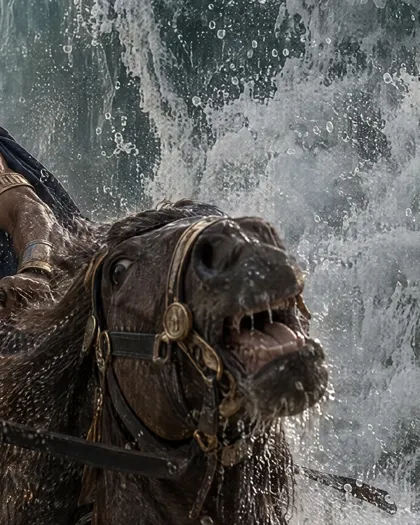
Notice the order of events in the first ayah. Pharaoh and his army pursued the Children of Israel into the sea “in tyranny and enmity”
(Quran 10:90). The Quran does not say "when he saw the sea part" or "when he realised he was wrong". It says “when drowning overtook him”
(Quran 10:90). Only then did he speak.
Al-Tafsir al-Muyassar explains the reply in the second ayah like this: Now, O Pharaoh, when death has come down on you, you confess that you are Allah's servant, when you disobeyed Him before His punishment reached you and were among the corrupters who turned people away from His path. Repentance does not benefit you at the hour of death, when death and the punishment are seen.
Ibn Kathir says the same in fewer words: Pharaoh believed at a time when belief could no longer benefit him. He then quotes the ayah of Surah Ghafir that states the rule, which we come to below.
Al-Sa'di adds the reason behind the rule. When disbelievers reach this state of compulsion, their faith does not help them, because it has become a faith of seeing, like the faith of someone who has already arrived at the Day of Resurrection. The faith that benefits is faith in the unseen, before the matter is witnessed with the eyes.
What exactly did Pharaoh say?
Pharaoh said three things as he drowned: that he believed, that there is no deity except the One the Children of Israel believe in, and that he was of the Muslims. The Quran quotes him exactly: “I believe that there is no deity except that in whom the Children of Israel believe, and I am of the Muslims.”
(Quran 10:90)
Al-Tabari explains the word "I believe" here as "I acknowledge" or "I confess". That is a precise choice of words. Pharaoh was not learning something new in the sea. He was confessing something he had been denying with his tongue while knowing it in his heart, as Musa had told him to his face years earlier:
﴿قَالَ لَقَدْ عَلِمْتَ مَآ أَنزَلَ هَـٰٓؤُلَآءِ إِلَّا رَبُّ ٱلسَّمَـٰوَٰتِ وَٱلْأَرْضِ بَصَآئِرَ وَإِنِّى لَأَظُنُّكَ يَـٰفِرْعَوْنُ مَثْبُورًا ١٠٢﴾(102) [Moses] said, "You have already known that none has sent down these [signs] except the Lord of the heavens and the earth as evidence, and indeed I think, O Pharaoh, that you are destroyed."
Al-Tafsir al-Muyassar explains Musa's words: you have become certain, O Pharaoh, that none sent down these nine signs except the Lord of the heavens and the earth. So the man who said "I believe" in the sea was a man who had already known, had already seen the staff, the hand and the rest of the nine signs, and had answered them with “Indeed I think, O Moses, that you are affected by magic.”
(Quran 17:101)
"Now?" The three charges in the reply
The reply in ayah 91 contains three charges, and each one explains why the faith was rejected: the timing, the past disobedience, and the corruption of others.
"Now?" Al-Tabari reads this as a rebuke in the form of a question. Allah makes Pharaoh see the ugliness of what he did in his life: why did he not confess this when he was in good health, with time ahead of him and the door of repentance open, instead of waiting until the waves rose over him and the agony of death covered him? Al-Sa'di puts it simply: now you believe, at a time when faith does not benefit.
"And you had disobeyed before." This is not a man who had never heard the message. Al-Sa'di explains that Pharaoh had openly confronted Allah with sins, disbelief and denial throughout the years that came before. Al-Muyassar: you disobeyed Him before His punishment came down on you.
"And were of the corrupters." Ibn Kathir explains that the corrupters here are those who led others astray in the land, and he connects it to another ayah about Pharaoh and his chiefs: “And We made them leaders inviting to the Fire, and on the Day of Resurrection they will not be helped.”
(Quran 28:41) Pharaoh's sin was not private. He had said “I am your most exalted lord”
(Quran 79:24) and “So he bluffed his people, and they obeyed him.”
(Quran 43:54) A whole nation had been pulled away from Allah by him.
The rule the Quran states in three other surahs
Pharaoh's case is not an exception invented for him. It is an application of a rule the Quran states openly in Surah Ghafir, Surah an-Nisa and Surah al-An'am.
Surah Ghafir: faith at the sight of the punishment does not benefit
﴿فَلَمَّا رَأَوْا۟ بَأْسَنَا قَالُوٓا۟ ءَامَنَّا بِٱللَّهِ وَحْدَهُۥ وَكَفَرْنَا بِمَا كُنَّا بِهِۦ مُشْرِكِينَ ٨٤ فَلَمْ يَكُ يَنفَعُهُمْ إِيمَـٰنُهُمْ لَمَّا رَأَوْا۟ بَأْسَنَا ۖ سُنَّتَ ٱللَّهِ ٱلَّتِى قَدْ خَلَتْ فِى عِبَادِهِۦ ۖ وَخَسِرَ هُنَالِكَ ٱلْكَـٰفِرُونَ ٨٥﴾(84) And when they saw Our punishment, they said, "We believe in Allāh alone and disbelieve in that which we used to associate with Him." (85) But never did their faith benefit them once they saw Our punishment. [It is] the established way of Allāh which has preceded among His servants. And the disbelievers thereupon lost [all].
This is the ayah Ibn Kathir quotes directly under Pharaoh's story. Al-Tafsir al-Muyassar explains why such faith is useless: it is a faith they were forced into, not a faith of choice and desire, and this is the way of Allah in all nations, that faith does not benefit them once they see the punishment. Al-Sa'di uses the same two words: it is a faith of compulsion, not a faith of choice, and the faith that benefits is the voluntary faith in the unseen, before the signs of punishment appear. The ayah itself calls this “the established way of Allāh which has preceded among His servants”
(Quran 40:85). Pharaoh was treated like every nation before and after him.
Surah an-Nisa: repentance is not for the one who says "now" at death
﴿إِنَّمَا ٱلتَّوْبَةُ عَلَى ٱللَّهِ لِلَّذِينَ يَعْمَلُونَ ٱلسُّوٓءَ بِجَهَـٰلَةٍ ثُمَّ يَتُوبُونَ مِن قَرِيبٍ فَأُو۟لَـٰٓئِكَ يَتُوبُ ٱللَّهُ عَلَيْهِمْ ۗ وَكَانَ ٱللَّهُ عَلِيمًا حَكِيمًا ١٧ وَلَيْسَتِ ٱلتَّوْبَةُ لِلَّذِينَ يَعْمَلُونَ ٱلسَّيِّـَٔاتِ حَتَّىٰٓ إِذَا حَضَرَ أَحَدَهُمُ ٱلْمَوْتُ قَالَ إِنِّى تُبْتُ ٱلْـَٔـٰنَ وَلَا ٱلَّذِينَ يَمُوتُونَ وَهُمْ كُفَّارٌ ۚ أُو۟لَـٰٓئِكَ أَعْتَدْنَا لَهُمْ عَذَابًا أَلِيمًا ١٨﴾(17) The repentance accepted by Allāh is only for those who do wrong in ignorance [or carelessness] and then repent soon [after]. It is those to whom Allāh will turn in forgiveness, and Allāh is ever Knowing and Wise. (18) But repentance is not [accepted] of those who [continue to] do evil deeds up until, when death comes to one of them, he says, "Indeed, I have repented now," or of those who die while they are disbelievers. For them We have prepared a painful punishment.
Read the two ayat together. The first describes the repentance that is accepted: those who do wrong, then “repent soon [after]”
(Quran 4:17). Al-Muyassar explains "soon" as returning to their Lord before witnessing death. The second ayah describes the repentance that is not: a person who keeps sinning “until, when death comes to one of them, he says”
(Quran 4:18) the words “I have repented now”
(Quran 4:18). The word is the same word Allah used to answer Pharaoh: now.
Al-Sa'di calls this a repentance of compulsion, which does not benefit, as opposed to a repentance of choice, which does. Ibn Kathir, explaining this ayah, cites exactly the two ayat of Surah Ghafir quoted above and the ayah of Surah al-An'am quoted below, and adds a short authentic hadith he takes from Musnad Ahmad: Allah accepts the repentance of His servant as long as the veil has not fallen, which Ibn Kathir explains as the soul leaving the body in a state of shirk. Under Surah Ghafir he cites the better-known wording from al-Tirmidhi and others: Allah accepts the repentance of the servant as long as he has not reached the death rattle.
Surah al-An'am: faith that did not exist before the sign
﴿هَلْ يَنظُرُونَ إِلَّآ أَن تَأْتِيَهُمُ ٱلْمَلَـٰٓئِكَةُ أَوْ يَأْتِىَ رَبُّكَ أَوْ يَأْتِىَ بَعْضُ ءَايَـٰتِ رَبِّكَ ۗ يَوْمَ يَأْتِى بَعْضُ ءَايَـٰتِ رَبِّكَ لَا يَنفَعُ نَفْسًا إِيمَـٰنُهَا لَمْ تَكُنْ ءَامَنَتْ مِن قَبْلُ أَوْ كَسَبَتْ فِىٓ إِيمَـٰنِهَا خَيْرًا ۗ قُلِ ٱنتَظِرُوٓا۟ إِنَّا مُنتَظِرُونَ ١٥٨﴾(158) Do they [then] wait for anything except that the angels should come to them or your Lord should come or that there come some of the signs of your Lord? The Day that some of the signs of your Lord will come no soul will benefit from its faith as long as it had not believed before or had earned through its faith some good. Say, "Wait. Indeed, we [also] are waiting."
Here the Quran speaks of a day when some of the signs of your Lord come, and “no soul will benefit from its faith as long as it had not believed before”
(Quran 6:158). Ibn Kathir explains that this is the day the sun rises from the west, one of the signs of the Hour, and that on that day a disbeliever who produces faith for the first time will not have it accepted. Al-Muyassar says the same. The principle is identical to Pharaoh's: faith that only appears when the sign is in front of your eyes is not the faith Allah asked for.
The Quran also tells people plainly when the window is open: “And return [in repentance] to your Lord and submit to Him before the punishment comes upon you; then you will not be helped.”
(Quran 39:54) Before the punishment, not during it.
The du'a of Musa two ayat earlier
The Quran places a du'a of Musa (peace be upon him) immediately before the drowning, and it asks for the very thing that then happened. Two ayat before Pharaoh's last words, we read:
﴿وَقَالَ مُوسَىٰ رَبَّنَآ إِنَّكَ ءَاتَيْتَ فِرْعَوْنَ وَمَلَأَهُۥ زِينَةً وَأَمْوَٰلًا فِى ٱلْحَيَوٰةِ ٱلدُّنْيَا رَبَّنَا لِيُضِلُّوا۟ عَن سَبِيلِكَ ۖ رَبَّنَا ٱطْمِسْ عَلَىٰٓ أَمْوَٰلِهِمْ وَٱشْدُدْ عَلَىٰ قُلُوبِهِمْ فَلَا يُؤْمِنُوا۟ حَتَّىٰ يَرَوُا۟ ٱلْعَذَابَ ٱلْأَلِيمَ ٨٨ قَالَ قَدْ أُجِيبَت دَّعْوَتُكُمَا فَٱسْتَقِيمَا وَلَا تَتَّبِعَآنِّ سَبِيلَ ٱلَّذِينَ لَا يَعْلَمُونَ ٨٩﴾(88) And Moses said, "Our Lord, indeed You have given Pharaoh and his establishment splendor and wealth in the worldly life, our Lord, that they may lead [men] astray from Your way. Our Lord, obliterate their wealth and harden their hearts so that they will not believe until they see the painful punishment." (89) [Allāh] said, "Your supplication has been answered." So remain on a right course and follow not the way of those who do not know."
Musa asked that Pharaoh and his chiefs “will not believe until they see the painful punishment”
(Quran 10:88), and Allah answered: “Your supplication has been answered.”
(Quran 10:89) Al-Tafsir al-Muyassar explains the du'a as: seal their hearts so that they do not open to faith, so that they do not believe until they see the severe, painful punishment. Al-Sa'di explains that Musa said this out of anger for Allah's sake, because they had violated what Allah made sacred, corrupted His servants and blocked His path, and that he said it knowing his Lord fully, and knowing that Allah would punish them for their deeds by closing the door of faith on them.
Then, in ayah 90, Pharaoh believes exactly when the painful punishment seizes him, and not one moment before. The Quran does not say how long passed between the du'a and the sea. Ibn Kathir reports differing views among the early scholars, forty years according to one and forty days according to another, and the Quran itself gives no number, so we do not need one. Al-Muyassar notes one detail about the du'a: Musa was the one praying and Harun was saying amin, which is why the ayah says "your supplication" in the dual form.
You can read more about this and the other prayers of the prophets in our article on the du'as of the prophets in the Quran.

Does the Quran contradict itself? Surah Yunus and Surah an-Nisa
No. Some websites claim that Surah Yunus shows Pharaoh being saved by a last-minute faith while Surah an-Nisa says such faith is never accepted. The claim only works if you stop reading at ayah 90.
Ayah 90 reports what Pharaoh said. Ayah 91 is Allah's reply, and it is a rebuke, not an acceptance: “Now? And you had disobeyed [Him] before and were of the corrupters?”
(Quran 10:91) Nothing in the passage says his faith was accepted, his sins forgiven, or his life spared. Ayah 92 then says “So today We will save you in body”
(Quran 10:92). Al-Tabari explains that the mention of the body makes clear that he was saved as a lifeless body, not alive, placed on raised ground, and al-Muyassar says the same: We will place you on high ground in your body, so that those who denied your destruction can look at you. Surah Yunus and Surah an-Nisa say the same thing in different words: a confession made when death has arrived is not the repentance Allah accepts.
Our pillar article explains the preservation of Pharaoh's body as a sign in more detail, including what the tafsir say and what they do not.
Did Pharaoh die a Muslim? What the Quran says about his end
Pharaoh did not die a believer, and the Quran says so in several places without any ambiguity. It is not left to inference from Surah Yunus alone.
﴿يَقْدُمُ قَوْمَهُۥ يَوْمَ ٱلْقِيَـٰمَةِ فَأَوْرَدَهُمُ ٱلنَّارَ ۖ وَبِئْسَ ٱلْوِرْدُ ٱلْمَوْرُودُ ٩٨ وَأُتْبِعُوا۟ فِى هَـٰذِهِۦ لَعْنَةً وَيَوْمَ ٱلْقِيَـٰمَةِ ۚ بِئْسَ ٱلرِّفْدُ ٱلْمَرْفُودُ ٩٩﴾(98) He will precede his people on the Day of Resurrection and lead them into the Fire; and wretched is the place to which they are led. (99) And they were followed in this [world] with a curse and on the Day of Resurrection. And wretched is the gift which is given.
Surah Hud says Pharaoh will lead his people on the Day of Resurrection “and lead them into the Fire”
(Quran 11:98). Al-Muyassar explains: Pharaoh will go ahead of his people on the Day of Resurrection until he brings them into the Fire. Surah al-Qasas calls Pharaoh and his chiefs “leaders inviting to the Fire”
(Quran 28:41) and says “And We caused to overtake them in this world a curse, and on the Day of Resurrection they will be of the despised.”
(Quran 28:42) Surah Ghafir says of the people of Pharaoh: “Make the people of Pharaoh enter the severest punishment.”
(Quran 40:46)
Surah adh-Dhariyat describes the drowning itself and adds a word about Pharaoh's state as he went into the sea: “So We took him and his soldiers and cast them into the sea, and he was blameworthy.”
(Quran 51:40) Al-Muyassar explains "blameworthy" as having done what he deserved blame for, because of his disbelief, denial and wickedness. The same word is used of Prophet Yunus (peace be upon him) in Surah as-Saffat, but with a completely different ending: Yunus repented inside the fish while he still lived, and Allah accepted it. We explain that difference in our article on why Prophet Yunus left his people.
Surah an-Nazi'at closes the matter: after Pharaoh said “I am your most exalted lord”
(Quran 79:24), “So Allāh seized him in exemplary punishment for the last and the first [transgression].”
(Quran 79:25) Punishment in the Hereafter and in this world. A man whose faith had been accepted would not be described this way.
The report about Jibril and the mud of the sea
Many people have heard that the angel Jibril pushed mud from the sea into Pharaoh's mouth so that he could not complete his words of faith. This detail is not in the Quran. Ibn Kathir and al-Tabari both record reports about it under this ayah. Ibn Kathir notes that al-Tirmidhi graded one chain as good, that other chains stop at an early scholar rather than reaching the Prophet, that one of the narrators in another chain is unknown, and he ends the discussion with "Allah knows best".
This article does not build anything on that report, and it does not need to. The Quran's own words, "Now?", together with the rule of Surah Ghafir and Surah an-Nisa, answer the question completely. Whether or not Jibril did what the report describes, Pharaoh's faith was rejected for the reason Allah Himself stated.
 Watch this story in QASASPharaoh's Last WordsAt the moment of drowning he said: I believe.Open on Google Play →
The answer at a glance
| Question | Answer | Where |
|---|---|---|
| When did Pharaoh say "I believe"? | Only when drowning had overtaken him | 10:90 |
| What was Allah's reply? | "Now? And you had disobeyed before and were of the corrupters" | 10:91 |
| What is the rule? | Faith at the sight of the punishment does not benefit; it is the way of Allah in every nation | 40:84-85 |
| What about repentance at death? | Not accepted from one who sins until death comes and then says "I have repented now" | 4:17-18 |
| Had he known the truth before? | Yes: "You have already known that none has sent down these signs except the Lord of the heavens and the earth" | 17:102 |
| Was it connected to a du'a? | Musa prayed that they would not believe until they saw the painful punishment, and Allah said it was answered | 10:88-89 |
| Was his body saved alive? | No, as a lifeless body, as a sign for those after him | 10:92 |
| What is his end? | He leads his people into the Fire; a curse in this world and the Hereafter | 11:98-99, 28:41-42 |
Lessons from why Pharaoh's repentance was rejected
- Repentance has a deadline, and it is before the punishment, not during it.
“before the punishment comes upon you; then you will not be helped”
(Quran 39:54) is addressed to every reader, not only to Pharaoh. - Faith in the unseen is the faith Allah asks for. Al-Sa'di's distinction between a faith of choice and a faith of seeing is the key to the whole story. Believing when you can still choose otherwise is what gives belief its value.
- Knowing the truth is not the same as submitting to it. Pharaoh knew (17:102) and still said "magic". His last words were a confession of what he had known all along.
- "Now" is the most dangerous word in the story. It appears in Pharaoh's reply (10:91) and in the rejected repentance of Surah an-Nisa (4:18). The person who plans to repent later is planning to say it too.
- Leading others astray is counted separately. The third charge, "and were of the corrupters", reminds us that the harm done to others does not vanish with a private declaration.
- Allah's way is consistent.
“the established way of Allāh which has preceded among His servants”
(Quran 40:85): Pharaoh was not singled out for harshness. The same rule protects the meaning of faith for everyone. - The door is open right now. The opposite of Pharaoh's story is written in the same Quran:
“Except for those who repent, believe and do righteous work. For them Allāh will replace their evil deeds with good.”
(Quran 25:70) The difference is only the timing.
Read and watch it in QASAS
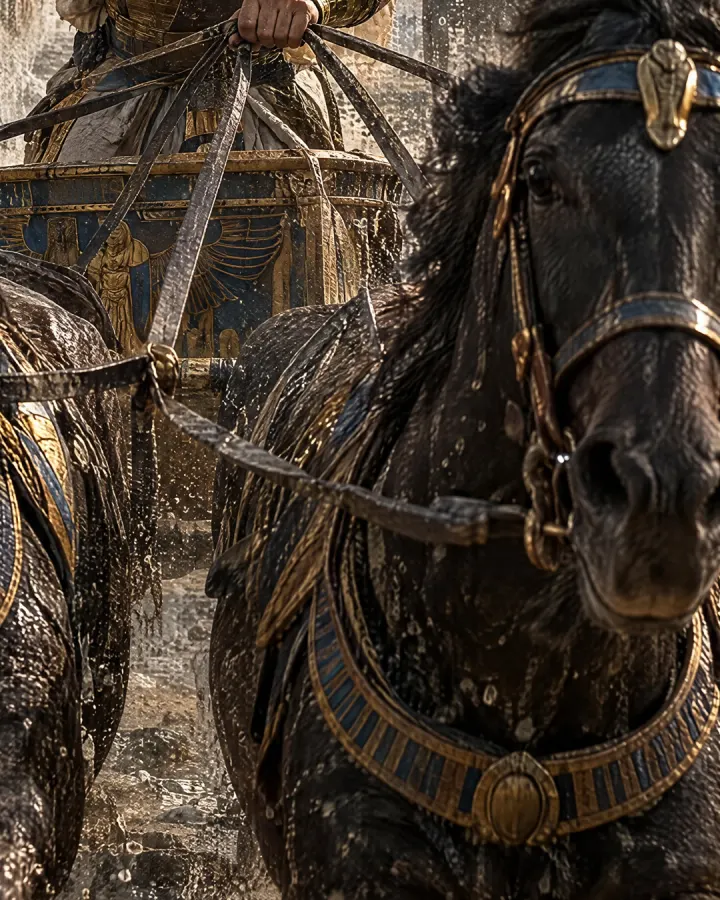
In the QASAS prophet stories app, this moment is a short cinematic story called "Pharaoh's Last Words": the chariots entering the path through the sea, the water closing, the words "I believe" spoken too late, and the crown sinking into the dark. You can watch it as a film or read it page by page, with the ayah of Surah Yunus under the chapter, and then take the quiz with your children. Open the mushaf with tafsir in the same app to read 10:88-92 with al-Muyassar and Ibn Kathir, and the parallel ayat of Surah Ghafir and Surah an-Nisa. QASAS is free, with no ads and no account, on Google Play now, and coming soon to iPhone.
Frequently asked questions
Why was Pharaoh's repentance not accepted?
Because he declared his faith only when drowning had already overtaken him, after years of knowingly rejecting the signs of Allah. The Quran replies to him, “Now? And you had disobeyed [Him] before and were of the corrupters?”
(Quran 10:91), and states the rule elsewhere: faith does not benefit once the punishment is seen (40:85), and repentance is not accepted when death has come (4:18). Ibn Kathir, al-Tabari, al-Sa'di and al-Muyassar all explain the ayah this way.
Did Pharaoh believe before he died?
He spoke the words of faith as he was dying, but the Quran counts it as a confession made too late, not as accepted belief. Al-Tabari explains "I believe" in 10:90 as "I acknowledge", and Musa had already told him “You have already known that none has sent down these [signs] except the Lord of the heavens and the earth”
(Quran 17:102).
What did Pharaoh say when he was drowning?
He said “I believe that there is no deity except that in whom the Children of Israel believe, and I am of the Muslims.”
(Quran 10:90) These are his exact last words as the Quran records them in Surah Yunus, ayah 90, and the next ayah is Allah's reply to them.
What does "Now? And you had disobeyed before" mean?
It is a rebuke in the form of a question. Al-Tabari explains it as: why did you not confess this when you were in good health and the door of repentance was open, instead of now, when the waves have covered you? Al-Sa'di and al-Muyassar add that "you had disobeyed before" refers to his years of open disbelief and denial, and "of the corrupters" to his leading others astray.
Did Pharaoh die a Muslim?
No. The Quran says he will lead his people into the Fire on the Day of Resurrection (11:98), calls him and his chiefs leaders inviting to the Fire who are cursed in this world and despised in the Hereafter (28:41-42), and says Allah seized him in exemplary punishment for the last and the first (79:25). None of this could be said of a man whose faith was accepted.
Is Pharaoh in Hell according to the Quran?
Yes. Surah Hud says he will “lead them into the Fire”
(Quran 11:98) on the Day of Resurrection, and Surah Ghafir says of his people, “Make the people of Pharaoh enter the severest punishment.”
(Quran 40:46) Al-Tafsir al-Muyassar explains that Pharaoh goes ahead of his people until he brings them into the Fire.
Does Surah Yunus contradict Surah an-Nisa about repentance at death?
No. Surah an-Nisa (4:18) says repentance is not accepted from one who says "I have repented now" when death comes, and Surah Yunus shows exactly that: Pharaoh's "I believe" is answered with "Now?" (10:91), not with acceptance. Saving him "in body" (10:92) means his lifeless body was placed on high ground as a sign, as al-Tabari and al-Muyassar explain, not that he was saved alive.
Why did Allah save Pharaoh's body if his faith was rejected?
So that he would be a sign for those after him, as the ayah says: “So today We will save you in body that you may be to those who succeed you a sign.”
(Quran 10:92) Ibn Kathir reports from the early scholars that some of the Children of Israel doubted he had really died, so the sea cast his body onto raised ground where they could see it. His body was saved, not his soul.
Sources
Quran: Surah Yunus 10:88-92, Surah Ghafir 40:84-85 and 40:46, Surah an-Nisa 4:17-18, Surah al-An'am 6:158, Surah az-Zumar 39:54, Surah al-Isra 17:101-102, Surah al-Qasas 28:41-42, Surah Hud 11:98-99, Surah adh-Dhariyat 51:40, Surah an-Nazi'at 79:24-25, Surah az-Zukhruf 43:54, Surah al-Furqan 25:70. Tafsir: al-Tafsir al-Muyassar (all of the above), Tafsir Ibn Kathir (10:89-92, 40:85, 4:18, 6:158), Tafsir al-Tabari (10:90-92), Taysir al-Karim al-Rahman by al-Sa'di (10:88, 10:91, 40:85, 4:18). Quran translation: Saheeh International.
Updated: · By QASAS