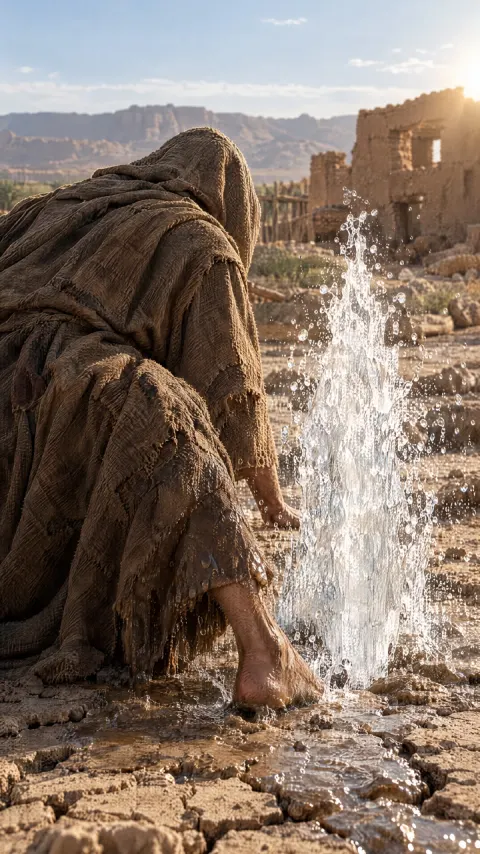
The story of Prophet Ibrahim (peace be upon him), known in English as Abraham, is the story of the man the Quran calls Allah's intimate friend, khalil (4:125), and whom it tells all believers to take as a model (60:4). He stood alone against his father, his city and its king, and he did it not with an army but with questions: what are these statues? Do they hear you when you call? Why do you worship what you carve with your own hands?
The Quran tells his early story in several places, each adding a piece. Surah al-Anbiya' (21:51-73) tells how he broke the idols and was thrown into the fire. Surah al-An'am (6:74-83) records his argument from the star, the moon and the sun. Surah Maryam (19:41-50) preserves his gentle conversation with his father. Surah ash-Shu'ara' (26:69-89) gives his description of his Lord and his du'a. Surah as-Saffat (37:83-99) returns to the idols and the fire with new details, Surah al-'Ankabut (29:16-27) records the moment his people said "kill him or burn him", and Surah al-Baqarah (2:258) tells of the king who argued with him about his Lord.
This article follows that story in order, using only the ayat of the Quran and the explanations of the trusted tafsir scholars: Ibn Kathir, al-Sa'di and al-Tafsir al-Muyassar. Where popular retellings add names, numbers and scenes that the Quran does not give, we say so plainly. The later chapters of Ibrahim's life, the birth of Ismail and Ishaq, the building of the Ka'bah and the sacrifice, are mentioned at the end but deserve their own articles.
Who was Prophet Ibrahim?
Prophet Ibrahim (peace be upon him) was a prophet and messenger whom Allah chose, guided and made a leader for all people. The Quran describes him with a cluster of titles that no other prophet gathers in the same way:
﴿إِنَّ إِبْرَٰهِيمَ كَانَ أُمَّةً قَانِتًا لِّلَّهِ حَنِيفًا وَلَمْ يَكُ مِنَ ٱلْمُشْرِكِينَ ١٢٠ شَاكِرًا لِّأَنْعُمِهِ ۚ ٱجْتَبَىٰهُ وَهَدَىٰهُ إِلَىٰ صِرَٰطٍ مُّسْتَقِيمٍ ١٢١ وَءَاتَيْنَـٰهُ فِى ٱلدُّنْيَا حَسَنَةً ۖ وَإِنَّهُۥ فِى ٱلْـَٔاخِرَةِ لَمِنَ ٱلصَّـٰلِحِينَ ١٢٢ ثُمَّ أَوْحَيْنَآ إِلَيْكَ أَنِ ٱتَّبِعْ مِلَّةَ إِبْرَٰهِيمَ حَنِيفًا ۖ وَمَا كَانَ مِنَ ٱلْمُشْرِكِينَ ١٢٣﴾(120) Indeed, Abraham was a [comprehensive] leader, devoutly obedient to Allāh, inclining toward truth, and he was not of those who associate others with Allāh. (121) [He was] grateful for His favors. He [i.e., Allāh] chose him and guided him to a straight path. (122) And We gave him good in this world, and indeed, in the Hereafter he will be among the righteous. (123) Then We revealed to you, [O Muḥammad], to follow the religion of Abraham, inclining toward truth; and he was not of those who associate with Allāh.
Al-Tafsir al-Muyassar explains that "ummah" here means a leader in goodness, that he was obedient and humble before Allah, that he never leaned away from Islam toward shirk, and that Allah chose him for His message and guided him to the straight path. In Surah an-Nisa' Allah says “And Allāh took Abraham as an intimate friend”
(Quran 4:125). Al-Muyassar notes that this ayah affirms the attribute of khullah, the highest station of love and selection.
Surah Maryam calls him “a man of truth and a prophet”
(Quran 19:41), and Surah Hud describes his character as “forbearing, grieving and [frequently] returning [to Allāh]”
(Quran 11:75). The Quran also tells us that his way is the way every Muslim is asked to follow: “[we follow] the religion of Abraham, inclining toward truth”
(Quran 2:135). Understanding his story, then, is understanding the root of our own religion.
Ibrahim's father Azar and the idols
Prophet Ibrahim grew up among a people who worshipped idols, and his own father was one of them. The Quran names his father in one place:
﴿۞ وَإِذْ قَالَ إِبْرَٰهِيمُ لِأَبِيهِ ءَازَرَ أَتَتَّخِذُ أَصْنَامًا ءَالِهَةً ۖ إِنِّىٓ أَرَىٰكَ وَقَوْمَكَ فِى ضَلَـٰلٍ مُّبِينٍ ٧٤﴾(74) And [mention, O Muḥammad], when Abraham said to his father Āzar, "Do you take idols as deities? Indeed, I see you and your people to be in manifest error."
Al-Tafsir al-Muyassar explains the ayah as the beginning of Ibrahim's argument with his father Azar: are you making idols into gods that you worship instead of Allah? I see you and your people clearly lost from the path of truth. This is the only name the Quran gives for Ibrahim's father, and the Quran gives nothing more about him: no occupation, no age, no description. Popular stories that make him a carver or seller of idols are not in the Quran, and we do not need them.
Surah al-Anbiya' opens its account by telling us where Ibrahim's clarity came from:
﴿۞ وَلَقَدْ ءَاتَيْنَآ إِبْرَٰهِيمَ رُشْدَهُۥ مِن قَبْلُ وَكُنَّا بِهِۦ عَـٰلِمِينَ ٥١ إِذْ قَالَ لِأَبِيهِ وَقَوْمِهِۦ مَا هَـٰذِهِ ٱلتَّمَاثِيلُ ٱلَّتِىٓ أَنتُمْ لَهَا عَـٰكِفُونَ ٥٢ قَالُوا۟ وَجَدْنَآ ءَابَآءَنَا لَهَا عَـٰبِدِينَ ٥٣ قَالَ لَقَدْ كُنتُمْ أَنتُمْ وَءَابَآؤُكُمْ فِى ضَلَـٰلٍ مُّبِينٍ ٥٤ قَالُوٓا۟ أَجِئْتَنَا بِٱلْحَقِّ أَمْ أَنتَ مِنَ ٱللَّـٰعِبِينَ ٥٥ قَالَ بَل رَّبُّكُمْ رَبُّ ٱلسَّمَـٰوَٰتِ وَٱلْأَرْضِ ٱلَّذِى فَطَرَهُنَّ وَأَنَا۠ عَلَىٰ ذَٰلِكُم مِّنَ ٱلشَّـٰهِدِينَ ٥٦﴾(51) And We had certainly given Abraham his sound judgement before, and We were of him well-Knowing (52) When he said to his father and his people, "What are these statues to which you are devoted?" (53) They said, "We found our fathers worshippers of them." (54) He said, "You were certainly, you and your fathers, in manifest error." (55) They said, "Have you come to us with truth, or are you of those who jest?" (56) He said, "[No], rather, your Lord is the Lord of the heavens and the earth who created them, and I, to that, am of those who testify.
Ibn Kathir explains that "rushd" is the guidance and sound judgement Allah gave Ibrahim from an early age, inspiring him with the truth and with the proof against his people, and that "We were of him well-Knowing" means he was worthy of it. When Ibrahim asked what the statues were, his people had only one answer: we found our fathers worshipping them. Ibn Kathir notes that inherited custom was their only evidence. Ibrahim's reply, that they and their fathers were in manifest error, addressed the fathers and the sons together, because both had left the straight path.
Their next question shows how strange his words sounded to them: “Have you come to us with truth, or are you of those who jest?”
(Quran 21:55) They had never heard anything like it. Ibrahim answered with the heart of his message: their Lord is the Lord of the heavens and the earth who created them, and he was a witness to that.
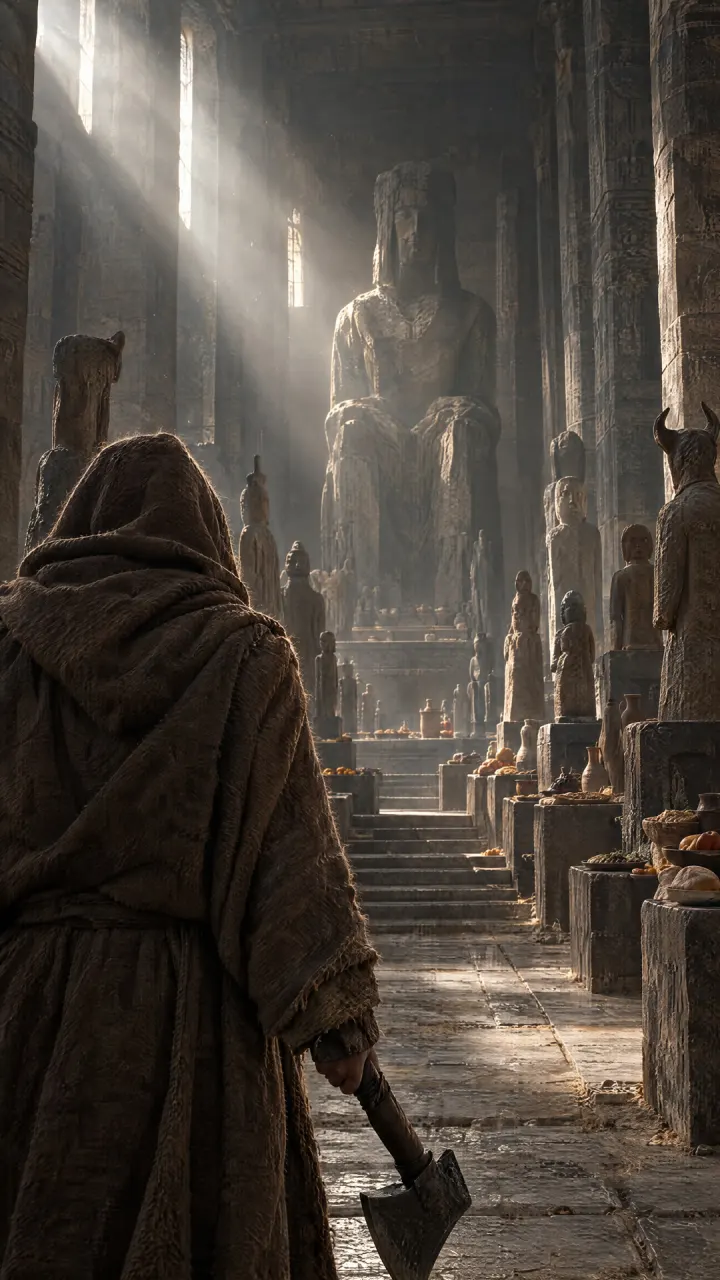
The gentle conversation with his father
Prophet Ibrahim spoke to his father with tenderness, even when his father answered him with a threat. Surah Maryam preserves the conversation:
﴿وَٱذْكُرْ فِى ٱلْكِتَـٰبِ إِبْرَٰهِيمَ ۚ إِنَّهُۥ كَانَ صِدِّيقًا نَّبِيًّا ٤١ إِذْ قَالَ لِأَبِيهِ يَـٰٓأَبَتِ لِمَ تَعْبُدُ مَا لَا يَسْمَعُ وَلَا يُبْصِرُ وَلَا يُغْنِى عَنكَ شَيْـًٔا ٤٢ يَـٰٓأَبَتِ إِنِّى قَدْ جَآءَنِى مِنَ ٱلْعِلْمِ مَا لَمْ يَأْتِكَ فَٱتَّبِعْنِىٓ أَهْدِكَ صِرَٰطًا سَوِيًّا ٤٣ يَـٰٓأَبَتِ لَا تَعْبُدِ ٱلشَّيْطَـٰنَ ۖ إِنَّ ٱلشَّيْطَـٰنَ كَانَ لِلرَّحْمَـٰنِ عَصِيًّا ٤٤ يَـٰٓأَبَتِ إِنِّىٓ أَخَافُ أَن يَمَسَّكَ عَذَابٌ مِّنَ ٱلرَّحْمَـٰنِ فَتَكُونَ لِلشَّيْطَـٰنِ وَلِيًّا ٤٥﴾(41) And mention in the Book [the story of] Abraham. Indeed, he was a man of truth and a prophet. (42) [Mention] when he said to his father, "O my father, why do you worship that which does not hear and does not see and will not benefit you at all? (43) O my father, indeed there has come to me of knowledge that which has not come to you, so follow me; I will guide you to an even path. (44) O my father, do not worship [i.e., obey] Satan. Indeed Satan has ever been, to the Most Merciful, disobedient. (45) O my father, indeed I fear that there will touch you a punishment from the Most Merciful so you would be to Satan a companion [in Hellfire]."
Four times Ibrahim says "ya abati", "O my father". He does not accuse; he asks. Why worship something that cannot hear, cannot see and cannot help you in any way? He tells his father that knowledge has come to him that his father does not have, and offers to guide him to an even path. He warns him against obeying Shaytan, and he says plainly that he fears for him.
His father's answer was cold:
﴿قَالَ أَرَاغِبٌ أَنتَ عَنْ ءَالِهَتِى يَـٰٓإِبْرَٰهِيمُ ۖ لَئِن لَّمْ تَنتَهِ لَأَرْجُمَنَّكَ ۖ وَٱهْجُرْنِى مَلِيًّا ٤٦ قَالَ سَلَـٰمٌ عَلَيْكَ ۖ سَأَسْتَغْفِرُ لَكَ رَبِّىٓ ۖ إِنَّهُۥ كَانَ بِى حَفِيًّا ٤٧ وَأَعْتَزِلُكُمْ وَمَا تَدْعُونَ مِن دُونِ ٱللَّهِ وَأَدْعُوا۟ رَبِّى عَسَىٰٓ أَلَّآ أَكُونَ بِدُعَآءِ رَبِّى شَقِيًّا ٤٨﴾(46) [His father] said, "Have you no desire for my gods, O Abraham? If you do not desist, I will surely stone you, so avoid me a prolonged time." (47) [Abraham] said, "Peace [i.e., safety] will be upon you. I will ask forgiveness for you of my Lord. Indeed, He is ever gracious to me. (48) And I will leave you and those you invoke other than Allāh and will invoke my Lord. I expect that I will not be in invocation to my Lord unhappy [i.e., disappointed]."
Azar threatened to stone him and told him to go away for a long time. Ibrahim's reply is one of the most beautiful lines in the story: “Peace [i.e., safety] will be upon you. I will ask forgiveness for you of my Lord.”
(Quran 19:47) Al-Sa'di explains that Ibrahim answered the way the servants of the Most Merciful answer when the ignorant address them: he did not insult his father or say anything that would hurt him, and "peace be upon you" was a promise that his father would hear no harsh word from him. Al-Sa'di draws from this that calling to Allah on the way of Ibrahim means knowledge, wisdom, gentleness, patience and returning harm with kindness.
Al-Tafsir al-Muyassar adds that Ibrahim promised to ask Allah to guide and forgive his father, and that "He is ever gracious to me" means his Lord is kind and answers him when he calls. Ibrahim kept that promise; in Surah ash-Shu'ara' he prays “And forgive my father. Indeed, he has been of those astray.”
(Quran 26:86) Surah at-Tawbah then tells us how that ended:
﴿وَمَا كَانَ ٱسْتِغْفَارُ إِبْرَٰهِيمَ لِأَبِيهِ إِلَّا عَن مَّوْعِدَةٍ وَعَدَهَآ إِيَّاهُ فَلَمَّا تَبَيَّنَ لَهُۥٓ أَنَّهُۥ عَدُوٌّ لِّلَّهِ تَبَرَّأَ مِنْهُ ۚ إِنَّ إِبْرَٰهِيمَ لَأَوَّٰهٌ حَلِيمٌ ١١٤﴾(114) And the request of forgiveness of Abraham for his father was only because of a promise he had made to him. But when it became apparent to him [i.e., Abraham] that he [i.e., the father] was an enemy to Allāh, he disassociated himself from him. Indeed was Abraham compassionate and patient.
Al-Sa'di explains that Ibrahim kept praying for his father until it became clear that his father was an enemy of Allah who would not benefit from it, and then he stopped and disassociated from him. Surah al-Mumtahanah makes the same point: Ibrahim is an excellent pattern for believers in everything except his prayer for his disbelieving father (60:4), which, al-Muyassar notes, was before it became clear to him that his father was an enemy of Allah.
The star, the moon and the sun
Prophet Ibrahim showed his people that nothing which rises and sets can be a lord. Surah al-An'am records the argument:
﴿وَكَذَٰلِكَ نُرِىٓ إِبْرَٰهِيمَ مَلَكُوتَ ٱلسَّمَـٰوَٰتِ وَٱلْأَرْضِ وَلِيَكُونَ مِنَ ٱلْمُوقِنِينَ ٧٥ فَلَمَّا جَنَّ عَلَيْهِ ٱلَّيْلُ رَءَا كَوْكَبًا ۖ قَالَ هَـٰذَا رَبِّى ۖ فَلَمَّآ أَفَلَ قَالَ لَآ أُحِبُّ ٱلْـَٔافِلِينَ ٧٦ فَلَمَّا رَءَا ٱلْقَمَرَ بَازِغًا قَالَ هَـٰذَا رَبِّى ۖ فَلَمَّآ أَفَلَ قَالَ لَئِن لَّمْ يَهْدِنِى رَبِّى لَأَكُونَنَّ مِنَ ٱلْقَوْمِ ٱلضَّآلِّينَ ٧٧ فَلَمَّا رَءَا ٱلشَّمْسَ بَازِغَةً قَالَ هَـٰذَا رَبِّى هَـٰذَآ أَكْبَرُ ۖ فَلَمَّآ أَفَلَتْ قَالَ يَـٰقَوْمِ إِنِّى بَرِىٓءٌ مِّمَّا تُشْرِكُونَ ٧٨ إِنِّى وَجَّهْتُ وَجْهِىَ لِلَّذِى فَطَرَ ٱلسَّمَـٰوَٰتِ وَٱلْأَرْضَ حَنِيفًا ۖ وَمَآ أَنَا۠ مِنَ ٱلْمُشْرِكِينَ ٧٩﴾(75) And thus did We show Abraham the realm of the heavens and the earth that he would be among the certain [in faith]. (76) So when the night covered him [with darkness], he saw a star. He said, "This is my lord." But when it set, he said, "I like not those that set [i.e., disappear]." (77) And when he saw the moon rising, he said, "This is my lord." But when it set, he said, "Unless my Lord guides me, I will surely be among the people gone astray." (78) And when he saw the sun rising, he said, "This is my lord; this is greater." But when it set, he said, "O my people, indeed I am free from what you associate with Allāh. (79) Indeed, I have turned my face [i.e., self] toward He who created the heavens and the earth, inclining toward truth, and I am not of those who associate others with Allāh."
What was happening here? Al-Tafsir al-Muyassar says that when the night darkened over Ibrahim, he debated his people, who used to worship the stars, in order to prove to them that their religion was false. When he said "this is my lord", he was leading his people step by step toward tawhid, not expressing his own belief. When the star set, he said he does not love gods that disappear. Al-Sa'di agrees: this was a debate (munazarah) with his people to show that these heavenly bodies have no divinity, and he rejects the view that it was Ibrahim's private reasoning as a child, saying there is no evidence for it.
The argument builds. The star sets. The moon rises, brighter, and sets. The sun rises, “this is greater”
(Quran 6:78), and it too sets. Then Ibrahim turns to his people with the conclusion: “O my people, indeed I am free from what you associate with Allāh.”
(Quran 6:78) Al-Muyassar explains the next ayah: I have turned my face in worship to Allah alone, who created the heavens and the earth, leaning away from shirk toward tawhid, and I am not of those who associate others with Him. Al-Sa'di explains "hanif" as devotion to Allah alone, turned toward Him and away from everything else.
"Do they hear you when you call?"
Prophet Ibrahim asked his people to test their own gods with simple questions. Surah ash-Shu'ara' records the exchange:
﴿وَٱتْلُ عَلَيْهِمْ نَبَأَ إِبْرَٰهِيمَ ٦٩ إِذْ قَالَ لِأَبِيهِ وَقَوْمِهِۦ مَا تَعْبُدُونَ ٧٠ قَالُوا۟ نَعْبُدُ أَصْنَامًا فَنَظَلُّ لَهَا عَـٰكِفِينَ ٧١ قَالَ هَلْ يَسْمَعُونَكُمْ إِذْ تَدْعُونَ ٧٢ أَوْ يَنفَعُونَكُمْ أَوْ يَضُرُّونَ ٧٣ قَالُوا۟ بَلْ وَجَدْنَآ ءَابَآءَنَا كَذَٰلِكَ يَفْعَلُونَ ٧٤﴾(69) And recite to them the news of Abraham, (70) When he said to his father and his people, "What do you worship?" (71) They said, "We worship idols and remain to them devoted." (72) He said, "Do they hear you when you supplicate? (73) Or do they benefit you, or do they harm?" (74) They said, "But we found our fathers doing thus."
﴿قَالَ أَفَرَءَيْتُم مَّا كُنتُمْ تَعْبُدُونَ ٧٥ أَنتُمْ وَءَابَآؤُكُمُ ٱلْأَقْدَمُونَ ٧٦ فَإِنَّهُمْ عَدُوٌّ لِّىٓ إِلَّا رَبَّ ٱلْعَـٰلَمِينَ ٧٧﴾(75) He said, "Then do you see what you have been worshipping, (76) You and your ancient forefathers? (77) Indeed, they are enemies to me, except the Lord of the worlds,
Do they hear you when you supplicate? Do they benefit you or harm you? His people had no answer except the same one: we found our fathers doing this. Ibrahim then declared that everything they worshipped was an enemy to him, except the Lord of the worlds. In Surah al-'Ankabut he explained why idols are worshipped at all: “You have only taken, other than Allāh, idols as [a bond of] affection among you in worldly life”
(Quran 29:25), a social bond that will turn into mutual cursing on the Day of Resurrection.
Then Ibrahim described the Lord he worshipped, and his words are a complete lesson in who Allah is:
﴿ٱلَّذِى خَلَقَنِى فَهُوَ يَهْدِينِ ٧٨ وَٱلَّذِى هُوَ يُطْعِمُنِى وَيَسْقِينِ ٧٩ وَإِذَا مَرِضْتُ فَهُوَ يَشْفِينِ ٨٠ وَٱلَّذِى يُمِيتُنِى ثُمَّ يُحْيِينِ ٨١ وَٱلَّذِىٓ أَطْمَعُ أَن يَغْفِرَ لِى خَطِيٓـَٔتِى يَوْمَ ٱلدِّينِ ٨٢﴾(78) Who created me, and He [it is who] guides me. (79) And it is He who feeds me and gives me drink. (80) And when I am ill, it is He who cures me (81) And who will cause me to die and then bring me to life (82) And who I aspire that He will forgive me my sin on the Day of Recompense."
He created me and guides me. He feeds me and gives me drink. When I am ill, He cures me. He will cause me to die and bring me to life again. And I hope He will forgive my sin on the Day of Recompense. Every sentence is something the idols could never do. Ibrahim followed it with a du'a that the Quran preserves for us to use: “My Lord, grant me authority and join me with the righteous.”
(Quran 26:83) He asked for a reputation of honor among later generations (26:84), and the fact that we are reading his story today is the answer to that prayer.
Why did Ibrahim break the idols?
Prophet Ibrahim broke the idols so that his people would see with their own eyes that their gods could not protect themselves, let alone anyone else. He announced his plan first:
﴿وَتَٱللَّهِ لَأَكِيدَنَّ أَصْنَـٰمَكُم بَعْدَ أَن تُوَلُّوا۟ مُدْبِرِينَ ٥٧ فَجَعَلَهُمْ جُذَٰذًا إِلَّا كَبِيرًا لَّهُمْ لَعَلَّهُمْ إِلَيْهِ يَرْجِعُونَ ٥٨﴾(57) And [I swear] by Allāh, I will surely plan against your idols after you have turned and gone away." (58) So he made them into fragments, except a large one among them, that they might return to it [and question].
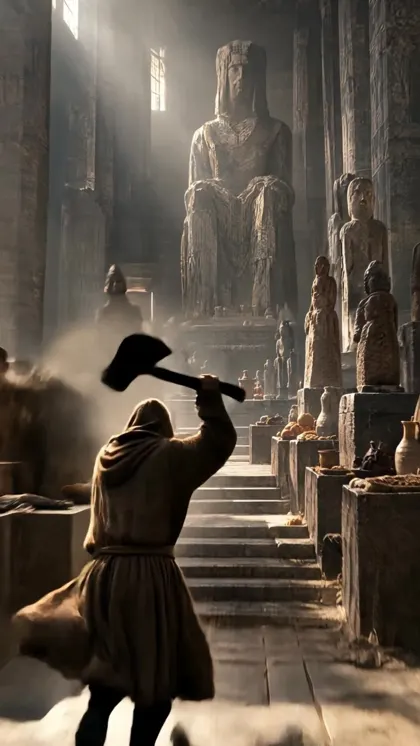
Al-Tafsir al-Muyassar explains: by Allah, I will plot against your idols and break them after you have turned away. Then he smashed them into small pieces and left the biggest one, so that the people would come back to it and ask, and their helplessness and error would be exposed, and the proof would stand against them. Ibn Kathir says the purpose of leaving the largest idol was exactly this, "that they might return to it" and question what had happened.
Surah as-Saffat tells us how he stayed behind when the city went out:
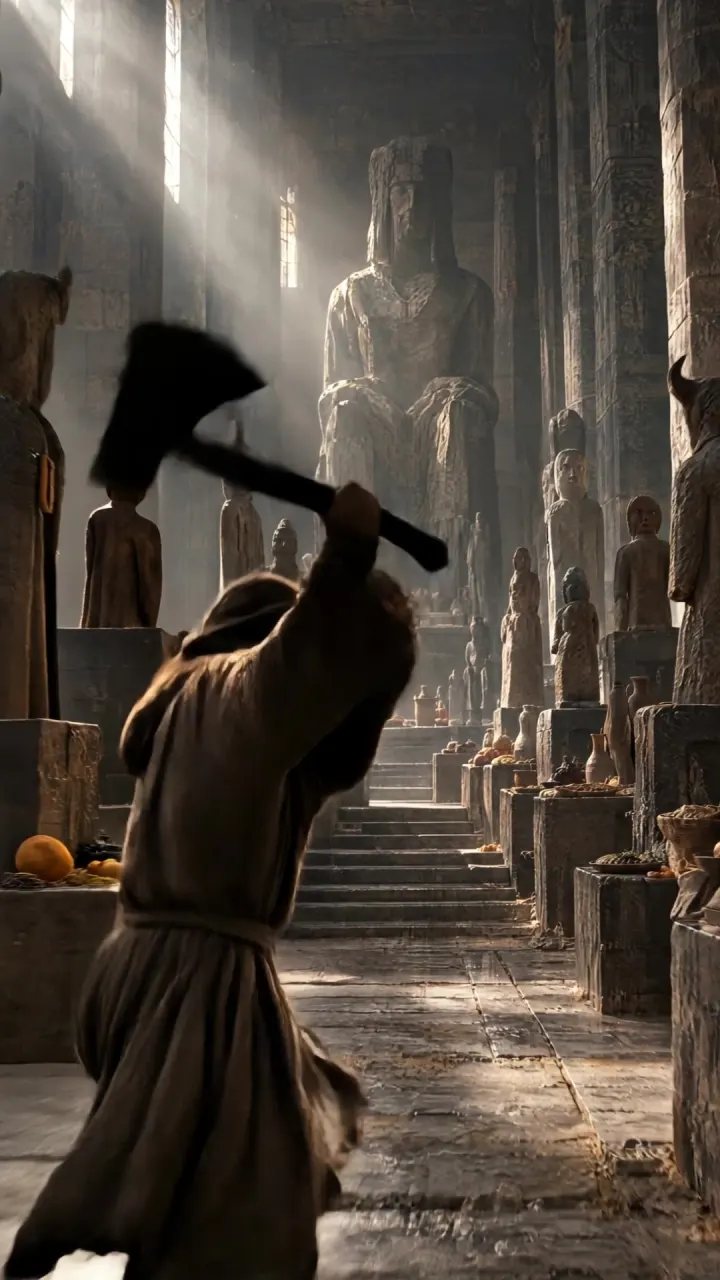
﴿فَنَظَرَ نَظْرَةً فِى ٱلنُّجُومِ ٨٨ فَقَالَ إِنِّى سَقِيمٌ ٨٩ فَتَوَلَّوْا۟ عَنْهُ مُدْبِرِينَ ٩٠ فَرَاغَ إِلَىٰٓ ءَالِهَتِهِمْ فَقَالَ أَلَا تَأْكُلُونَ ٩١ مَا لَكُمْ لَا تَنطِقُونَ ٩٢ فَرَاغَ عَلَيْهِمْ ضَرْبًۢا بِٱلْيَمِينِ ٩٣﴾(88) And he cast a look at the stars. (89) And said, "Indeed, I am [about to be] ill." (90) So they turned away from him, departing. (91) Then he turned to their gods and said, "Do you not eat? (92) What is [wrong] with you that you do not speak?". (93) And he turned upon them a blow with [his] right hand.
Ibrahim cast a glance at the stars and said “Indeed, I am [about to be] ill.”
(Quran 37:89) Al-Muyassar explains that he looked at the stars in the way his people used to, thinking of an excuse not to go out with them to their festival, and that "I am ill" was an indirect expression (ta'rid), not a plain lie. Ibn Kathir says the same: it was said so he could be alone with their idols, and it is not the kind of lie that deserves blame, but a form of indirect speech for a legitimate religious purpose. Ibn Kathir records several readings of "ill": sick at heart from their idol worship, or afflicted in a way that made them leave him behind.
Alone in the temple, Ibrahim first spoke to the idols as if they were what their worshippers claimed: “Do you not eat?”
(Quran 37:91) and “What is [wrong] with you that you do not speak?”
(Quran 37:92) Then he turned on them “a blow with [his] right hand”
(Quran 37:93). Al-Muyassar explains that he struck and broke them with his right hand to prove to his people the error of worshipping them.
 Watch this story in QASASIbrahim and the IdolsHe broke every idol but the biggest one. Why?Open on Google Play →
Where did the idea of a festival come from? The Quran itself says only that they "turned away" (21:57, 37:90). Ibn Kathir cites a report that it was a festival day. The app's episode follows that reading, and it is a reasonable tafsir explanation, but the Quran does not name the occasion, and nothing in the story depends on it.
"Ask them, if they can speak"
When the people returned and found their gods in pieces, Prophet Ibrahim turned their own question back on them. The Quran tells the scene almost line by line:
﴿قَالُوا۟ مَن فَعَلَ هَـٰذَا بِـَٔالِهَتِنَآ إِنَّهُۥ لَمِنَ ٱلظَّـٰلِمِينَ ٥٩ قَالُوا۟ سَمِعْنَا فَتًى يَذْكُرُهُمْ يُقَالُ لَهُۥٓ إِبْرَٰهِيمُ ٦٠ قَالُوا۟ فَأْتُوا۟ بِهِۦ عَلَىٰٓ أَعْيُنِ ٱلنَّاسِ لَعَلَّهُمْ يَشْهَدُونَ ٦١ قَالُوٓا۟ ءَأَنتَ فَعَلْتَ هَـٰذَا بِـَٔالِهَتِنَا يَـٰٓإِبْرَٰهِيمُ ٦٢ قَالَ بَلْ فَعَلَهُۥ كَبِيرُهُمْ هَـٰذَا فَسْـَٔلُوهُمْ إِن كَانُوا۟ يَنطِقُونَ ٦٣﴾(59) They said, "Who has done this to our gods? Indeed, he is of the wrongdoers." (60) They said, "We heard a young man mention them who is called Abraham." (61) They said, "Then bring him before the eyes of the people that they may testify." (62) They said, "Have you done this to our gods, O Abraham?" (63) He said, "Rather, this - the largest of them - did it, so ask them, if they should [be able to] speak."
Who did this to our gods? He must be a wrongdoer! Some remembered a young man who used to speak against the idols, “a young man mention them who is called Abraham”
(Quran 21:60). Al-Tafsir al-Muyassar notes that Ibrahim had already succeeded in exposing their foolishness before their own eyes. They decided to bring him before the people so that everyone could witness what happened next.
His answer is famous: “Rather, this - the largest of them - did it, so ask them, if they should [be able to] speak.”
(Quran 21:63) Al-Muyassar explains that this was an argument meant to expose their stupidity: the big idol broke them, so ask your supposed gods, if they can talk or answer. Ibn Kathir says Ibrahim hoped they would admit of their own accord that these idols could not speak. Ibn Kathir also mentions a report that "it was said" Ibrahim placed the tool he used in the hands of the largest idol; he marks it as a report, not as an established fact, and the Quran does not mention it.
What happened in their hearts is recorded with painful honesty:
﴿فَرَجَعُوٓا۟ إِلَىٰٓ أَنفُسِهِمْ فَقَالُوٓا۟ إِنَّكُمْ أَنتُمُ ٱلظَّـٰلِمُونَ ٦٤ ثُمَّ نُكِسُوا۟ عَلَىٰ رُءُوسِهِمْ لَقَدْ عَلِمْتَ مَا هَـٰٓؤُلَآءِ يَنطِقُونَ ٦٥ قَالَ أَفَتَعْبُدُونَ مِن دُونِ ٱللَّهِ مَا لَا يَنفَعُكُمْ شَيْـًٔا وَلَا يَضُرُّكُمْ ٦٦ أُفٍّ لَّكُمْ وَلِمَا تَعْبُدُونَ مِن دُونِ ٱللَّهِ ۖ أَفَلَا تَعْقِلُونَ ٦٧﴾(64) So they returned to [blaming] themselves and said [to each other], "Indeed, you are the wrongdoers." (65) Then they reversed themselves, [saying], "You have already known that these do not speak!" (66) He said, "Then do you worship instead of Allāh that which does not benefit you at all or harm you? (67) Uff to you and to what you worship instead of Allāh. Then will you not use reason?"
For a moment they looked inward and admitted “Indeed, you are the wrongdoers.”
(Quran 21:64) Then they flipped back: you know these do not speak! That was the admission Ibrahim had been waiting for. If you know they cannot speak, he asked, do you worship, instead of Allah, something that cannot benefit you at all or harm you? “Then will you not use reason?”
(Quran 21:67) In Surah as-Saffat his words are even sharper: “Do you worship that which you [yourselves] carve”
(Quran 37:95), while Allah created you and what you make?
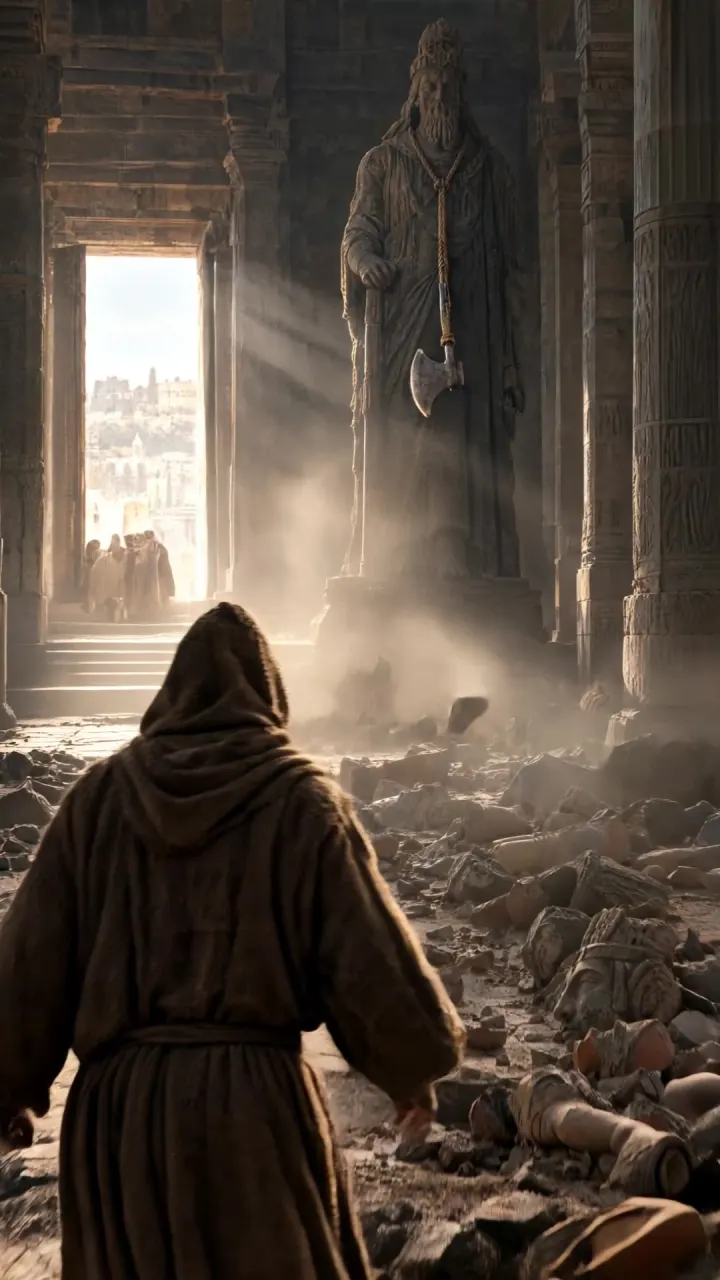
"Burn him!" The fire that did not burn
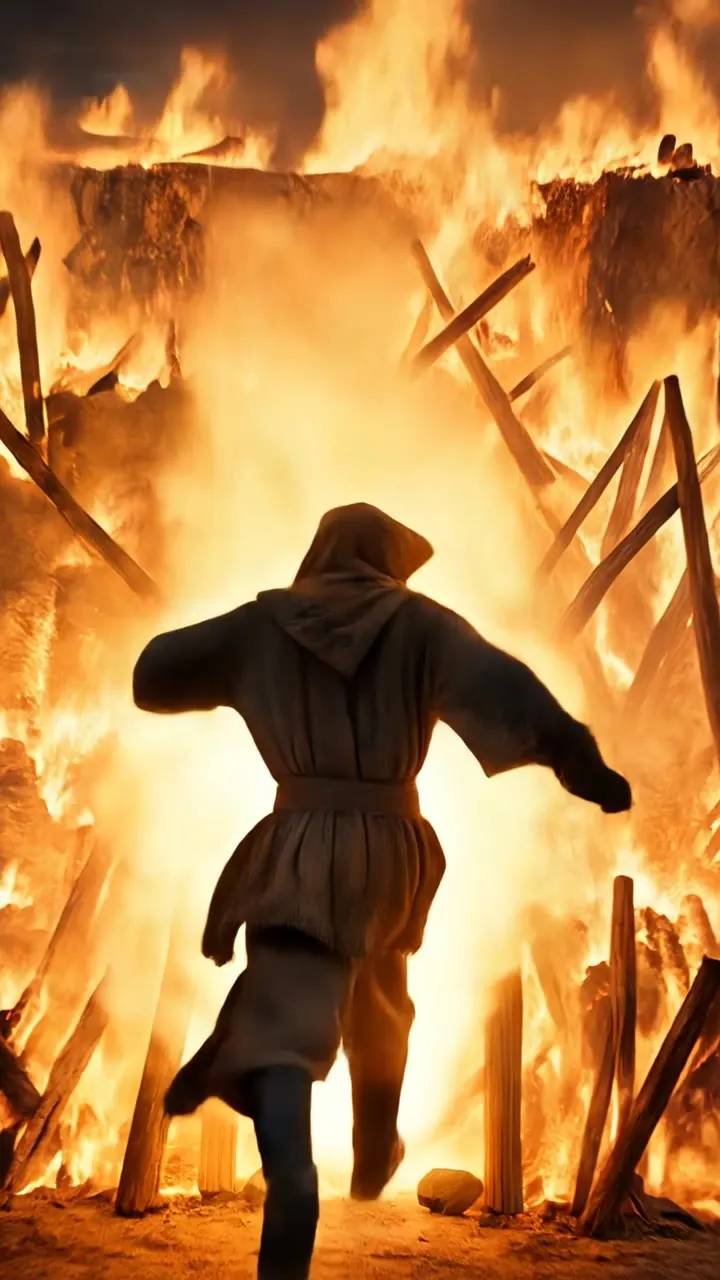
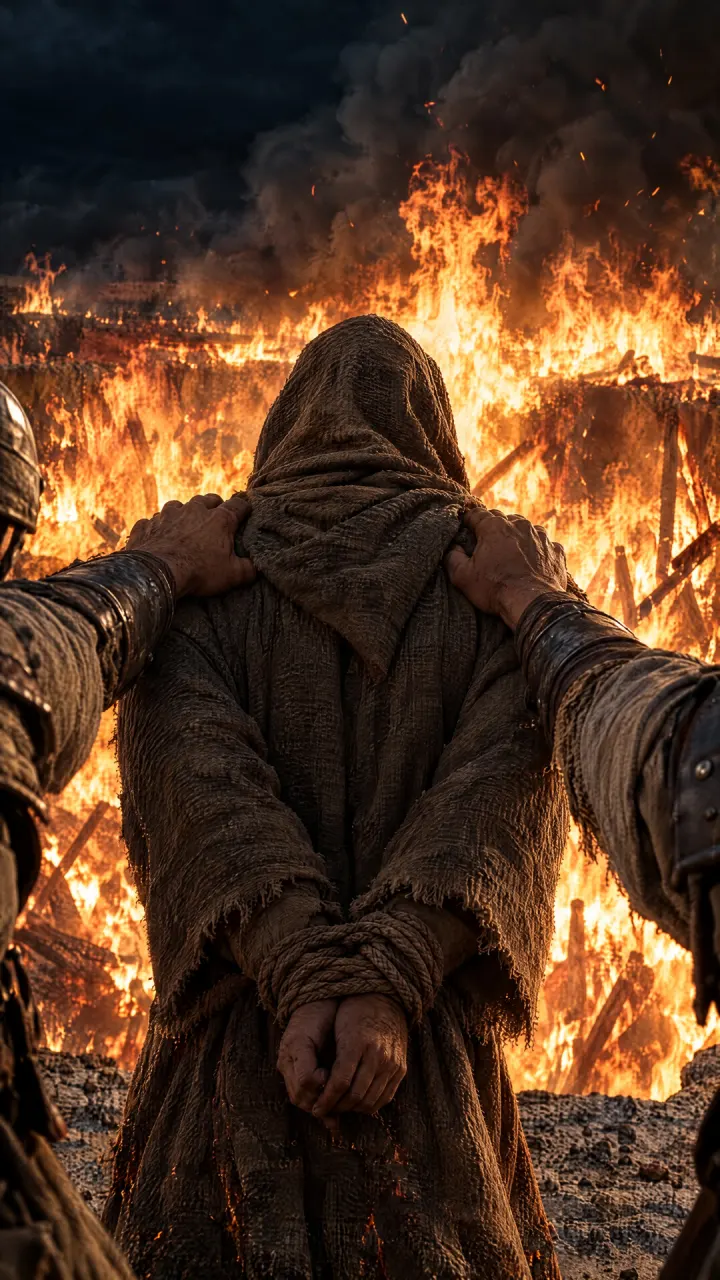
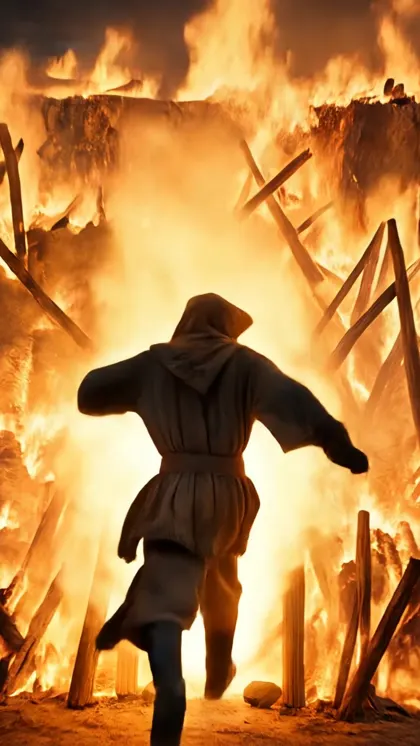
When Prophet Ibrahim's people had no argument left, they turned to force and decided to burn him. The Quran records their decision and Allah's answer in two ayat that every Muslim child knows:
﴿قَالُوا۟ حَرِّقُوهُ وَٱنصُرُوٓا۟ ءَالِهَتَكُمْ إِن كُنتُمْ فَـٰعِلِينَ ٦٨ قُلْنَا يَـٰنَارُ كُونِى بَرْدًا وَسَلَـٰمًا عَلَىٰٓ إِبْرَٰهِيمَ ٦٩ وَأَرَادُوا۟ بِهِۦ كَيْدًا فَجَعَلْنَـٰهُمُ ٱلْأَخْسَرِينَ ٧٠﴾(68) They said, "Burn him and support your gods - if you are to act." (69) We [i.e., Allāh] said, "O fire, be coolness and safety upon Abraham." (70) And they intended for him a plan [i.e., harm], but We made them the greatest losers.
Al-Tafsir al-Muyassar explains: when their argument collapsed and the truth was clear, they turned to their power and said, "Burn Ibrahim in the fire, out of anger for your gods, if you are going to support them." So they lit an enormous fire and threw him in. Then Allah defended His messenger and said to the fire, "Be coolness and safety upon Ibrahim," and no harm or hurt reached him in it. Al-Sa'di adds that Allah came to the aid of His khalil, that the fire obeyed, that no injury touched him and that he felt no distress.
Surah as-Saffat adds how the fire was prepared:
﴿قَالُوا۟ ٱبْنُوا۟ لَهُۥ بُنْيَـٰنًا فَأَلْقُوهُ فِى ٱلْجَحِيمِ ٩٧ فَأَرَادُوا۟ بِهِۦ كَيْدًا فَجَعَلْنَـٰهُمُ ٱلْأَسْفَلِينَ ٩٨﴾(97) They said, "Construct for him a structure [i.e., furnace] and throw him into the burning fire." (98) And they intended for him a plan [i.e., harm], but We made them the most debased.
They built a structure for him, al-Muyassar says, filled it with firewood and then threw him into it. And Surah al-'Ankabut records their words as “Kill him or burn him”
(Quran 29:24), adding that Allah saved him from the fire and that “Indeed in that are signs for a people who believe.”
(Quran 29:24)
 Watch this story in QASASIbrahim and the FireThey threw him into the fire. It did not burn him.Open on Google Play →
What the Quran does not say about the fire
The Quran does not tell us how long the fire was prepared, how long Ibrahim was inside it, how he was thrown in, how old he was or exactly where the city was. Ibn Kathir records a number of reports under 21:69, such as that no fire on earth gave heat that day, that the fire burned only his bonds, or that an angel was with him inside it. He presents them as reports with their chains, not as established facts, and the stories of a catapult and a month of gathering wood are not in the Quran at all. What the Quran gives us is enough: a fire, a command, and a man who walked out of it because Allah made it “coolness and safety”
(Quran 21:69) for him. Anything we add to that is not knowledge.
Why did the fire not burn Ibrahim?
The fire did not burn Ibrahim because Allah, who created fire and gave it the property of burning, commanded it to be cool and safe for him. Fire obeys its Creator, not its nature. Al-Muyassar sums up the whole event in one sentence: Allah defended His messenger. The next ayah tells us the result for his enemies: “they intended for him a plan [i.e., harm], but We made them the greatest losers.”
(Quran 21:70) Al-Sa'di explains "the greatest losers" as losers in this world and the next, in contrast to Allah's khalil and his followers, who are the winners and the successful.
The king who argued with Ibrahim
Prophet Ibrahim also faced a king who argued with him about his Lord because Allah had given him power. Surah al-Baqarah tells it in a single ayah:
﴿أَلَمْ تَرَ إِلَى ٱلَّذِى حَآجَّ إِبْرَٰهِـۧمَ فِى رَبِّهِۦٓ أَنْ ءَاتَىٰهُ ٱللَّهُ ٱلْمُلْكَ إِذْ قَالَ إِبْرَٰهِـۧمُ رَبِّىَ ٱلَّذِى يُحْىِۦ وَيُمِيتُ قَالَ أَنَا۠ أُحْىِۦ وَأُمِيتُ ۖ قَالَ إِبْرَٰهِـۧمُ فَإِنَّ ٱللَّهَ يَأْتِى بِٱلشَّمْسِ مِنَ ٱلْمَشْرِقِ فَأْتِ بِهَا مِنَ ٱلْمَغْرِبِ فَبُهِتَ ٱلَّذِى كَفَرَ ۗ وَٱللَّهُ لَا يَهْدِى ٱلْقَوْمَ ٱلظَّـٰلِمِينَ ٢٥٨﴾(258) Have you not considered the one who argued with Abraham about his Lord [merely] because Allāh had given him kingship? When Abraham said, "My Lord is the one who gives life and causes death," he said, "I give life and cause death." Abraham said, "Indeed, Allāh brings up the sun from the east, so bring it up from the west." So the disbeliever was overwhelmed [by astonishment], and Allāh does not guide the wrongdoing people.
Al-Tafsir al-Muyassar explains the exchange. The king, made arrogant by his kingship, asked Ibrahim: who is your Lord? Ibrahim said: my Lord is the One who gives life and causes death, who alone brings creatures to life and takes life from them. The king replied, "I give life and cause death," meaning that he could kill whom he wished and spare whom he wished. So Ibrahim moved to an argument the king could not twist: Allah brings the sun from the east, so bring it from the west. The king was left speechless, and his argument collapsed.
Ibn Kathir reports from Mujahid and others that this king was Nimrod (Namrud), king of Babylon, and he gives a second genealogy introduced with "it is said". The Quran itself does not name him, and it does not say whether this debate took place before or after the fire. The name is a tafsir report, and the lesson does not depend on it: a man with power thought power made him a god, and one question from Ibrahim showed how small that power was.
Hijrah to the blessed land, and the gift of Ishaq and Ya'qub
After the fire, Allah delivered Prophet Ibrahim and Lut to the land He had blessed. Surah al-Anbiya' continues:
﴿وَنَجَّيْنَـٰهُ وَلُوطًا إِلَى ٱلْأَرْضِ ٱلَّتِى بَـٰرَكْنَا فِيهَا لِلْعَـٰلَمِينَ ٧١ وَوَهَبْنَا لَهُۥٓ إِسْحَـٰقَ وَيَعْقُوبَ نَافِلَةً ۖ وَكُلًّا جَعَلْنَا صَـٰلِحِينَ ٧٢ وَجَعَلْنَـٰهُمْ أَئِمَّةً يَهْدُونَ بِأَمْرِنَا وَأَوْحَيْنَآ إِلَيْهِمْ فِعْلَ ٱلْخَيْرَٰتِ وَإِقَامَ ٱلصَّلَوٰةِ وَإِيتَآءَ ٱلزَّكَوٰةِ ۖ وَكَانُوا۟ لَنَا عَـٰبِدِينَ ٧٣﴾(71) And We delivered him and Lot to the land which We had blessed for the worlds [i.e., peoples]. (72) And We gave him Isaac and Jacob in addition, and all [of them] We made righteous. (73) And We made them leaders guiding by Our command. And We inspired to them the doing of good deeds, establishment of prayer, and giving of zakāh; and they were worshippers of Us.
Al-Tafsir al-Muyassar explains that Allah saved Ibrahim and Lut, who had believed in him, from Iraq and brought them to the land of ash-Sham, which Allah blessed with abundant good and in which most of the prophets lived. Surah al-'Ankabut records Ibrahim's own words at that moment: “Indeed, I will emigrate to [the service of] my Lord. Indeed, He is the Exalted in Might, the Wise.”
(Quran 29:26) Al-Muyassar notes that Lut believed in Ibrahim and followed his religion. In Surah as-Saffat Ibrahim says “Indeed, I will go to [where I am ordered by] my Lord; He will guide me.”
(Quran 37:99)
Then Allah gave him what every believer who leaves everything for Allah hopes for: “And We gave him Isaac and Jacob in addition, and all [of them] We made righteous.”
(Quran 21:72) Surah Maryam connects the gift directly to the separation from his people: “So when he had left them and those they worshipped other than Allāh, We gave him Isaac and Jacob”
(Quran 19:49). Prophethood and scripture were placed in his descendants (29:27), which is why the Quran calls so many later prophets his children, including Ya'qub and Yusuf, whose story is told in our article on the story of Prophet Yusuf.
The later story of Ibrahim, briefly
The Quran tells several more chapters of Prophet Ibrahim's life, each deserving its own article. The angels visited him as honored guests and gave him good tidings of a learned son when he and his wife were old (11:69-73, 15:51-56, 51:24-30), and he pleaded with them for the people of Lut (11:74-76). Allah tested him with commands and he fulfilled them, so Allah made him a leader for all people (2:124). He raised the foundations of the Ka'bah with his son Ismail, praying “Our Lord, accept [this] from us”
(Quran 2:127), and he made du'a for Makkah and for his descendants near the sacred House (14:35-37). He was commanded in a dream to sacrifice his son, and both father and son submitted; we tell that part in our article on patience in the stories of the prophets. He asked Allah to show him how He gives life to the dead, and was given the sign of the four birds (2:260).
Running through all of it is one word. When his Lord said to him "Submit", he said “I have submitted [in Islām] to the Lord of the worlds.”
(Quran 2:131)
Timeline of the story of Ibrahim, the idols and the fire
| Stage | What happens | Ayat |
|---|---|---|
| Guidance | Allah gives Ibrahim sound judgement while young | 21:51 |
| The question | He asks his father and people what the statues are | 21:52-56, 26:70-74 |
| His father | Gentle call to Azar; the threat of stoning; "peace be upon you" | 6:74, 19:41-48 |
| Star, moon, sun | Debate with the star-worshippers; "I am free from what you associate" | 6:75-79 |
| Describing his Lord | Who created, feeds, cures, gives death and life, forgives | 26:75-82 |
| The oath | "I will plan against your idols after you have gone" | 21:57 |
| Staying behind | He looks at the stars and says "I am ill" | 37:88-90 |
| Breaking the idols | He smashes them, except the biggest, with his right hand | 21:58, 37:91-93 |
| The trial | "Who did this?" "Ask them, if they can speak" | 21:59-67, 37:94-96 |
| The fire | "Burn him"; "O fire, be coolness and safety" | 21:68-70, 37:97-98, 29:24 |
| The king | "My Lord gives life and death"; the sun from the west | 2:258 |
| Hijrah | Delivered with Lut to the blessed land | 21:71, 29:26, 37:99 |
| The gift | Ishaq and Ya'qub; prophethood in his descendants | 21:72-73, 19:49, 29:27 |
Lessons from the story of Prophet Ibrahim
- Truth is not inherited; it is sought. His people's only argument was "we found our fathers doing this" (21:53, 26:74). Ibn Kathir notes this was their only evidence. A tradition is not true because it is old.
- Ask questions. Ibrahim's whole method was questions: what are these? Do they hear you? Why worship what cannot see? The Quran calls it
“Our [conclusive] argument which We gave Abraham”
(Quran 6:83). - Be gentle with parents, even in disagreement. Four times "O my father", and "peace be upon you" in answer to a threat (19:42-47). Al-Sa'di draws the manners of da'wah from this scene.
- Nothing that sets can be a lord. The star, the moon and the sun argument (6:76-78) is a lesson in using the created world to point to the Creator.
- Prove it, do not only say it. Ibrahim did not only tell his people the idols were powerless; he let them see it (21:58, 21:63).
- Fear Allah alone.
“So which of the two parties has more right to security”
(Quran 6:81), he asked: the one who worships the Creator, or the one who worships what cannot harm or help? - Fire obeys its Creator. The most famous lesson in the story: Allah's command overrules every natural cause (21:69). Al-Muyassar: Allah defended His messenger.
- The plotter becomes the loser. They wanted to make an example of him and became the example (21:70, 37:98).
- Leaving for Allah is never a loss. After the hijrah came Ishaq and Ya'qub and a line of prophets (19:49, 21:72).
- A sound heart is the goal. Ibrahim came to his Lord
“with a sound heart”
(Quran 37:84), and his du'a asks to be among those who come to Allah“with a sound heart”
(Quran 26:89).
How to tell the story of Ibrahim to children
Children love the story of Prophet Ibrahim because it has a clear question at its heart: can a statue be a god? Start there. Ask your child: if I make something with my hands, can it hear me? Can it help me? Then tell them about the young man who asked his whole city that question.
Keep the three scenes the Quran gives. First, Ibrahim asks his father and his people what the statues are, and they can only say "our fathers did it". Second, when everyone has left, he breaks the idols and leaves the biggest one, so that when the people come back he can say: ask it, if it can speak. Third, the fire: they build it, they throw him in, and Allah tells the fire to be cool and safe, and it obeys.
Keep to what the Quran says. There is no need for a catapult, a king's name or a number of days in the fire. If your child asks "how long was he in the fire?", the honest answer is that the Quran does not tell us, and that the important thing is that it did not burn him because Allah commanded it.
End with the moral in one sentence: Ibrahim trusted Allah alone, and Allah protected him. The QASAS app has two short episodes, "Ibrahim and the Idols" and "Ibrahim and the Fire", that children can watch and then read page by page, each with the ayah on screen and a short quiz at the end. For another story with the same lesson of trust in Allah, see the story of Prophet Nuh and the Ark.
Read and watch the story of Ibrahim in QASAS
QASAS is a free prophet stories app with no ads and no account. The two Ibrahim episodes, "Ibrahim and the Idols" and "Ibrahim and the Fire", are told only from the ayat above, with face-free scenes and the Quran text on screen, and each can be watched or read page by page with a quiz. The app also has a full mushaf with recitation, al-Muyassar and Ibn Kathir tafsir, translation and word by word, so you can open Surah al-Anbiya' 51-73 and read the tafsir of every ayah in this article yourself. Prayer times with adhan, a qibla compass, a 3D tasbih and adhkar are all included. It is live on Google Play, and the iPhone version is coming soon.
Frequently asked questions
Why did Prophet Ibrahim break the idols?
He broke them to show his people that their gods could not even protect themselves, so that the proof would stand against them. Al-Tafsir al-Muyassar explains 21:58: he left the biggest idol so that the people would come back to it and ask, and their helplessness and error would be exposed.
Why did the fire not burn Prophet Ibrahim?
Because Allah commanded it: "O fire, be coolness and safety upon Abraham" (21:69). Fire obeys its Creator, not its nature. Al-Muyassar explains that Allah defended His messenger and that no harm or hurt reached Ibrahim in it. The Quran does not say how long he was inside the fire.
Who was the father of Prophet Ibrahim?
The Quran names him Azar in Surah al-An'am 6:74, where Ibrahim asks him, "Do you take idols as deities?" The Quran gives no other details about him. Ibrahim prayed for his forgiveness until it became clear that his father was an enemy of Allah, then he disassociated from him (9:114).
Did Prophet Ibrahim really think the star, the moon and the sun were his lord?
No. Al-Tafsir al-Muyassar and al-Sa'di both explain 6:76-78 as a debate with his people, who worshipped the heavenly bodies. He said "this is my lord" to lead them step by step to the conclusion that nothing which sets can be a lord. Al-Sa'di rejects the view that it was his own childhood reasoning, saying there is no evidence for it.
Was Prophet Ibrahim lying when he said "I am ill"?
No. Ibn Kathir and al-Muyassar explain 37:89 as an indirect expression (ta'rid) used for a legitimate religious purpose, not a lie that deserves blame. He said it so he could stay behind and break the idols.
Who was the king who argued with Prophet Ibrahim?
The Quran does not name him; it only says he argued because Allah had given him kingship (2:258). Ibn Kathir reports from Mujahid and others that he was Nimrod, king of Babylon. The lesson does not depend on the name: the king claimed to give life and death, and Ibrahim silenced him by asking him to bring the sun from the west.
Where did Prophet Ibrahim go after the fire?
Allah delivered him and Lut "to the land which We had blessed for the worlds" (21:71). Al-Tafsir al-Muyassar explains this as the land of ash-Sham, where Allah placed abundant blessing and where most of the prophets lived. There Allah gave him Ishaq and Ya'qub (21:72).
Why is Prophet Ibrahim called Khalil Allah?
Because the Quran says, "And Allah took Abraham as an intimate friend" (4:125). Al-Muyassar explains that this affirms the attribute of khullah, the highest station of love and selection, and that Allah chose Ibrahim from among all His creation.
Sources
Quran: Surah al-Anbiya' 21:51-73, Surah al-An'am 6:74-83, Surah Maryam 19:41-50, Surah ash-Shu'ara' 26:69-89, Surah as-Saffat 37:83-99, Surah al-'Ankabut 29:16-27, Surah al-Baqarah 2:124-131, 2:258, 2:260, Surah at-Tawbah 9:114, Surah an-Nahl 16:120-123, Surah an-Nisa' 4:125, Surah Hud 11:69-76, Surah al-Mumtahanah 60:4. Tafsir: al-Tafsir al-Muyassar; Tafsir Ibn Kathir (21:51-70, 37:89, 2:258); Taysir al-Karim al-Rahman by al-Sa'di (6:76-79, 19:47, 21:68-70).
Updated: · By QASAS