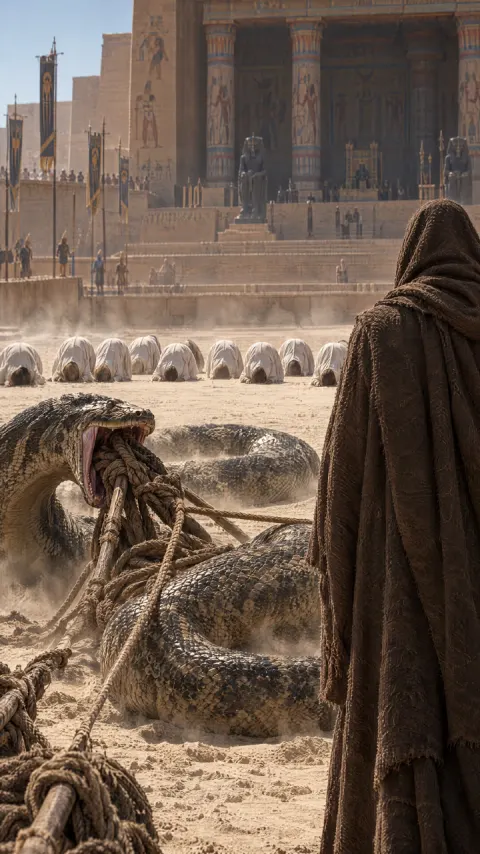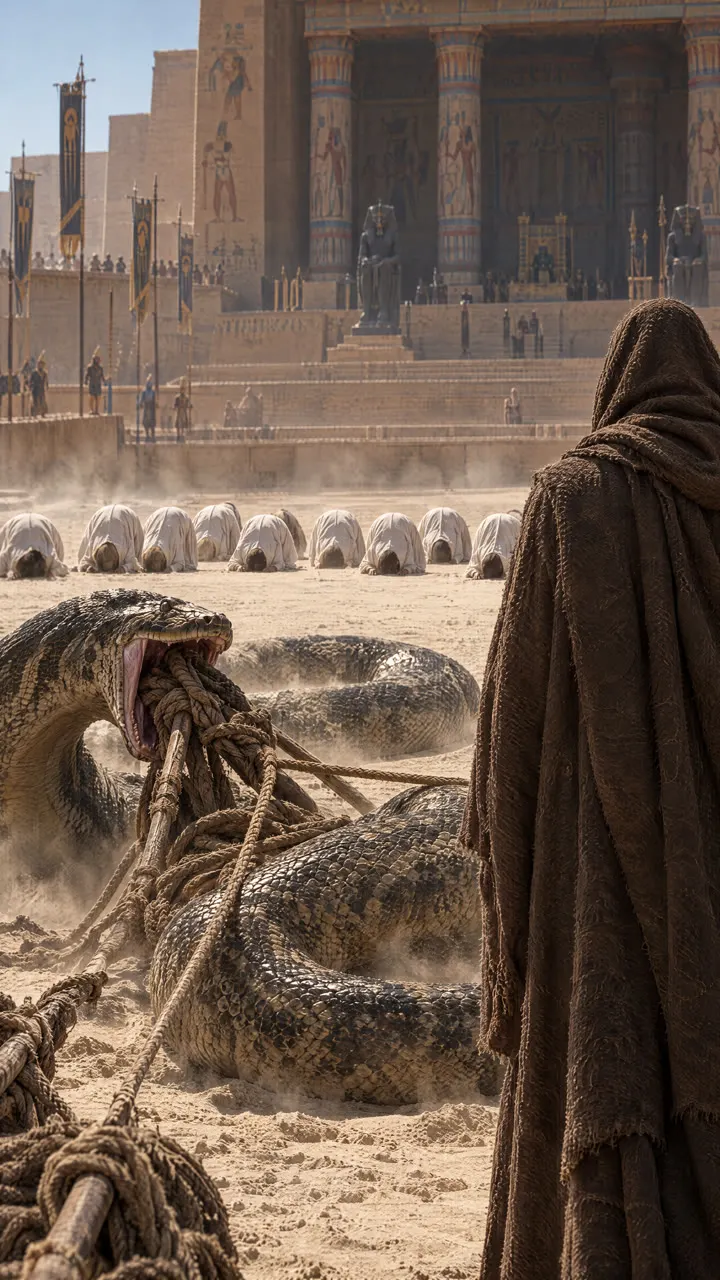
Rabbi ishrah li sadri, the words of “My Lord, expand [i.e., relax] for me my breast”
(Quran 20:25), is one of the most loved du'as in the Quran. Many Muslims say it before an exam, a job interview, a hard conversation or any task that feels too big for them. It is also searched as "rabbish rahli sadri", which is simply another way of spelling the same words.
But before it became a du'a on people's lips, it was the prayer of Prophet Musa (peace be upon him) at one of the heaviest moments of his life. Allah had just spoken to him and commanded him to go to Pharaoh, the tyrant who claimed to be a god. Musa did not refuse, and he did not ask to be excused. He asked for exactly what he needed to carry the mission.
This article explains the du'a phrase by phrase. Every quotation of the Quran comes straight from the text, and every explanation is credited to the classical tafsir it comes from: Ibn Kathir, al-Tabari, al-Sa'di and al-Tafsir al-Muyassar. For the full story around it, see our complete story of Musa and Pharaoh.
Where is "Rabbi ishrah li sadri" in the Quran?
"Rabbi ishrah li sadri" is in Surah Taha, the 20th surah of the Quran, ayat 25 to 28. These four short ayat are the heart of the du'a, and the request continues to ayah 35.
﴿قَالَ رَبِّ ٱشْرَحْ لِى صَدْرِى ٢٥ وَيَسِّرْ لِىٓ أَمْرِى ٢٦ وَٱحْلُلْ عُقْدَةً مِّن لِّسَانِى ٢٧ يَفْقَهُوا۟ قَوْلِى ٢٨﴾(25) [Moses] said, "My Lord, expand [i.e., relax] for me my breast [with assurance] (26) And ease for me my task (27) And untie the knot from my tongue (28) That they may understand my speech.
Surah Taha is a Makkan surah, and a large part of it tells the story of Musa. The du'a comes right after the scene at the sacred valley, where Allah called Musa, showed him the signs of the staff and the shining hand, and gave him his mission.
The same moment is described from a different angle in Surah ash-Shu'ara and Surah al-Qasas. Reading the three passages together helps us understand why Musa asked for these four things in particular, as we will see below.
When did Musa make this du'a?
Musa made this du'a immediately after Allah commanded him: “Go to Pharaoh. Indeed, he has transgressed”
(Quran 20:24). It was his first response to being given the message.
Ibn Kathir explains how heavy that command was. Pharaoh was the most powerful and arrogant ruler of his time, a king who told his people he knew of no god for them other than himself. And Musa had a personal history with him: he had grown up in Pharaoh's own household, then fled Egypt after a man was killed, and had lived for years as a wanted man. Now he was being sent back, alone, to the very palace he had escaped.
Al-Sa'di adds that at this point Musa understood he had been given an enormous burden. So he turned to the One who had given it and asked for help to carry it.
This is the first lesson of the du'a, before we even look at its words: Musa did not ask Allah to remove the task. He asked Allah to make him able to do it.
Expanding the breast: the meaning of "Rabbi ishrah li sadri"
The first request, “My Lord, expand [i.e., relax] for me my breast”
(Quran 20:25), asks Allah to widen and open the heart so that it can carry the mission with calm and patience. Al-Tafsir al-Muyassar explains it simply as "widen my chest for me".
Al-Sa'di gives the reason. Musa was asking for a chest wide enough to bear the harm that would come to him in words and in deeds, so that his heart would not be troubled by it and his chest would not tighten. A person whose chest is tight, al-Sa'di says, is not fit to guide people and call them to the truth. People are far more likely to accept the truth from someone who is gentle and open-hearted with them.
Ibn Kathir connects the request to the size of the task: the mission was great and weighty, so Musa asked first for the inner strength to carry it.
The Quran uses the same idea of an "expanded breast" in other places. It says that whoever Allah wants to guide, “He expands his breast to [contain] Islām”
(Quran 6:125), while the one who turns away finds his breast tight and constricted. An open chest, in the language of the Quran, is a heart at peace with the truth and ready to receive it.
So when we say "Rabbi ishrah li sadri", we are not only asking for a good mood. We are asking for a heart that can hold difficulty without breaking, and stay patient and kind while doing so.
Easing the task: asking Allah to make it easy
The second request, “And ease for me my task”
(Quran 20:26), asks Allah to make the mission itself easy to carry out. Musa had asked for strength inside; now he asked for ease outside.
Al-Tabari explains it as: make it easy for me to carry out the message You have charged me with, and the obedience You have placed on me. Al-Sa'di makes it wider: make easy every matter I take on and every road I set out on in Your way, and lighten the hardships that lie ahead of me.
Ibn Kathir points out the humility in this request. Musa knew that he could not do the task without Allah's help, aid and support. The word "my task" (amri) refers to the mission he had just been given, but the meaning is general enough that any believer can ask for it in any good matter.
Notice the order. Musa did not ask Allah to make the task disappear, or to make Pharaoh vanish. He asked for the task to be made easy for him. The mission stayed; the help came with it.
Untying the knot from his tongue: Musa's speech
The third request, “And untie the knot from my tongue”
(Quran 20:27), asks Allah to loosen a difficulty in Musa's speech so that he could speak clearly. The Quran itself shows that this was a real concern for him.
In Surah ash-Shu'ara, Musa describes his fear at that moment: “And that my breast will tighten and my tongue will not be fluent”
(Quran 26:13). Al-Tafsir al-Muyassar explains that he feared they would deny him, that his chest would fill with distress at being denied, and that his tongue would not flow freely when calling them. In Surah al-Qasas he says that his brother Harun “is more fluent than me in tongue”
(Quran 28:34).
These two ayat explain why the du'a puts the chest and the tongue side by side. When the chest tightens with worry, the words do not come. So Musa asked for both: a wide chest and a free tongue.
Did Musa ask for the difficulty to be removed completely? Ibn Kathir notes that Musa asked only for "a knot" to be untied, and gives the reason in the next ayah: so that people would understand him. He did not ask for perfect eloquence, only for what his mission needed. Ibn Kathir says the prophets do not ask for more than what is required, and he reads Pharaoh's later insult, that Musa “hardly makes himself clear”
(Quran 43:52), as a sign that some trace of the difficulty remained.
What about the story of the burning coal? Some books of tafsir, including Ibn Kathir's, mention a story from Musa's childhood about a coal that touched his tongue. That story is not in the Quran, and nothing in the du'a or its meaning depends on it. The Quran tells us only that Musa had a difficulty in speech and asked Allah to ease it, and that is all we need.
So that they understand: the purpose of the du'a
The fourth line, “That they may understand my speech.”
(Quran 20:28), gives the reason for everything before it. Musa wanted his message to be understood.
Al-Sa'di explains that Musa asked for this so that people would grasp what he said, which would allow full communication in speaking, discussing and conveying meanings. He was not asking to impress anyone or to win arguments for their own sake. He wanted Pharaoh and his people to hear the truth clearly, so that they would have the chance to accept it.
This is why many teachers, speakers and students love this du'a. It puts the focus in the right place: not "let me sound good", but "let them understand".
The rest of the du'a: Harun as a helper
After the four famous lines, Musa continued his du'a and asked Allah to give him a helper from his own family: his brother Harun.
﴿وَٱجْعَل لِّى وَزِيرًا مِّنْ أَهْلِى ٢٩ هَـٰرُونَ أَخِى ٣٠ ٱشْدُدْ بِهِۦٓ أَزْرِى ٣١ وَأَشْرِكْهُ فِىٓ أَمْرِى ٣٢ كَىْ نُسَبِّحَكَ كَثِيرًا ٣٣ وَنَذْكُرَكَ كَثِيرًا ٣٤﴾(29) And appoint for me a minister [i.e., assistant] from my family - (30) Aaron, my brother. (31) Increase through him my strength (32) And let him share my task (33) That we may exalt You much (34) And remember You much.
Al-Tafsir al-Muyassar summarises the whole passage: Musa asked Allah to give him a helper from his family, Harun his brother, to strengthen him and support his back, and to make Harun his partner in prophethood and in conveying the message, so that they could glorify Allah much and remember Him much, "for You have always seen us, and nothing of our deeds is hidden from You."
Ibn Kathir highlights something special here: this part of the du'a was a request for someone else. Musa asked for his brother to be honoured with prophethood alongside him. For “And let him share my task”
(Quran 20:32), Ibn Kathir explains that Musa wanted Harun to be his partner and counsellor in the mission.
Look at the reason Musa gave: “That we may exalt You much”
(Quran 20:33) “And remember You much.”
(Quran 20:34) He did not ask for a helper so that life would be more comfortable. He asked for one so that the two of them could worship Allah more. Ibn Kathir quotes the early scholar Mujahid that a servant is not counted among those who remember Allah much until he remembers Him standing, sitting and lying down.
And he ended with trust: “Indeed, You are of us ever Seeing.”
(Quran 20:35) Ibn Kathir explains that Musa was acknowledging that Allah had seen them, chosen them, given them prophethood and sent them, and that all praise belongs to Allah for this.
How Allah answered the du'a of Musa
Allah answered Musa's du'a in full and immediately: “You have been granted your request, O Moses.”
(Quran 20:36) Al-Tafsir al-Muyassar explains it as: I have given you everything you asked for, O Musa.
In Surah al-Qasas the same answer is given about Harun: “We will strengthen your arm through your brother”
(Quran 28:35), with a promise that Pharaoh and his people would not be able to reach them with harm. Harun became a prophet alongside his brother, and from then on the Quran often speaks of "Musa and Harun" together.
The answer came with a new instruction. Allah told the two brothers: “do not slacken in My remembrance”
(Quran 20:42), and commanded them to “speak to him with gentle speech”
(Quran 20:44). The du'a had asked for a wide chest and a clear tongue; the instruction showed how to use them: with constant remembrance of Allah and with gentle words, even to a tyrant.
What followed is told in the full story: Musa and Harun stood before Pharaoh, the magicians were defeated and believed, and in the end Allah saved the Children of Israel and drowned Pharaoh. You can read it from start to end in Musa and Pharaoh: the complete story.
 Watch this story in QASASMusa and the MagiciansThe staff became a serpent and swallowed their tricks.Open on Google Play →
The du'a of Musa phrase by phrase
The table below gathers each part of the du'a with its meaning in English and what the tafsir says about it.
| Ayah | What Musa asks for | What the tafsir explains |
|---|---|---|
| 20:25 | An expanded breast | A heart wide enough to bear harm in word and deed, calm and gentle with people (al-Sa'di, al-Muyassar) |
| 20:26 | An easy task | Make the mission and every path in Allah's way easy, and lighten the hardships ahead (al-Tabari, al-Sa'di) |
| 20:27 | The knot in his tongue untied | Loosen the difficulty in speech; he asked only for what the mission needed (Ibn Kathir) |
| 20:28 | To be understood | The goal is that people understand the message (al-Sa'di) |
| 20:29-32 | Harun as a helper from his family | Harun as partner in prophethood and support (al-Muyassar, Ibn Kathir) |
| 20:33-35 | To glorify and remember Allah much | The help is asked for the sake of worship (Ibn Kathir) |
| 20:36 | Allah's answer | Allah gave him all he asked (al-Muyassar) |
When can you say "Rabbi ishrah li sadri" today?
You can say this du'a whenever you face a task that feels heavy: studying, an exam, a new job, a speech, teaching, or a difficult conversation. It is a du'a from the Quran, and asking Allah with the words of the Quran for any good need is something Muslims have always done.
At the same time, it helps to be precise about what the sources say. The Quran tells us that Musa said these words when he was sent to Pharaoh, and the tafsir scholars explain them in the context of his mission. Neither the Quran nor the tafsir we cite attach a fixed number of repetitions, a special time of day, or a guaranteed result to it. You can say it once, or as often as you need, in your own du'a, in Arabic or in your own language.
The best way to say it is the way Musa did: as a real request from a person who has accepted the task and is about to walk into it. Musa asked, and then he went to Pharaoh. The du'a was not a replacement for the effort; it was the strength for it.
Is it a du'a for exams or for stuttering?
Many people say "Rabbi ishrah li sadri" before an exam, and many say "wahlul 'uqdatan min lisani" when they struggle to speak. There is nothing wrong with asking Allah for ease and clear speech with these words, since they are words of the Quran and a beautiful request.
What the Quran and the tafsir actually tell us is this: the "knot" was a real difficulty in Musa's speech, he asked Allah to loosen it enough to be understood, and Allah granted his request. The Quran does not present this du'a as a medical cure or a formula for passing tests. It presents it as the prayer of a prophet who felt weak in front of a huge task and turned to his Lord.
That is exactly why it fits a student before an exam or a shy person before a speech. The feeling is the same: "this is bigger than me". The answer is the same too: ask the One who can make it easy, then do your part.
Lessons from the du'a of Musa
- Ask Allah first. Musa's first response to a heavy mission was du'a, before any plan.
- Ask for strength, not escape. He did not ask to be excused; he asked to be made able.
- Inner calm comes before outer success. He began with his chest before his task and his tongue.
- Ask for what you need. As Ibn Kathir notes, he asked only for as much clarity as the mission required.
- The goal of speech is understanding. Musa asked to be understood, which puts the listener first.
- Good help is a blessing. Asking for a righteous helper is part of wisdom, not a sign of weakness.
- Make dua for others. Musa used part of this du'a to ask honour for his brother.
- Tie every blessing to worship. He wanted a helper so that they could glorify and remember Allah much (20:33-34).
- Allah answers.
“You have been granted your request, O Moses.”
(Quran 20:36) - Gentle words open hearts. The answer came with the command to speak gently, even to Pharaoh.
Teaching this du'a to children
This du'a is one of the easiest to teach children, because its four lines are short and each one matches a feeling they know: being nervous, finding something hard, not finding the right words, and wanting to be understood.
You can explain it like this: Prophet Musa was asked to do something very big and scary. Before he went, he asked Allah for four things: a calm heart, an easy path, words that come out right, and people who understand him. And Allah said yes to all of them.
Then let children use it in their own lives: before a test, on the first day at a new school, before reading aloud in class. You can also show them the story of Musa so that the du'a has a face-free picture in their minds: the staff, the magicians and the palace. QASAS has Islamic stories for kids told in a calm, cinematic way, with a short quiz at the end.
Read the du'a and its tafsir in QASAS
In QASAS, a free Quran stories app with no ads and no account, you can open Surah Taha in the full mushaf, listen to the recitation of ayat 25 to 36, read the word-by-word meaning, and open the tafsir of al-Muyassar and Ibn Kathir under each ayah. It is a simple way to read the du'a in its place and understand each word.
You can also watch "Musa and the Magicians", the story of what happened after Allah answered this du'a, and the other Musa stories in the app, or read them page by page. The app also has prayer times with adhan, the qibla, a 3D tasbih, adhkar and du'as. For another prophet's du'a from the Quran, read our article on the story of Prophet Yunus and his du'a in the darkness, and for patience through a long trial, the story of Prophet Yusuf.
Frequently asked questions
What is the meaning of "Rabbi ishrah li sadri"?
It means “My Lord, expand [i.e., relax] for me my breast”
(Quran 20:25): a request to Allah for a calm, open heart that can carry a heavy task. Al-Sa'di explains it as asking for a chest wide enough to bear harm with patience. The du'a continues with asking for an easy task and a loosened tongue so that people understand (Quran 20:26-28).
Where is "Rabbi ishrah li sadri" in the Quran?
It is in Surah Taha, ayat 25 to 28. The du'a continues to ayah 35 with Musa's request for his brother Harun as a helper, and Allah's answer comes in ayah 36.
Who said "Rabbi ishrah li sadri" and why?
Prophet Musa (peace be upon him) said it when Allah commanded him to go to Pharaoh. Ibn Kathir explains that the mission was great and heavy, so Musa asked Allah for the strength, ease and clear speech he needed to carry it.
Is "rabbish rahli sadri" the same du'a?
Yes. "Rabbish rahli sadri" and "Rabbi ishrah li sadri" are two English spellings of the same Arabic words from Surah Taha 20:25. The words of the ayah are the same; only the way people write them in Latin letters differs.
Can I say "Rabbi ishrah li sadri" before an exam?
Yes, you can ask Allah with these Quranic words before an exam or any difficult task. The Quran and the tafsir explain the du'a in the context of Musa's mission and do not set a fixed number of repetitions or a guaranteed result for it, so say it sincerely and then do your best.
What does "untie the knot from my tongue" mean?
It refers to a difficulty in Musa's speech that he asked Allah to loosen. Ibn Kathir notes that he asked only enough to be understood by the people, which is why the next ayah says “That they may understand my speech.”
(Quran 20:28)
Did Allah answer Musa's du'a?
Yes. Allah said, “You have been granted your request, O Moses.”
(Quran 20:36) This al-Tafsir al-Muyassar explains as "I have given you everything you asked for". Harun was made a prophet to support him, as Allah also says in Surah al-Qasas 28:35.
Sources
Quran: Surah Taha 20:24-36 and 20:42-44, Surah ash-Shu'ara 26:12-14, Surah al-Qasas 28:33-35, Surah az-Zukhruf 43:52, Surah al-An'am 6:125 (Uthmani text and Saheeh International translation). Tafsir: Ibn Kathir, al-Tabari (Jami' al-Bayan), al-Sa'di (Taysir al-Karim al-Rahman) and al-Tafsir al-Muyassar (King Fahd Complex).
Updated: · By QASAS