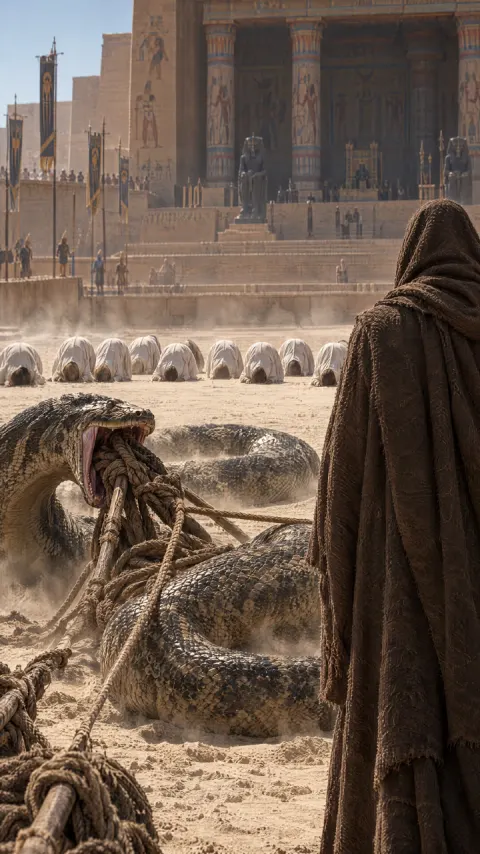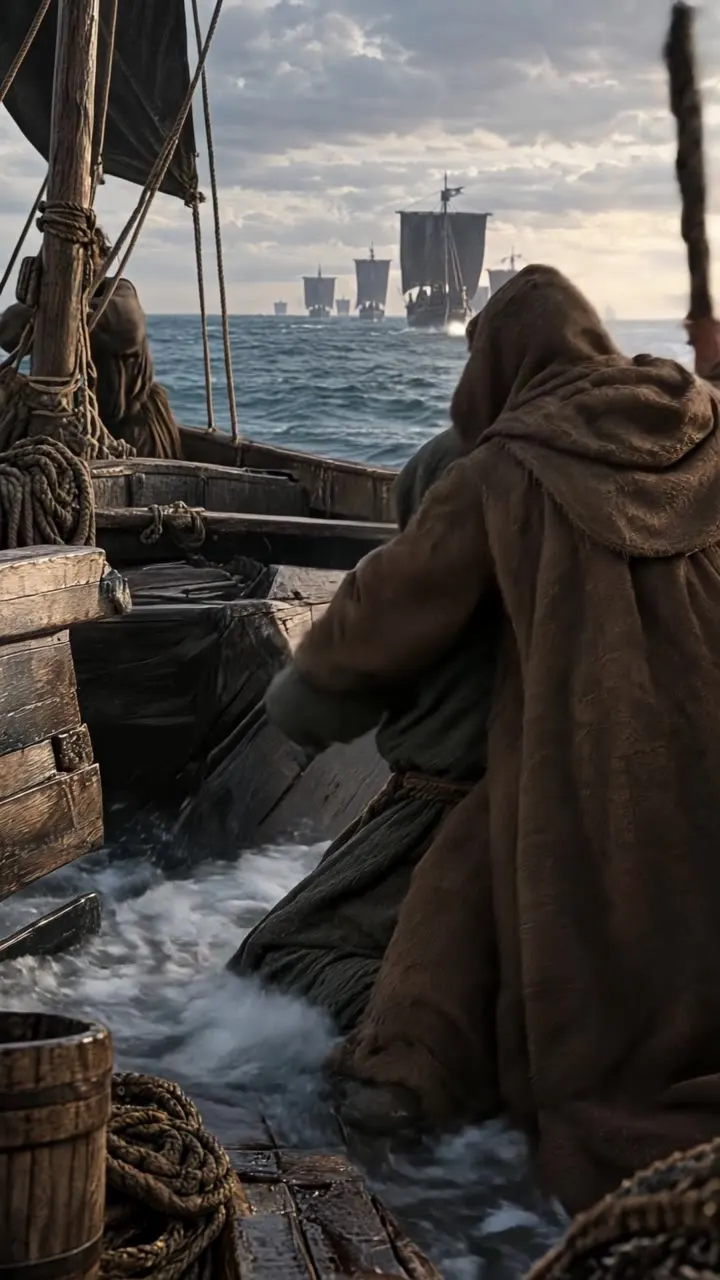
The story of Musa and al-Khidr is the third of the four stories of Surah al-Kahf, and the Quran tells it in twenty-three ayat, 18:60 to 18:82. It is unlike any other story of Prophet Musa (peace be upon him). There is no Pharaoh, no sea splitting, no people to lead. There is a prophet who walks a long way to sit at the feet of a teacher, and a teacher whose every action looks wrong until its meaning is revealed.
The whole story turns on one sentence that al-Khidr says before anything happens: “And how can you have patience for what you do not encompass in knowledge?”
(Quran 18:68) Everything Musa sees afterwards, the ship, the boy and the wall, is a test of that sentence, and the explanation at the end is its answer.
This article follows the ayat in order and explains them with the classical tafsir of Ibn Kathir, al-Tabari, al-Sa'di and al-Tafsir al-Muyassar. It answers the questions people ask most: who al-Khidr was, whether he was a prophet, why he damaged the ship, why he killed the boy, what was under the wall, and what the story teaches. Where the Quran and the tafsir are silent, we say so and leave it there.
Why did Musa go looking for al-Khidr?
Musa went looking for al-Khidr because he had been told of a servant of Allah who had knowledge that Musa did not have, and he was determined to learn it from him. That is how al-Tafsir al-Muyassar explains the opening ayah: Musa set out "to reach the righteous servant, to learn from him the knowledge I do not have." Al-Sa'di opens his commentary on the same ayah with the words: Allah tells us about His prophet Musa and "the strength of his desire for good and for seeking knowledge."
﴿وَإِذْ قَالَ مُوسَىٰ لِفَتَىٰهُ لَآ أَبْرَحُ حَتَّىٰٓ أَبْلُغَ مَجْمَعَ ٱلْبَحْرَيْنِ أَوْ أَمْضِىَ حُقُبًا ٦٠﴾(60) And [mention] when Moses said to his boy [i.e., servant], "I will not cease [traveling] until I reach the junction of the two seas or continue for a long period."
The Quran does not tell us here how Musa came to know about this servant. Ibn Kathir fills in the background from the authentic narrations he relies on: Musa was informed that there was a servant of Allah at the junction of the two seas who had knowledge Musa lacked, and he chose to travel to him. We do not need more than that, and the ayah itself gives the lesson: a prophet of Allah, one of the greatest messengers, said “I will not cease [traveling] until I reach the junction of the two seas”
(Quran 18:60). Al-Sa'di calls this "a firm resolve from him, and so he carried it out."
The word for the length of the journey, huquban, means a long period of time. Al-Tabari records the different views of the early commentators on how long that is, from "an age" to seventy or eighty years, and notes that they agree it means a long span. Musa was saying, in effect, that he would walk for as long as it took.
The "boy" or young servant with Musa is not named in the Quran. Al-Tabari, Ibn Kathir and al-Muyassar all name him as Yusha' ibn Nun, following the narrations they rely on. The Quran calls him simply fatahu, his young attendant, and the story does not depend on his name.
The fish and the rock
The sign that Musa had reached the right place was a fish: when the fish they carried as food came alive and slipped into the sea, they had passed the meeting point and had to turn back.
﴿فَلَمَّا بَلَغَا مَجْمَعَ بَيْنِهِمَا نَسِيَا حُوتَهُمَا فَٱتَّخَذَ سَبِيلَهُۥ فِى ٱلْبَحْرِ سَرَبًا ٦١ فَلَمَّا جَاوَزَا قَالَ لِفَتَىٰهُ ءَاتِنَا غَدَآءَنَا لَقَدْ لَقِينَا مِن سَفَرِنَا هَـٰذَا نَصَبًا ٦٢ قَالَ أَرَءَيْتَ إِذْ أَوَيْنَآ إِلَى ٱلصَّخْرَةِ فَإِنِّى نَسِيتُ ٱلْحُوتَ وَمَآ أَنسَىٰنِيهُ إِلَّا ٱلشَّيْطَـٰنُ أَنْ أَذْكُرَهُۥ ۚ وَٱتَّخَذَ سَبِيلَهُۥ فِى ٱلْبَحْرِ عَجَبًا ٦٣ قَالَ ذَٰلِكَ مَا كُنَّا نَبْغِ ۚ فَٱرْتَدَّا عَلَىٰٓ ءَاثَارِهِمَا قَصَصًا ٦٤﴾(61) But when they reached the junction between them, they forgot their fish, and it took its course into the sea, slipping away. (62) So when they had passed beyond it, [Moses] said to his boy, "Bring us our morning meal. We have certainly suffered in this, our journey, [much] fatigue." (63) He said, "Did you see when we retired to the rock? Indeed, I forgot [there] the fish. And none made me forget it except Satan - that I should mention it. And it took its course into the sea amazingly." (64) [Moses] said, "That is what we were seeking." So they returned, following their footprints.
Al-Muyassar explains that Musa had been commanded to take a fish with him as provision, and that when the two of them reached the junction of the two seas they sat by a rock and forgot the fish. The fish came alive and "made for itself an open path in the sea." They carried on walking until Musa grew tired and hungry and asked for their meal. Only then did the young man remember and say: “And none made me forget it except Satan”
(Quran 18:63).
Ibn Kathir adds, from the narrations, that water from the spring by that rock touched the fish and gave it life, and that the fish then left a channel through the water as it went. This is why the Quran says “it took its course into the sea amazingly.”
(Quran 18:63) Musa's answer was immediate: “That is what we were seeking.”
(Quran 18:64) Al-Muyassar explains: this was the sign he had been given for the place of the righteous servant. So they went back, retracing their own footprints, until they reached the rock.
Notice two small things the tafsir points out. The young man blamed Satan for his forgetfulness, and al-Sa'di counts it among the lessons of the story that harm and its causes are attributed to Satan's whispering, even though everything happens by the decree of Allah. And Musa openly said he was tired after the journey; al-Sa'di says this shows that a person may mention tiredness or hunger when it is true and not a complaint.
Who was al-Khidr?
Al-Khidr was a righteous servant of Allah to whom Allah had given a special mercy and had taught knowledge directly from Himself. That is the whole of what the Quran says about him, and the Quran does not even give his name.
﴿فَوَجَدَا عَبْدًا مِّنْ عِبَادِنَآ ءَاتَيْنَـٰهُ رَحْمَةً مِّنْ عِندِنَا وَعَلَّمْنَـٰهُ مِن لَّدُنَّا عِلْمًا ٦٥﴾(65) And they found a servant from among Our servants [i.e., al-Khiḍr] to whom We had given mercy from Us and had taught him from Us a [certain] knowledge.
The name "al-Khidr" comes from the authentic narrations, and all the mainstream tafsir use it. Al-Muyassar explains the ayah as: they found there "a righteous servant from among Our servants, al-Khidr, peace be upon him, to whom We gave mercy from Us and taught great knowledge from Us." Al-Sa'di says Allah gave him "a special mercy" that increased his knowledge and made his deeds good, and knowledge that came from Allah directly.
Al-Sa'di then adds a point of balance that is easy to miss. Al-Khidr had been given knowledge of certain things that Musa had not been given, but Musa was more knowledgeable than him in most matters, especially in faith and in the foundations of the religion, because Musa was one of the messengers of firm resolve. The story does not say al-Khidr was greater than Musa. It says each had knowledge from Allah that the other did not, and Ibn Kathir explains al-Khidr's warning to Musa in exactly those words: each of them had knowledge from Allah the other had not been given, and each had responsibilities before Allah the other did not share.
Was al-Khidr a prophet?
The scholars of tafsir differ on whether al-Khidr was a prophet, and the Quran does not settle it. Al-Tafsir al-Muyassar states plainly that he was "a prophet from among the prophets of Allah." Ibn Kathir presents 18:65 and the closing words of 18:82, “And I did it not of my own accord.”
(Quran 18:82), as the evidence used by those who say he was a prophet, because killing a boy and damaging a ship could only be done by a command from Allah. Al-Sa'di takes the other view and writes that he was "a righteous servant, not a prophet, according to the sounder opinion," and that the words "not of my own accord" show that he was inspired, without proving prophethood.
Both views come from scholars we trust, and the lesson of the story is the same on either view: whatever al-Khidr did, he did by the command and knowledge of Allah, not by his own judgement.
People also ask whether al-Khidr is still alive. The Quran says nothing about it, and al-Muyassar, in its explanation of 18:65, describes him as a prophet "whom Allah has caused to die." That is as far as a careful reader needs to go.
The condition: do not ask until I explain
Musa asked to follow al-Khidr in the most polite words a student could use, and al-Khidr agreed on one condition: Musa must not ask about anything until al-Khidr himself explained it.
﴿قَالَ لَهُۥ مُوسَىٰ هَلْ أَتَّبِعُكَ عَلَىٰٓ أَن تُعَلِّمَنِ مِمَّا عُلِّمْتَ رُشْدًا ٦٦ قَالَ إِنَّكَ لَن تَسْتَطِيعَ مَعِىَ صَبْرًا ٦٧ وَكَيْفَ تَصْبِرُ عَلَىٰ مَا لَمْ تُحِطْ بِهِۦ خُبْرًا ٦٨ قَالَ سَتَجِدُنِىٓ إِن شَآءَ ٱللَّهُ صَابِرًا وَلَآ أَعْصِى لَكَ أَمْرًا ٦٩ قَالَ فَإِنِ ٱتَّبَعْتَنِى فَلَا تَسْـَٔلْنِى عَن شَىْءٍ حَتَّىٰٓ أُحْدِثَ لَكَ مِنْهُ ذِكْرًا ٧٠﴾(66) Moses said to him, "May I follow you on [the condition] that you teach me from what you have been taught of sound judgement?" (67) He said, "Indeed, with me you will never be able to have patience. (68) And how can you have patience for what you do not encompass in knowledge?" (69) [Moses] said, "You will find me, if Allāh wills, patient, and I will not disobey you in [any] order." (70) He said, "Then if you follow me, do not ask me about anything until I make to you about it mention [i.e., explanation]."
Ibn Kathir says that Musa's request, “May I follow you on [the condition] that you teach me from what you have been taught of sound judgement?”
(Quran 18:66), was gentle and without any force in it, and that "this is how a seeker of knowledge should address a scholar." Al-Sa'di explains Musa's aim: to be taught some of what Allah had taught al-Khidr, so that he would be guided by it and recognise the truth.
Al-Khidr's answer was not a refusal. It was a diagnosis: “Indeed, with me you will never be able to have patience.”
(Quran 18:67) Al-Sa'di explains: you will see things you cannot bear, "things whose outward appearance is objectionable while their inner reality is not." Then al-Khidr gave the reason, and it is the sentence this whole story is built on: how can you be patient with what your knowledge does not encompass? Al-Muyassar paraphrases: how can you bear what I will do, things hidden from you that Allah has taught me?
Musa made his promise the way a believer should: patient, if Allah wills, and obedient. Al-Sa'di counts this among the lessons of the story, that we attach what we intend to do to the will of Allah, and that resolving to do something is not the same as doing it. Al-Khidr accepted, and set the condition: “do not ask me about anything until I make to you about it mention”
(Quran 18:70). Al-Muyassar explains: do not ask me about anything you disapprove of until I explain it to you myself.
The first act: the ship
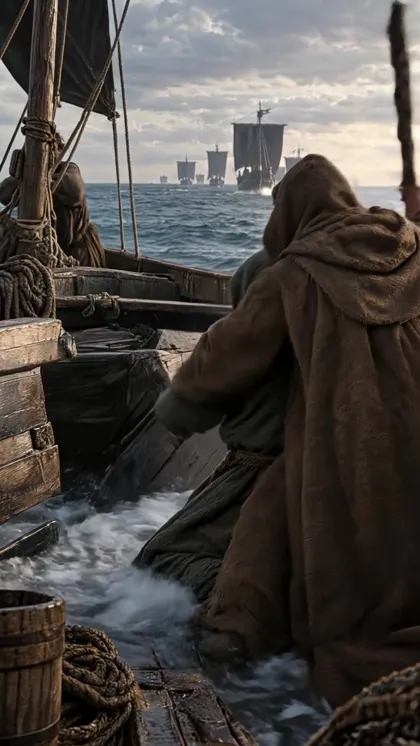
The first thing al-Khidr did was to damage a ship whose owners had carried them without payment, and Musa could not hold back his objection.
﴿فَٱنطَلَقَا حَتَّىٰٓ إِذَا رَكِبَا فِى ٱلسَّفِينَةِ خَرَقَهَا ۖ قَالَ أَخَرَقْتَهَا لِتُغْرِقَ أَهْلَهَا لَقَدْ جِئْتَ شَيْـًٔا إِمْرًا ٧١ قَالَ أَلَمْ أَقُلْ إِنَّكَ لَن تَسْتَطِيعَ مَعِىَ صَبْرًا ٧٢ قَالَ لَا تُؤَاخِذْنِى بِمَا نَسِيتُ وَلَا تُرْهِقْنِى مِنْ أَمْرِى عُسْرًا ٧٣﴾(71) So they set out, until when they had embarked on the ship, he [i.e., al-Khiḍr] tore it open. [Moses] said, "Have you torn it open to drown its people? You have certainly done a grave thing." (72) [Al-Khiḍr] said, "Did I not say that with me you would never be able to have patience?" (73) [Moses] said, "Do not blame me for what I forgot and do not overwhelm me in my matter with difficulty."
Al-Muyassar describes the scene: the two walked along the shore, a ship passed, they asked its people to take them aboard, and once aboard al-Khidr pulled out a plank and holed the ship. Al-Sa'di uses the same words, "he pulled a plank from it," and explains Musa's reaction: the act was, on its face, a defect in the ship and a cause for its people to drown. Musa said: “You have certainly done a grave thing.”
(Quran 18:71) Ibn Kathir records two explanations of the word imran from the early commentators, "an evil thing" and "an astonishing thing," and al-Sa'di explains it as "something great and terrible."
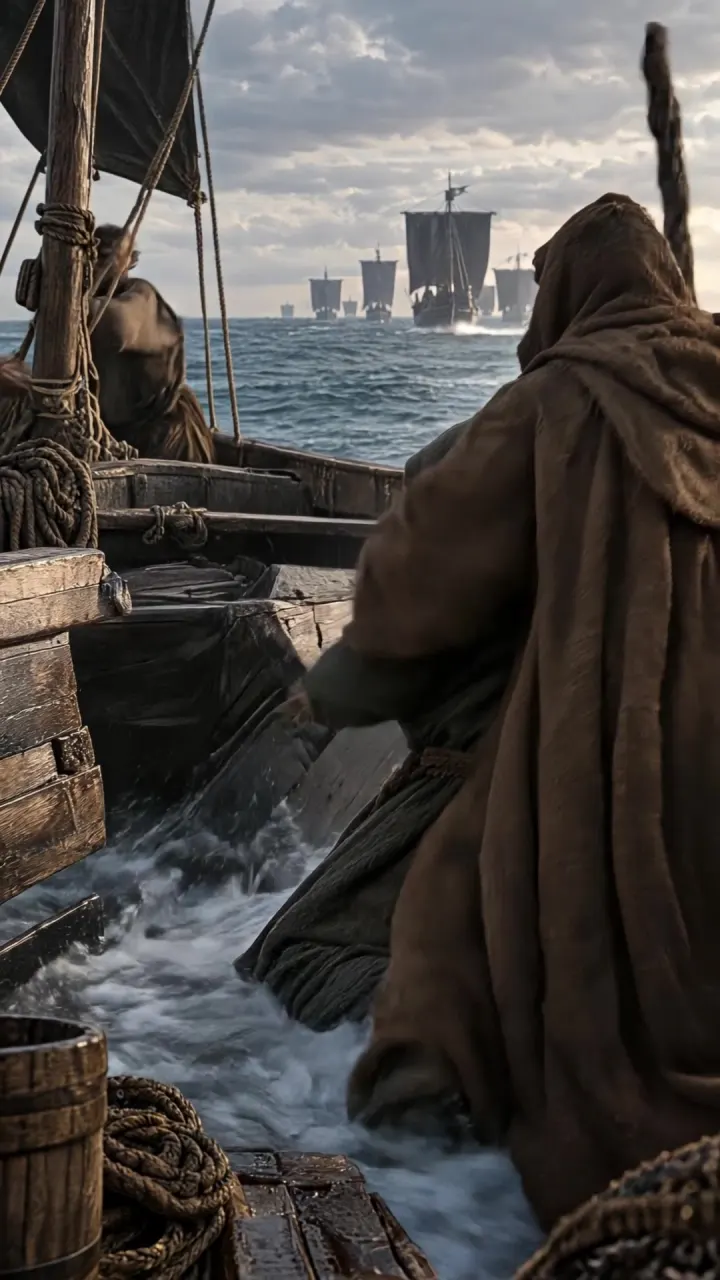
Ibn Kathir makes a point about the grammar that matters for the meaning. Musa did not accuse al-Khidr of intending to drown anyone. His words mean "you have holed it so that its people will drown," the drowning being the result of the act, not its purpose. Even in protest, Musa was exact.
Al-Khidr reminded him of the warning, and Musa apologised: “Do not blame me for what I forgot”
(Quran 18:73). Al-Muyassar explains that he was asking not to be held to account for forgetting the condition, and to be treated gently in his learning. Ibn Kathir notes that this first objection came from forgetfulness, and al-Sa'di draws the lesson that a person who forgets is not blamed for it.
The second act: the boy
The second thing al-Khidr did was to kill a boy, and this time Musa objected even more strongly, because a child who had harmed no one had been killed.
﴿فَٱنطَلَقَا حَتَّىٰٓ إِذَا لَقِيَا غُلَـٰمًا فَقَتَلَهُۥ قَالَ أَقَتَلْتَ نَفْسًا زَكِيَّةًۢ بِغَيْرِ نَفْسٍ لَّقَدْ جِئْتَ شَيْـًٔا نُّكْرًا ٧٤ ۞ قَالَ أَلَمْ أَقُل لَّكَ إِنَّكَ لَن تَسْتَطِيعَ مَعِىَ صَبْرًا ٧٥ قَالَ إِن سَأَلْتُكَ عَن شَىْءٍۭ بَعْدَهَا فَلَا تُصَـٰحِبْنِى ۖ قَدْ بَلَغْتَ مِن لَّدُنِّى عُذْرًا ٧٦﴾(74) So they set out, until when they met a boy, he [i.e., al-Khiḍr] killed him. [Moses] said, "Have you killed a pure soul for other than [having killed] a soul? You have certainly done a deplorable thing." (75) [Al-Khiḍr] said, "Did I not tell you that with me you would never be able to have patience?" (76) [Moses] said, "If I should ask you about anything after this, then do not keep me as a companion. You have obtained from me an excuse."
Al-Muyassar says they left the ship and were walking on the shore when they saw a boy playing with other boys, and al-Khidr killed him. Musa's objection was sharp: “You have certainly done a deplorable thing.”
(Quran 18:74) Ibn Kathir explains the words of the ayah: “a pure soul”
(Quran 18:74) means a young person who had not yet done any wrong, "for other than a soul" means there was no life taken that would justify it, and nukran means something clearly evil. Al-Sa'di explains that religious zeal took hold of Musa, because a small child with no sin had been killed, and he notes the difference between this objection and the first: the first was forgetfulness, this one was a lack of patience.
Al-Khidr repeated his reminder, and Musa made the promise that would end their companionship: “You have obtained from me an excuse.”
(Quran 18:76) Al-Muyassar explains: if I ask you about anything after this, leave me, for you have reached the limit of excuse with me and have not fallen short. Ibn Kathir summarises it as Musa saying that al-Khidr had now been excused twice.
We should be careful here. The Quran gives the boy no name, no age beyond "a boy," and no town. The explanation of why he was killed comes later, from al-Khidr's own mouth, and we will take it there. The tafsir makes clear that Musa's objection was right by every standard Musa had, and that the story does not teach anyone to do what al-Khidr did. Al-Sa'di states as one of the lessons of the story that matters are judged by their outward appearance in this world, that Musa's objections came from exactly that, and that killing is among the greatest of sins.
The third act: the wall
The third act was the strangest of all: in a town whose people refused them food, al-Khidr rebuilt a wall that was about to collapse and asked nothing for it.
﴿فَٱنطَلَقَا حَتَّىٰٓ إِذَآ أَتَيَآ أَهْلَ قَرْيَةٍ ٱسْتَطْعَمَآ أَهْلَهَا فَأَبَوْا۟ أَن يُضَيِّفُوهُمَا فَوَجَدَا فِيهَا جِدَارًا يُرِيدُ أَن يَنقَضَّ فَأَقَامَهُۥ ۖ قَالَ لَوْ شِئْتَ لَتَّخَذْتَ عَلَيْهِ أَجْرًا ٧٧﴾(77) So they set out, until when they came to the people of a town, they asked its people for food, but they refused to offer them hospitality. And they found therein a wall about to collapse, so he [i.e., al-Khiḍr] restored it. [Moses] said, "If you wished, you could have taken for it a payment."
Al-Muyassar explains that the two asked the people of the town for food as guests, and the people refused. Then they found a wall leaning and about to fall, and al-Khidr set it straight. Ibn Kathir says he set it upright with his own hands, and calls that an extraordinary thing. Musa's remark this time was not an accusation but a reasonable comment: “If you wished, you could have taken for it a payment.”
(Quran 18:77) Al-Muyassar explains the thought behind it: a wage for that work would have bought the food the townspeople refused to give.
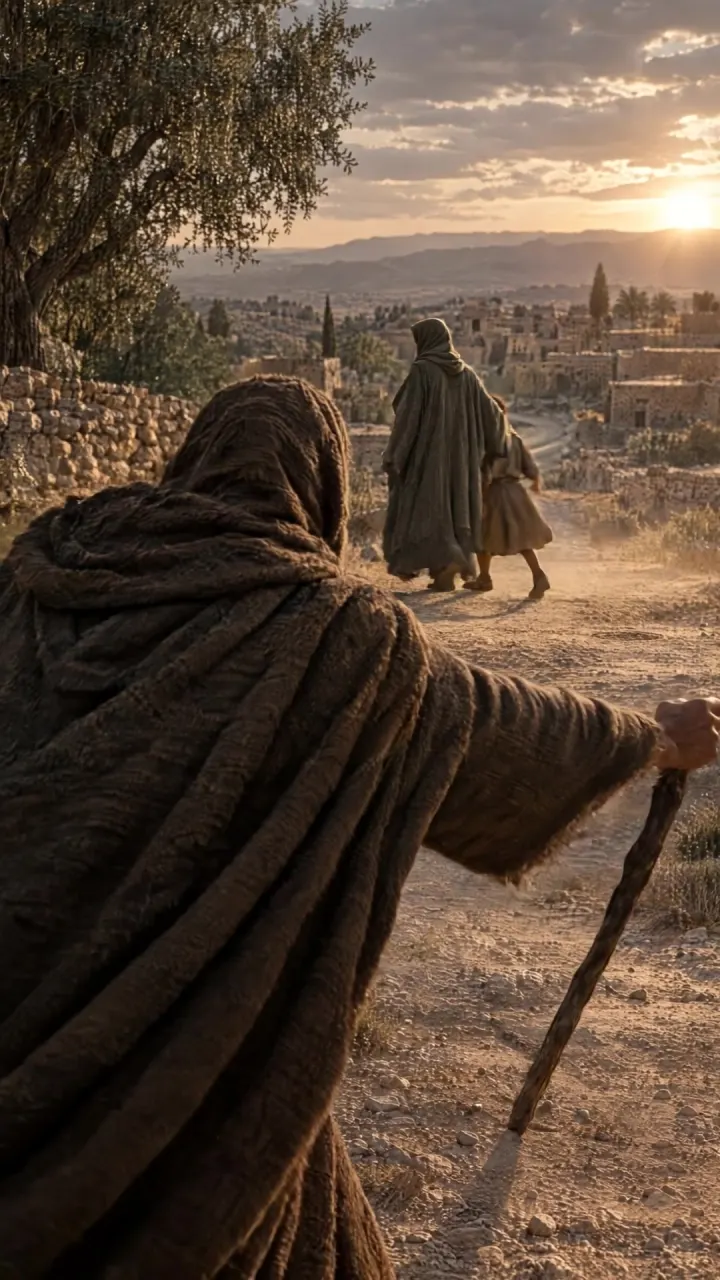
Ibn Kathir names the town from a report he cites, but the Quran itself does not name it, and al-Sa'di counts among the lessons of the story that there is a right way to deal with people who are stingy: you take what people freely offer and do not burden them. Al-Khidr built their wall anyway.
The parting and the explanation
Al-Khidr answered Musa's third question with the words that ended their journey together, and then explained all three acts.
﴿قَالَ هَـٰذَا فِرَاقُ بَيْنِى وَبَيْنِكَ ۚ سَأُنَبِّئُكَ بِتَأْوِيلِ مَا لَمْ تَسْتَطِع عَّلَيْهِ صَبْرًا ٧٨﴾(78) [Al-Khiḍr] said, "This is parting between me and you. I will inform you of the interpretation of that about which you could not have patience.
Al-Sa'di explains the parting: Musa had set that condition on himself, so "no excuse remains now, and no place for companionship." Ibn Kathir glosses "interpretation" as "explanation": al-Khidr was going to tell him the reasons behind what he could not bear patiently.
 Watch this story in QASASMusa and al-KhidrThree acts shocked Musa, then al-Khidr revealed the secret.Open on Google Play →
The ship: a defect that saved it
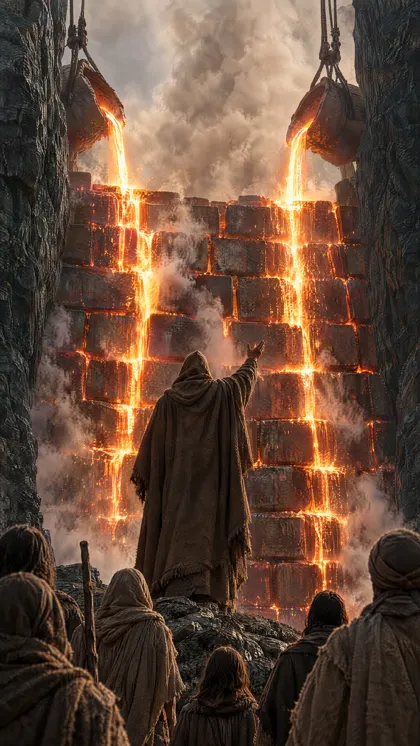
﴿أَمَّا ٱلسَّفِينَةُ فَكَانَتْ لِمَسَـٰكِينَ يَعْمَلُونَ فِى ٱلْبَحْرِ فَأَرَدتُّ أَنْ أَعِيبَهَا وَكَانَ وَرَآءَهُم مَّلِكٌ يَأْخُذُ كُلَّ سَفِينَةٍ غَصْبًا ٧٩﴾(79) As for the ship, it belonged to poor people working at sea. So I intended to cause defect in it as there was after them a king who seized every [good] ship by force.
The ship “belonged to poor people working at sea”
(Quran 18:79), and ahead of them was “a king who seized every [good] ship by force”
(Quran 18:79). Al-Muyassar explains that these were needy people who did not own enough to meet their needs, who worked at sea for their living, and that al-Khidr made the ship defective because the king took every sound ship from its owners. Al-Sa'di says the wording itself shows compassion for them, and explains the logic: with a defect in it, the ship "would be safe from that oppressor." Ibn Kathir puts it in one line: the aim was to make it appear faulty, so that its poor owners, who had nothing else, could keep benefiting from it. What looked like destruction was the only way to save it.
The boy: a mercy to his parents
﴿وَأَمَّا ٱلْغُلَـٰمُ فَكَانَ أَبَوَاهُ مُؤْمِنَيْنِ فَخَشِينَآ أَن يُرْهِقَهُمَا طُغْيَـٰنًا وَكُفْرًا ٨٠ فَأَرَدْنَآ أَن يُبْدِلَهُمَا رَبُّهُمَا خَيْرًا مِّنْهُ زَكَوٰةً وَأَقْرَبَ رُحْمًا ٨١﴾(80) And as for the boy, his parents were believers, and we feared that he would overburden them by transgression and disbelief. (81) So we intended that their Lord should substitute for them one better than him in purity and nearer to mercy.
Of the boy, al-Khidr said that “his parents were believers”
(Quran 18:80), and: "we feared that he would overburden them by transgression and disbelief." Al-Muyassar explains that in the knowledge of Allah the boy would have been a disbeliever, and that had he lived he would have carried his parents into disbelief and transgression, through their love for him or their need of him. Ibn Kathir explains the fear in the same way: that the parents' love for the boy could lead them to follow him. He also quotes Qatadah: his parents rejoiced at his birth and grieved at his death, and had he lived he would have been the cause of their ruin, so a believer should accept the decree of Allah. Ibn Kathir then cites the ayah of Surah al-Baqarah that a person may dislike a thing that is good for him.
Then the promise: “one better than him in purity and nearer to mercy”
(Quran 18:81). Al-Muyassar explains: that Allah would give his parents, in his place, one better than him in righteousness, religion and kindness to them. Ibn Kathir quotes Ibn Jurayj that this was a child better than the boy, towards whom they would feel more tenderness. The Quran does not tell us who that child was, and the tafsir we rely on does not establish it either, so we leave it there.
The wall: a treasure for two orphans
﴿وَأَمَّا ٱلْجِدَارُ فَكَانَ لِغُلَـٰمَيْنِ يَتِيمَيْنِ فِى ٱلْمَدِينَةِ وَكَانَ تَحْتَهُۥ كَنزٌ لَّهُمَا وَكَانَ أَبُوهُمَا صَـٰلِحًا فَأَرَادَ رَبُّكَ أَن يَبْلُغَآ أَشُدَّهُمَا وَيَسْتَخْرِجَا كَنزَهُمَا رَحْمَةً مِّن رَّبِّكَ ۚ وَمَا فَعَلْتُهُۥ عَنْ أَمْرِى ۚ ذَٰلِكَ تَأْوِيلُ مَا لَمْ تَسْطِع عَّلَيْهِ صَبْرًا ٨٢﴾(82) And as for the wall, it belonged to two orphan boys in the city, and there was beneath it a treasure for them, and their father had been righteous. So your Lord intended that they reach maturity and extract their treasure, as a mercy from your Lord. And I did it not of my own accord. That is the interpretation of that about which you could not have patience."
The wall belonged to two orphan boys, under it was a treasure that was theirs, and “their father had been righteous”
(Quran 18:82). Al-Muyassar explains that the treasure was gold and silver, that their father was a righteous man, and that Allah wanted the two boys to grow up and take out their treasure “as a mercy from your Lord”
(Quran 18:82). Al-Tabari records the different reports on what the treasure was, some saying wealth and some saying knowledge written down, and prefers the view that it was wealth, because that is what the word kanz normally means in Arabic. Ibn Kathir reaches the same conclusion from 'Ikrimah and Qatadah: buried wealth kept for them, and he says the context makes this clear.
The phrase about the father carries one of the most loved lessons of the story. Ibn Kathir says that a righteous person's offspring are cared for, and that the blessing of his worship reaches them in this world and the next. Al-Tabari quotes the report that the two boys "were protected by the righteousness of their father, and no righteousness of their own is mentioned." Al-Sa'di states it as a lesson: Allah protects a righteous servant in his descendants.
"And I did it not of my own accord"
The last sentence of the story is its key: “And I did it not of my own accord.”
(Quran 18:82) Al-Muyassar explains: "everything you saw me do, Musa, I did not do from myself; I did it by the command of Allah." Ibn Kathir says the three acts came from Allah's mercy to the people involved, and that al-Khidr was only commanded to do them.
The tafsir also notices how al-Khidr speaks. For the ship, he said "I intended" to make it defective. For the boy, "we intended." For the wall, "your Lord intended." Ibn Kathir explains the last one: no one can bring two children to their full strength except Allah, so the will is attributed to Him. Al-Sa'di draws out the manners in it: al-Khidr attributed the apparent fault to himself and the good to Allah, which is proper etiquette with Allah in speech.
Timeline of the story of Musa and al-Khidr
| Stage | What happens | Ayat |
|---|---|---|
| The resolve | Musa sets out with his young servant for the junction of the two seas | 18:60 |
| The fish | The fish comes alive by the rock and slips into the sea; they turn back | 18:61-64 |
| The meeting | They find a servant given mercy and knowledge from Allah | 18:65 |
| The condition | Musa asks to follow; al-Khidr warns he will not be patient and sets the condition | 18:66-70 |
| The ship | Al-Khidr holes the ship; Musa objects and pleads forgetfulness | 18:71-73 |
| The boy | Al-Khidr kills a boy; Musa objects and promises to leave if he asks again | 18:74-76 |
| The wall | A town refuses them food; al-Khidr rebuilds a wall for free; Musa remarks on payment | 18:77 |
| The parting | "This is parting between me and you" | 18:78 |
| The explanation | The ship, the boy, the wall, and "not of my own accord" | 18:79-82 |
Lessons from the story of Musa and al-Khidr
Al-Sa'di closes his commentary on 18:82 with a long list of benefits drawn from the story. The lessons below are taken from that list and from the ayat themselves.
- Knowledge is worth a journey. Al-Sa'di's first lesson is the virtue of knowledge and of travelling to seek it, which he calls one of the most important matters. A prophet walked for as long as it took.
- A student speaks gently to a teacher. Musa asked "may I follow you?" and Ibn Kathir says this is how a seeker of knowledge should speak to a scholar.
- Humility has no ceiling. Al-Sa'di notes the humility of a great man learning from someone below him in rank, and that even a scholar advanced in general knowledge may learn a specific thing from a specialist.
- Patience comes from knowledge. The story's central sentence is 18:68. Al-Sa'di says the main cause of patience is a full understanding of the matter, and that whoever cannot be patient with a teacher loses much knowledge.
- Judge by what is apparent, but know that it is not everything. Al-Sa'di says Musa's objections came from judging by outward appearance, which is how rulings in this world work, while Allah's knowledge encompasses what is hidden.
- A smaller harm may be borne to prevent a greater one. Al-Sa'di draws this from the ship: a defect was accepted to save the whole ship from the king.
- A decree you dislike can be a mercy. Ibn Kathir's comment on the boy, with Qatadah's words and the ayah of al-Baqarah, is the heart of this lesson.
- Righteous parents are a shelter for their children. The wall was rebuilt for two orphans because their father had been righteous.
- Say "if Allah wills." Musa attached his promise to the will of Allah, and al-Sa'di lists this among the manners the story teaches.
- Attribute good to Allah and faults to yourself. Al-Khidr said "I intended" for the defect and "your Lord intended" for the mercy.
This story sits naturally beside the other examples in our article on patience in the stories of the prophets, where the patience of Musa with al-Khidr is the patience with what we do not understand.
How to tell the story of Musa and al-Khidr to children
Tell children the story as a journey with three surprises, and let them feel what Musa felt before the explanation comes. Start with the long walk and the fish that jumped into the sea, which children love. Then present each of the three acts as a puzzle: a hole in a ship, a wall fixed for free, and, for younger children, you can say that al-Khidr did something that looked very wrong, and that Musa was right to be upset. Then give the explanation, exactly as the Quran gives it.
The moral children can hold on to is simple and true: Allah knows what we do not, and some things that look bad are a mercy we cannot see yet. Ask them: how did Musa feel when the ship was damaged? What would you have said? Why did al-Khidr say "I did it not of my own accord"?
With older children, read 18:66-70 together and talk about how Musa asked to be taught, and about the promise he made. It is a natural way to talk about manners with teachers and about keeping our word. Our story of Musa and Pharaoh is a good companion for the same age, because it shows the same prophet in a completely different test.
Read and watch the story of Musa and al-Khidr in QASAS
QASAS is a free prophet stories app with no ads and no account, and "Musa and al-Khidr" is one of its cinematic stories: the ship, the boy and the wall in short scenes you can watch, or read page by page with your child, with a quiz at the end. The app's images have no faces, so the story is shown through the ship, the shore and the wall rather than through its people.
Since this story lives in Surah al-Kahf, the app also opens the full surah in its mushaf with the al-Muyassar and Ibn Kathir tafsir beside the ayat, which is the best way to read 18:60-82 slowly. The same surah holds the People of the Cave and the story of Dhul-Qarnayn and the wall, both also in the app, and many families read all four on Friday; our guide to reading Surah al-Kahf on Friday explains why. Prayer times, qibla and a 3D tasbih are there too for the rest of the day.
Frequently asked questions
Who was al-Khidr in the Quran?
Al-Khidr was a righteous servant of Allah to whom Allah gave a special mercy and taught knowledge directly from Himself (18:65). The Quran does not give his name; "al-Khidr" comes from the authentic narrations and is used by all the mainstream tafsir, including Ibn Kathir, al-Sa'di and al-Tafsir al-Muyassar.
Was al-Khidr a prophet?
The scholars differ, and the Quran does not settle it. Al-Tafsir al-Muyassar calls him a prophet, Ibn Kathir presents 18:65 and 18:82 as the evidence of those who say he was, and al-Sa'di holds that he was a righteous servant and not a prophet. All agree that he acted by Allah's command and knowledge, as the Quran says: "And I did it not of my own accord."
Where is the story of Musa and al-Khidr in the Quran?
It is in Surah al-Kahf, ayat 60 to 82, the third of the surah's four stories. It comes after the People of the Cave and the man with two gardens, and before Dhul-Qarnayn.
Why did Musa travel to find al-Khidr?
Because he had been told of a servant of Allah who had knowledge Musa did not have, and he resolved to learn it from him. Al-Sa'di explains the journey by Musa's strong desire for good and for seeking knowledge, and al-Muyassar says he went to learn from the righteous servant what he did not know.
Why did al-Khidr damage the ship?
Because a king ahead of them seized every sound ship by force, and the ship belonged to poor people who worked at sea (18:79). Al-Khidr made it defective so the king would pass it by and its owners could keep it. Al-Sa'di explains that with a defect in it the ship was safe from the oppressor.
Why did al-Khidr kill the boy?
The Quran gives the reason in 18:80-81: the boy's parents were believers, and it was feared he would burden them with transgression and disbelief, so Allah would give them one better than him in purity and nearer to mercy. Al-Muyassar explains that in Allah's knowledge the boy would have been a disbeliever who dragged his parents with him. Al-Khidr did this by Allah's command, not by his own judgement, and the tafsir is clear that Musa's objection was right by the standards given to people.
What was under the wall that al-Khidr rebuilt?
A treasure belonging to two orphan boys whose father had been righteous (18:82). Al-Muyassar says it was gold and silver, and al-Tabari and Ibn Kathir prefer the view that it was buried wealth. The wall was restored so it would stand until the boys grew up and could take out their treasure.
What is the main lesson of the story of Musa and al-Khidr?
That Allah's knowledge encompasses what ours does not, so patience with what we cannot understand is part of faith. Al-Khidr's question, "how can you have patience for what you do not encompass in knowledge?" (18:68), is the key to the story, and his closing words, "I did it not of my own accord," are its answer.
Sources
Surah al-Kahf 18:60-82, with al-Tafsir al-Muyassar (18:60-82), Tafsir Ibn Kathir (18:60-82), Tafsir al-Sa'di (18:60-82, including his list of lessons under 18:82) and Tafsir al-Tabari (18:60, 18:82). Quran translation: Saheeh International.
Updated: · By QASAS