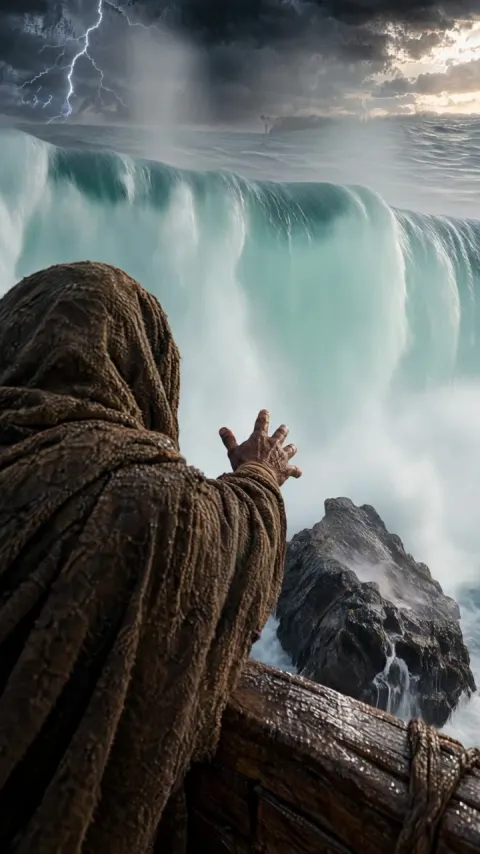
This is the Prophet Yusuf story for kids, told the way the Quran tells it: gently, in order, and with a happy ending that children can see coming from the very first scene. Many children know Yusuf (peace be upon him) by his English name, Joseph. The Quran calls his story “the best of stories”
(Quran 12:3), and it is the only prophet's story told from beginning to end in a single surah, Surah Yusuf.
Everything on this page comes from Surah Yusuf (chapter 12, ayat 4 to 101) and from the classical tafsir of Ibn Kathir, al-Sa'di and al-Tafsir al-Muyassar. We have not added names, ages, numbers or made-up conversations, because children deserve the true story. Where the Quran is quiet, we say so.
If you want every ayah with the full tafsir discussion for yourself, read our complete story of Prophet Yusuf. This page is the one to read aloud to your child.
How to use this page
Read the story section aloud, one part at a time, and stop at the pictures. The sentences are short on purpose, so that you can read slowly and let your child imagine the stars, the well and the storehouses full of grain. Each ayah box shows the Arabic with its English meaning; read the English, and if your child is learning Quran, point to the Arabic words as you go.
After the story you will find the moral in one sentence, three questions to talk about, a guide for different ages, two short du'as from the surah that a child can learn, honest answers to the questions children ask most, and a table of the whole story. Teachers can use the FAQ at the end for the questions that come up in class.
The story of Prophet Yusuf for children
A boy and a dream
A long time ago there lived a boy called Yusuf. His father was a prophet, Ya'qub (peace be upon him), and he had eleven brothers. One night Yusuf had a dream, and in the morning he ran to tell his father.
﴿إِذْ قَالَ يُوسُفُ لِأَبِيهِ يَـٰٓأَبَتِ إِنِّى رَأَيْتُ أَحَدَ عَشَرَ كَوْكَبًا وَٱلشَّمْسَ وَٱلْقَمَرَ رَأَيْتُهُمْ لِى سَـٰجِدِينَ ٤﴾(4) [Of these stories mention] when Joseph said to his father, "O my father, indeed I have seen [in a dream] eleven stars and the sun and the moon; I saw them prostrating to me."
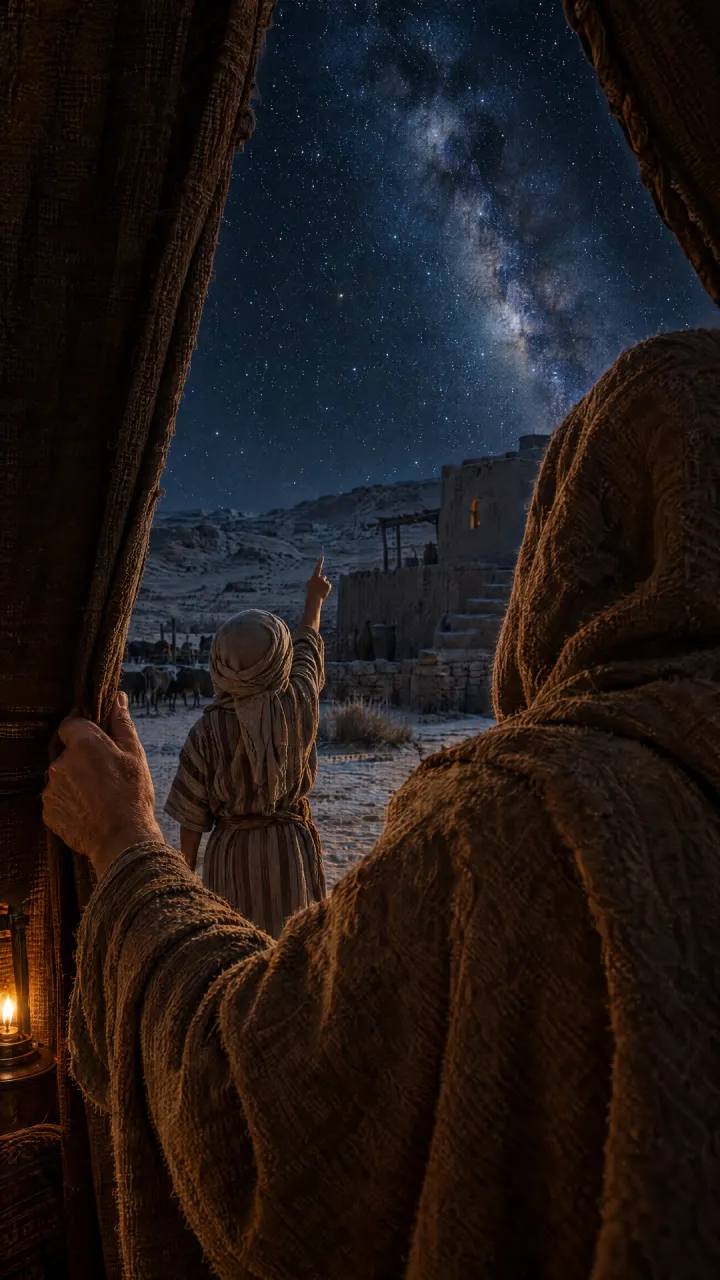
Eleven stars, the sun and the moon, all bowing down to him. Ibn Kathir explains that the eleven stars stood for his eleven brothers, and the sun and the moon for his father and mother. He also reminds us that the dreams of prophets are true messages from Allah.
Ya'qub understood the dream straight away. It meant that Allah was going to give Yusuf something very special. But he also knew that his other sons might feel jealous. So he gave Yusuf a quiet piece of advice: “do not relate your vision to your brothers”
(Quran 12:5). Al-Tafsir al-Muyassar explains that Ya'qub was afraid they would envy Yusuf and plot against him, because Satan is an open enemy to people. Al-Sa'di adds a gentle lesson from this: it is wise to keep a blessing quiet when talking about it could cause harm.
A note for parents: the Quran does not tell us how old Yusuf was when he had the dream. The honest answer is "he was a boy, and the Quran does not give his age."
The brothers and the wolf
Yusuf's brothers had a problem in their hearts. They thought their father loved Yusuf and his little brother more than them. They said to each other: “Joseph and his brother are more beloved to our father than we”
(Quran 12:8). That feeling is called jealousy, and it made them think of something terrible.
﴿إِذْ قَالُوا۟ لَيُوسُفُ وَأَخُوهُ أَحَبُّ إِلَىٰٓ أَبِينَا مِنَّا وَنَحْنُ عُصْبَةٌ إِنَّ أَبَانَا لَفِى ضَلَـٰلٍ مُّبِينٍ ٨ ٱقْتُلُوا۟ يُوسُفَ أَوِ ٱطْرَحُوهُ أَرْضًا يَخْلُ لَكُمْ وَجْهُ أَبِيكُمْ وَتَكُونُوا۟ مِنۢ بَعْدِهِۦ قَوْمًا صَـٰلِحِينَ ٩ قَالَ قَآئِلٌ مِّنْهُمْ لَا تَقْتُلُوا۟ يُوسُفَ وَأَلْقُوهُ فِى غَيَـٰبَتِ ٱلْجُبِّ يَلْتَقِطْهُ بَعْضُ ٱلسَّيَّارَةِ إِن كُنتُمْ فَـٰعِلِينَ ١٠﴾(8) When they said, "Joseph and his brother are more beloved to our father than we, while we are a clan. Indeed, our father is in clear error. (9) Kill Joseph or cast him out to [another] land; the countenance [i.e., attention] of your father will [then] be only for you, and you will be after that a righteous people." (10) Said a speaker among them, "Do not kill Joseph but throw him into the bottom of the well; some travelers will pick him up - if you would do [something]."
Some of them wanted to get rid of Yusuf for good. But one brother said no: “Do not kill Joseph but throw him into the bottom of the well”
(Quran 12:10), so that some travellers would find him. The Quran does not tell us this brother's name. Al-Sa'di explains that his idea was still wrong, but it was far less evil than what the others wanted.
Then the brothers went to their father with big smiles. They said: “Send him with us tomorrow that he may eat well and play”
(Quran 12:12), and they promised to look after him. Ya'qub was worried. He said: “I fear that a wolf would eat him”
(Quran 12:13). The brothers laughed and said that could never happen with so many of them around.
Our full article on why Yusuf's brothers threw him in the well looks at this part of the story in depth for older readers.
Alone in the well, but not alone
The brothers took Yusuf far from home. Then they did what they had planned: they put him in the bottom of a well. Imagine how dark and quiet it was down there.
﴿فَلَمَّا ذَهَبُوا۟ بِهِۦ وَأَجْمَعُوٓا۟ أَن يَجْعَلُوهُ فِى غَيَـٰبَتِ ٱلْجُبِّ ۚ وَأَوْحَيْنَآ إِلَيْهِ لَتُنَبِّئَنَّهُم بِأَمْرِهِمْ هَـٰذَا وَهُمْ لَا يَشْعُرُونَ ١٥﴾(15) So when they took him [out] and agreed to put him into the bottom of the well... But We inspired to him, "You will surely inform them [someday] about this affair of theirs while they do not perceive [your identity]."
But look at what happened in the well. Allah sent Yusuf a message: one day you will tell your brothers what they did, and they will not even recognise you. Ibn Kathir explains that Allah inspired Yusuf in that narrow, frightening place to comfort his heart and make him steady. Yusuf was alone in the dark, but Allah was with him. That is the most important sentence in this part of the story.

That night the brothers came home crying. They told their father that they had been racing, that they left Yusuf with their things, “and a wolf ate him”
(Quran 12:17). And they brought his shirt.
﴿وَجَآءُو عَلَىٰ قَمِيصِهِۦ بِدَمٍ كَذِبٍ ۚ قَالَ بَلْ سَوَّلَتْ لَكُمْ أَنفُسُكُمْ أَمْرًا ۖ فَصَبْرٌ جَمِيلٌ ۖ وَٱللَّهُ ٱلْمُسْتَعَانُ عَلَىٰ مَا تَصِفُونَ ١٨﴾(18) And they brought upon his shirt false blood. [Jacob] said, "Rather, your souls have enticed you to something, so patience is most fitting. And Allāh is the one sought for help against that which you describe."
The shirt had “false blood”
(Quran 12:18) on it. Al-Tafsir al-Muyassar explains how Ya'qub knew they were lying: the shirt was not torn. A wolf does not eat a boy and leave his shirt in one piece. But Ya'qub did not shout. He said two beautiful words: sabrun jamil, “patience is most fitting”
(Quran 12:18), beautiful patience. Al-Sa'di explains that Ya'qub meant: my job now is to be patient in a beautiful way, and I will ask Allah to help me, not my own strength. Al-Muyassar describes beautiful patience as patience with no complaining to people.
 Watch this story in QASASYusuf in the WellHis brothers threw him into a well... then what happened?Open on Google Play →
The bucket and the journey to Egypt
Some travellers stopped near the well. They sent one man to get water. He let his bucket down into the dark, and when he pulled it up, there was a boy holding on to it!
﴿وَجَآءَتْ سَيَّارَةٌ فَأَرْسَلُوا۟ وَارِدَهُمْ فَأَدْلَىٰ دَلْوَهُۥ ۖ قَالَ يَـٰبُشْرَىٰ هَـٰذَا غُلَـٰمٌ ۚ وَأَسَرُّوهُ بِضَـٰعَةً ۚ وَٱللَّهُ عَلِيمٌۢ بِمَا يَعْمَلُونَ ١٩ وَشَرَوْهُ بِثَمَنٍۭ بَخْسٍ دَرَٰهِمَ مَعْدُودَةٍ وَكَانُوا۟ فِيهِ مِنَ ٱلزَّٰهِدِينَ ٢٠﴾(19) And there came a company of travelers; then they sent their water drawer, and he let down his bucket. He said, "Good news! Here is a boy." And they concealed him, [taking him] as merchandise; and Allāh was Knowing of what they did. (20) And they sold him for a reduced price - a few dirhams - and they were, concerning him, of those content with little.
“Good news! Here is a boy.”
(Quran 12:19) Al-Tafsir al-Muyassar explains that the water drawer was overjoyed to find a boy. The travellers hid Yusuf and sold him for “a few dirhams”
(Quran 12:20), a tiny price, because they had no idea who he really was.
Yusuf was taken all the way to Egypt. A very important man there bought him and told his wife: “Make his residence comfortable”
(Quran 12:21). Ibn Kathir describes this man as the minister of Egypt; the Quran later calls him al-'Aziz. And the Quran tells us the secret behind everything: “And thus, We established Joseph in the land”
(Quran 12:21). The well that was meant to make Yusuf disappear became the road to a great house in Egypt. Allah had a plan the whole time.
Yusuf says no to doing wrong
Yusuf grew up in that house and became a strong, handsome young man, and Allah gave him wisdom and knowledge. Then came a hard test. The lady of the house asked Yusuf to do something that Allah does not allow. Yusuf did not even think about it. He said: “[I seek] the refuge of Allāh”
(Quran 12:23), ma'adh Allah, and he refused.
But the lady lied about him, and other women in the city joined in. Yusuf turned to Allah with a du'a:
﴿قَالَ رَبِّ ٱلسِّجْنُ أَحَبُّ إِلَىَّ مِمَّا يَدْعُونَنِىٓ إِلَيْهِ ۖ وَإِلَّا تَصْرِفْ عَنِّى كَيْدَهُنَّ أَصْبُ إِلَيْهِنَّ وَأَكُن مِّنَ ٱلْجَـٰهِلِينَ ٣٣ فَٱسْتَجَابَ لَهُۥ رَبُّهُۥ فَصَرَفَ عَنْهُ كَيْدَهُنَّ ۚ إِنَّهُۥ هُوَ ٱلسَّمِيعُ ٱلْعَلِيمُ ٣٤﴾(33) He said, "My Lord, prison is more to my liking than that to which they invite me. And if You do not avert from me their plan, I might incline toward them and [thus] be of the ignorant." (34) So his Lord responded to him and averted from him their plan. Indeed, He is the Hearing, the Knowing.
He said: “prison is more to my liking than that to which they invite me”
(Quran 12:33). He would rather go to prison than do something wrong. Al-Sa'di explains that a believer should prefer hardship in this world over disobeying Allah, and that whoever has faith firm in his heart, Allah protects him. Allah answered Yusuf's du'a and kept him safe from wrongdoing. Even so, the people in charge put him in prison to avoid a scandal, although they knew he had done nothing wrong. Al-Tafsir al-Muyassar explains that they imprisoned him even after seeing the proof that he was innocent.
A note for parents: this is all a young child needs to know about this part: someone asked Yusuf to do something wrong, he said "I seek refuge in Allah", and he went to prison for choosing the right thing. The Quran does not tell us the lady's name, and we do not need it.
In prison, still a good man
Yusuf was in prison, but he did not stop being kind, and he did not stop talking about Allah. Two young men in the prison had strange dreams. They came to Yusuf because, as they told him, “we see you to be of those who do good”
(Quran 12:36).
Before Yusuf explained their dreams, he taught them the most important thing of all. He asked them: “are separate lords better or Allāh, the One, the Prevailing?”
(Quran 12:39) Al-Sa'di points out that Yusuf began with what mattered most, calling them to worship Allah alone, before he answered their question. Then he explained their dreams, and they came true exactly as he said.
Yusuf asked the man who was going free to tell the king about him. But the man forgot. Al-Tafsir al-Muyassar explains that Satan made him forget to mention Yusuf, and so Yusuf “remained in prison several years”
(Quran 12:42).
A note for parents: the Quran says "several years" and does not give the exact number. Ibn Kathir quotes early scholars who say the Arabic word means between three and nine. Teach the Quran's words: several years.
The king's dream: seven fat cows and seven thin ones
One night the king of Egypt had a strange dream. He saw “seven fat cows being eaten by seven [that were] lean”
(Quran 12:43), and seven green ears of grain and seven dry ones.
﴿وَقَالَ ٱلْمَلِكُ إِنِّىٓ أَرَىٰ سَبْعَ بَقَرَٰتٍ سِمَانٍ يَأْكُلُهُنَّ سَبْعٌ عِجَافٌ وَسَبْعَ سُنۢبُلَـٰتٍ خُضْرٍ وَأُخَرَ يَابِسَـٰتٍ ۖ يَـٰٓأَيُّهَا ٱلْمَلَأُ أَفْتُونِى فِى رُءْيَـٰىَ إِن كُنتُمْ لِلرُّءْيَا تَعْبُرُونَ ٤٣﴾(43) And [subsequently] the king said, "Indeed, I have seen [in a dream] seven fat cows being eaten by seven [that were] lean, and seven green spikes [of grain] and others [that were] dry. O eminent ones, explain to me my vision, if you should interpret visions."
None of the king's wise men could explain it. Then the man from the prison suddenly remembered Yusuf! He ran to the prison and said: “O man of truth”
(Quran 12:46), explain this dream for us. And Yusuf did not only explain it. He gave them a plan.
﴿قَالَ تَزْرَعُونَ سَبْعَ سِنِينَ دَأَبًا فَمَا حَصَدتُّمْ فَذَرُوهُ فِى سُنۢبُلِهِۦٓ إِلَّا قَلِيلًا مِّمَّا تَأْكُلُونَ ٤٧ ثُمَّ يَأْتِى مِنۢ بَعْدِ ذَٰلِكَ سَبْعٌ شِدَادٌ يَأْكُلْنَ مَا قَدَّمْتُمْ لَهُنَّ إِلَّا قَلِيلًا مِّمَّا تُحْصِنُونَ ٤٨ ثُمَّ يَأْتِى مِنۢ بَعْدِ ذَٰلِكَ عَامٌ فِيهِ يُغَاثُ ٱلنَّاسُ وَفِيهِ يَعْصِرُونَ ٤٩﴾(47) [Joseph] said, "You will plant for seven years consecutively; and what you harvest leave in its spikes, except a little from which you will eat. (48) Then will come after that seven difficult [years] which will consume what you advanced [i.e., saved] for them, except a little from which you will store. (49) Then will come after that a year in which the people will be given rain and in which they will press [olives and grapes]."
“You will plant for seven years consecutively”
(Quran 12:47), Yusuf said. Seven good years would come, and Egypt should save the grain in its ears. Then seven hard years would come and eat up what was saved. Then “a year in which the people will be given rain”
(Quran 12:49) would follow. Al-Tafsir al-Muyassar explains that leaving the grain in its ears keeps it from spoiling. Al-Sa'di adds that saving in good years is wise planning and does not go against trusting Allah.
Count it with your child: seven, seven, and one. Fifteen years of a plan, from a man sitting in a prison cell.
Out of prison, and in charge of the food
The king wanted to meet Yusuf at once. But Yusuf would not leave prison until everyone knew he had never done anything wrong. The king asked the women, and the lady of the house finally told the truth: “Now the truth has become evident”
(Quran 12:51). Yusuf's name was clean.
When the king spoke with Yusuf, he said: “you are today established [in position] and trusted”
(Quran 12:54). And Yusuf asked for one job: “Appoint me over the storehouses of the land”
(Quran 12:55).
﴿قَالَ ٱجْعَلْنِى عَلَىٰ خَزَآئِنِ ٱلْأَرْضِ ۖ إِنِّى حَفِيظٌ عَلِيمٌ ٥٥ وَكَذَٰلِكَ مَكَّنَّا لِيُوسُفَ فِى ٱلْأَرْضِ يَتَبَوَّأُ مِنْهَا حَيْثُ يَشَآءُ ۚ نُصِيبُ بِرَحْمَتِنَا مَن نَّشَآءُ ۖ وَلَا نُضِيعُ أَجْرَ ٱلْمُحْسِنِينَ ٥٦﴾(55) [Joseph] said, "Appoint me over the storehouses of the land. Indeed, I will be a knowing guardian." (56) And thus We established Joseph in the land to settle therein wherever he willed. We touch with Our mercy whom We will, and We do not allow to be lost the reward of those who do good.
Al-Tafsir al-Muyassar explains that Yusuf wanted to help people and to be fair to everyone. The boy who was sold for a few coins was now trusted with the food of a whole country. And Allah says He never lets the reward of good people be lost.
The brothers come back
The hard years came, and they reached Yusuf's old home too. His brothers travelled to Egypt to buy food. They stood in front of Yusuf, and “he recognized them, but he was to them unknown”
(Quran 12:58). Al-Tafsir al-Muyassar explains that they did not know him because so many years had passed and he looked so different.
Yusuf was kind to them. He gave them food and told them to bring their youngest brother next time. At home, old Ya'qub was afraid to let another son go. But he said: “But Allāh is the best guardian, and He is the most merciful of the merciful.”
(Quran 12:64)
﴿قَالَ هَلْ ءَامَنُكُمْ عَلَيْهِ إِلَّا كَمَآ أَمِنتُكُمْ عَلَىٰٓ أَخِيهِ مِن قَبْلُ ۖ فَٱللَّهُ خَيْرٌ حَـٰفِظًا ۖ وَهُوَ أَرْحَمُ ٱلرَّٰحِمِينَ ٦٤﴾(64) He said, "Should I entrust you with him except [under coercion] as I entrusted you with his brother before? But Allāh is the best guardian, and He is the most merciful of the merciful."
When the brothers came back with the youngest brother, Yusuf took him aside and whispered: “Indeed, I am your brother, so do not despair”
(Quran 12:69). Then Yusuf found a way to keep his little brother with him in Egypt, and the Quran says that this was a plan Allah made for Yusuf. When the other brothers said unkind things about Yusuf without knowing he was there, “But Joseph kept it within himself and did not reveal it to them.”
(Quran 12:77) He stayed quiet and patient.
A father who never gave up
Back home, Ya'qub had now lost two sons. He cried so much that “his eyes became white from grief”
(Quran 12:84), and he could no longer see. Al-Tafsir al-Muyassar explains that his eyes lost their colour from the strength of his sorrow, yet he kept it inside.
﴿قَالَ إِنَّمَآ أَشْكُوا۟ بَثِّى وَحُزْنِىٓ إِلَى ٱللَّهِ وَأَعْلَمُ مِنَ ٱللَّهِ مَا لَا تَعْلَمُونَ ٨٦ يَـٰبَنِىَّ ٱذْهَبُوا۟ فَتَحَسَّسُوا۟ مِن يُوسُفَ وَأَخِيهِ وَلَا تَا۟يْـَٔسُوا۟ مِن رَّوْحِ ٱللَّهِ ۖ إِنَّهُۥ لَا يَا۟يْـَٔسُ مِن رَّوْحِ ٱللَّهِ إِلَّا ٱلْقَوْمُ ٱلْكَـٰفِرُونَ ٨٧﴾(86) He said, "I only complain of my suffering and my grief to Allāh, and I know from Allāh that which you do not know. (87) O my sons, go and find out about Joseph and his brother and despair not of relief from Allāh. Indeed, no one despairs of relief from Allāh except the disbelieving people."
His sons told him to stop thinking about Yusuf. He answered: “I only complain of my suffering and my grief to Allāh”
(Quran 12:86). Al-Sa'di explains that telling Allah about your sadness does not spoil patience; what spoils patience is complaining to people. And then Ya'qub said something full of hope: go and look for Yusuf and his brother, and “despair not of relief from Allāh”
(Quran 12:87). Al-Sa'di explains that hope makes a person get up and try, while giving up makes a person lazy and slow.
So the brothers went back to Egypt one more time.
"I am Yusuf"
The brothers stood before the great man of Egypt again, poor and tired. They said: “adversity has touched us and our family”
(Quran 12:88), and they begged for food. Then Yusuf asked them a question they never expected: “Do you know what you did with Joseph and his brother when you were ignorant?”
(Quran 12:89)
﴿قَالُوٓا۟ أَءِنَّكَ لَأَنتَ يُوسُفُ ۖ قَالَ أَنَا۠ يُوسُفُ وَهَـٰذَآ أَخِى ۖ قَدْ مَنَّ ٱللَّهُ عَلَيْنَآ ۖ إِنَّهُۥ مَن يَتَّقِ وَيَصْبِرْ فَإِنَّ ٱللَّهَ لَا يُضِيعُ أَجْرَ ٱلْمُحْسِنِينَ ٩٠ قَالُوا۟ تَٱللَّهِ لَقَدْ ءَاثَرَكَ ٱللَّهُ عَلَيْنَا وَإِن كُنَّا لَخَـٰطِـِٔينَ ٩١ قَالَ لَا تَثْرِيبَ عَلَيْكُمُ ٱلْيَوْمَ ۖ يَغْفِرُ ٱللَّهُ لَكُمْ ۖ وَهُوَ أَرْحَمُ ٱلرَّٰحِمِينَ ٩٢﴾(90) They said, "Are you indeed Joseph?" He said, "I am Joseph, and this is my brother. Allāh has certainly favored us. Indeed, he who fears Allāh and is patient, then indeed, Allāh does not allow to be lost the reward of those who do good." (91) They said, "By Allāh, certainly has Allāh preferred you over us, and indeed, we have been sinners." (92) He said, "No blame will there be upon you today. May Allāh forgive you; and He is the most merciful of the merciful.
“Are you indeed Joseph?”
(Quran 12:90) they gasped. “I am Joseph, and this is my brother.”
(Quran 12:90) Al-Tafsir al-Muyassar explains that when Yusuf heard their plea, his heart softened and he told them who he was. The brothers who had thrown him into a well were standing in front of him, and he was now a great man of Egypt, in charge of all its storehouses. What did he do?
He forgave them. “No blame will there be upon you today.”
(Quran 12:92) No shouting, no punishment, no "I told you so". Ibn Kathir explains that Yusuf promised not to remind them of what they did, and then he asked Allah to forgive them. And Yusuf explained the secret of his whole life in one sentence: “he who fears Allāh and is patient, then indeed, Allāh does not allow to be lost the reward of those who do good”
(Quran 12:90).
The shirt and the father's eyes
Yusuf had one more thing to do. He gave his brothers his shirt and said: “Take this, my shirt, and cast it over the face of my father; he will become seeing.”
(Quran 12:93)
As soon as the caravan left Egypt, far away at home, Ya'qub said: “I find the smell of Joseph”
(Quran 12:94). The people around him thought he was confused. Then the good news arrived.
﴿فَلَمَّآ أَن جَآءَ ٱلْبَشِيرُ أَلْقَىٰهُ عَلَىٰ وَجْهِهِۦ فَٱرْتَدَّ بَصِيرًا ۖ قَالَ أَلَمْ أَقُل لَّكُمْ إِنِّىٓ أَعْلَمُ مِنَ ٱللَّهِ مَا لَا تَعْلَمُونَ ٩٦﴾(96) And when the bearer of good tidings arrived, he cast it over his face, and he returned [once again] seeing. He said, "Did I not tell you that I know from Allāh that which you do not know?"
They put the shirt over his face, and “he returned [once again] seeing”
(Quran 12:96). Ya'qub could see again! And he reminded everyone: did I not tell you that I know from Allah what you do not know? The brothers said sorry to their father, and he promised: “I will ask forgiveness for you from my Lord.”
(Quran 12:98)
Point out to your child how a shirt appears three times in this story: a shirt with false blood that hid the truth, a shirt that proved Yusuf was innocent, and a shirt that gave a father back his sight.
The dream comes true
The whole family travelled to Egypt. Yusuf hugged his parents and said: “Enter Egypt, Allāh willing, safe [and secure].”
(Quran 12:99) Then he sat his parents on his throne, and his parents and his eleven brothers bowed to him.
﴿وَرَفَعَ أَبَوَيْهِ عَلَى ٱلْعَرْشِ وَخَرُّوا۟ لَهُۥ سُجَّدًا ۖ وَقَالَ يَـٰٓأَبَتِ هَـٰذَا تَأْوِيلُ رُءْيَـٰىَ مِن قَبْلُ قَدْ جَعَلَهَا رَبِّى حَقًّا ۖ وَقَدْ أَحْسَنَ بِىٓ إِذْ أَخْرَجَنِى مِنَ ٱلسِّجْنِ وَجَآءَ بِكُم مِّنَ ٱلْبَدْوِ مِنۢ بَعْدِ أَن نَّزَغَ ٱلشَّيْطَـٰنُ بَيْنِى وَبَيْنَ إِخْوَتِىٓ ۚ إِنَّ رَبِّى لَطِيفٌ لِّمَا يَشَآءُ ۚ إِنَّهُۥ هُوَ ٱلْعَلِيمُ ٱلْحَكِيمُ ١٠٠﴾(100) And he raised his parents upon the throne, and they bowed to him in prostration. And he said, "O my father, this is the explanation of my vision of before. My Lord has made it reality. And He was certainly good to me when He took me out of prison and brought you [here] from bedouin life after Satan had induced [estrangement] between me and my brothers. Indeed, my Lord is Subtle in what He wills. Indeed, it is He who is the Knowing, the Wise.

Eleven brothers, a father and a mother: eleven stars, the sun and the moon. Yusuf turned to his father and said: “this is the explanation of my vision of before. My Lord has made it reality.”
(Quran 12:100) The dream from the first scene of the story had come true in the last.
A note for parents: this bowing was a greeting of respect, not worship. Al-Tafsir al-Muyassar and Ibn Kathir explain that it was allowed as a greeting in the law of those earlier prophets, and that in Islam bowing down is for Allah alone. Al-Sa'di describes it as a bow of honour and respect. If your child asks, say: "In those days people greeted great men that way. We only bow to Allah."
Notice something else. When Yusuf thanked Allah, he mentioned the prison, but he did not mention the well. Al-Sa'di explains that this was because he had forgiven his brothers completely and did not want to bring up their mistake again.
Yusuf's du'a
At the very top of his success, with his whole family around him, Yusuf did not ask for more power or more gold. He made this du'a:
﴿۞ رَبِّ قَدْ ءَاتَيْتَنِى مِنَ ٱلْمُلْكِ وَعَلَّمْتَنِى مِن تَأْوِيلِ ٱلْأَحَادِيثِ ۚ فَاطِرَ ٱلسَّمَـٰوَٰتِ وَٱلْأَرْضِ أَنتَ وَلِىِّۦ فِى ٱلدُّنْيَا وَٱلْـَٔاخِرَةِ ۖ تَوَفَّنِى مُسْلِمًا وَأَلْحِقْنِى بِٱلصَّـٰلِحِينَ ١٠١﴾(101) My Lord, You have given me [something] of sovereignty and taught me of the interpretation of dreams. Creator of the heavens and earth, You are my protector in this world and the Hereafter. Cause me to die a Muslim and join me with the righteous."
“Cause me to die a Muslim and join me with the righteous.”
(Quran 12:101) That is how the best of stories ends: with a thank you to Allah, and a wish to stay on the right path forever.
 Watch this story in QASASYusuf's DreamEleven stars, the sun and the moon bowed to him.Open on Google Play →
The moral of the story of Yusuf for kids
The moral of the story of Yusuf is this: be patient, do what is right even when it is hard, and trust Allah, because He can turn a dark well into a happy ending. That is the one sentence to leave your child with. Yusuf was thrown in a well, sold, lied about and put in prison, and he never stopped being good. In the end Allah gave him more than he could ever have imagined.
There are a few smaller lessons inside the big one, and each can be said in a child's own words:
- Jealousy hurts everyone. The brothers were jealous, and it made them do something terrible that hurt their father and themselves for years. When we feel jealous, we talk about it instead of acting on it.
- Say "ma'adh Allah" and walk away. When someone asked Yusuf to do wrong, he said "I seek refuge in Allah" and refused, even though it cost him his freedom (12:23, 12:33).
- Allah is with you in the dark. Yusuf was alone in the well, but Allah sent him a message of comfort (12:15). You are never truly alone.
- Be patient in a beautiful way. Ya'qub said "sabrun jamil" and took his sadness to Allah, not to people (12:18, 12:86).
- Never give up hope. Even after many years, Ya'qub told his sons to keep looking and never to despair of Allah's relief (12:87).
- Forgive, even when you could punish. Yusuf said "no blame on you today" to the brothers who threw him in the well (12:92).
- Use your gifts to help people. Yusuf used his knowledge to save a whole country from hunger (12:47-49, 12:55).
- Say thank you to Allah when good things come. Yusuf's last words in the story are a du'a of thanks (12:101).
Three questions to talk about after the story
Talking about the story is where the lesson sticks. Here are three questions for children, with what to listen for and a short true answer you can give if they get stuck.
1. Why did Yusuf's brothers put him in the well? Listen for: they were jealous because they thought their father loved Yusuf more (12:8). If your child says "because they were bad", go one step deeper: they let a bad feeling, jealousy, grow until it turned into a bad action. Follow-up: "Have you ever felt jealous of someone? What is a good thing to do with that feeling?"
2. What did Yusuf say when someone asked him to do something wrong? Listen for: "ma'adh Allah", I seek refuge in Allah (12:23), and that he would rather go to prison than do wrong (12:33). Follow-up: "What could you say if a friend asked you to do something you know is wrong?"
3. What did Yusuf do when his brothers came to him hungry? Listen for: he forgave them and said "no blame on you today" (12:92), and he gave them food. Children often expect a punishment; the surprise of forgiveness is the heart of the story. Follow-up: "Has anyone ever said sorry to you? What did you say back?"
Telling the story of Yusuf by age
The story of Prophet Yusuf works for every age, as long as you choose what to focus on. The facts stay the same; what changes is how much you explain.
Ages 4 to 6. Keep it to six beats: Yusuf dreamed of eleven stars, the sun and the moon bowing to him; his jealous brothers put him in a well; travellers found him and took him to Egypt; he explained the king's dream and saved the food; his brothers came hungry and he forgave them; the whole family bowed to him and the dream came true. Use the pictures. Count the eleven stars together. Skip the lady of the house entirely, or say only "someone wanted him to do something wrong, and he said no." End on Ya'qub seeing again.
Ages 7 to 9. Add the false blood on the shirt and how Ya'qub knew it was a lie, Yusuf's du'a in the house ("prison is better for me than doing wrong"), the two prisoners' dreams and the seven-seven-one plan for the grain. Teach the two du'as below. Ask all three questions above.
Ages 10 to 12. Add the youngest brother and the king's cup, Yusuf staying silent when his brothers insulted him (12:77), and Ya'qub's words about complaining only to Allah and never despairing (12:86-87). Be honest about what the Quran does not say (Yusuf's age, the lady's name, the years in prison) and why scholars say "Allah knows best." Older children can open Surah Yusuf in a mushaf with tafsir and read ayat 89 to 101 themselves. For a longer read at this age, go to the complete story of Prophet Yusuf with tafsir.
For every age: no made-up dialogue, no scary voices for the well, and no pictures of faces. The Quran's version is already exciting, and it is gentle: Allah was with Yusuf the whole time, and the story ends with a family hugging in Egypt.
Two du'as from Surah Yusuf your child can learn
The first is the shortest in the Quran and the most useful for a child: ma'adh Allah, “[I seek] the refuge of Allāh”
(Quran 12:23). It is what Yusuf said the moment he was asked to do wrong (12:23). Teach it as the sentence to say, out loud or in the heart, whenever someone asks you to do something Allah does not like.
The second is the du'a Yusuf made at the end of his story (12:101). The Arabic is in the ayah box above, and the meaning of its last part is: “Cause me to die a Muslim and join me with the righteous.”
(Quran 12:101) In transliteration it is: tawaffani musliman wa alhiqni bis-salihin.
A simple way to teach it over one week:
- Days 1 and 2. Say it once each night at bedtime, in Arabic, then in English. Let them listen only.
- Days 3 and 4. Say it in two pieces and let them repeat each piece: tawaffani musliman / wa alhiqni bis-salihin.
- Days 5 to 7. Let them say it on their own, then ask: "When did Yusuf say this? Why did he ask for this and not for more gold?"
Pair these with Ya'qub's two words, sabrun jamil, beautiful patience (12:18), as a family phrase for hard days. Our full article on the du'as of the prophets in the Quran has more du'as like these for parents.
What the Quran does not tell us (and how to answer)
Children ask great questions, and the best answer to some of them is "the Quran does not say". Here is how to handle the most common ones without inventing anything.
- "How old was Yusuf when they put him in the well?" The Quran calls him a boy and does not give his age. Tell your child: "He was a boy like you, and the Quran did not tell us his exact age."
- "What was the name of the lady in the house?" The Quran never names her; it calls her only the wife of al-'Aziz. Ibn Kathir mentions names from later reports without confirming any of them, so we do not teach a name as a fact.
- "How many years was Yusuf in prison?" The Quran says "several years" (12:42). Ibn Kathir quotes early scholars that the Arabic word means between three and nine, so the honest answer is "several years, and the Quran did not give the exact number."
- "How long was it between the dream and the bowing?" The Quran does not say. Ibn Kathir mentions reports of forty years and of eighty years and does not settle on one.
- "What was the name of Yusuf's little brother?" The Quran only says "his brother". Al-Tafsir al-Muyassar and other commentators call him Binyamin, so you can say: "The Quran did not name him; the scholars call him Binyamin."
- "Which brother said not to kill Yusuf?" The Quran does not name him, and it does not matter. What matters is that he stopped a much worse thing from happening.
Teaching a child to say "the Quran does not tell us" is a gift. It teaches them to love the Quran as it is, and not to mix it with stories that were added later.
The story at a glance
| Part | What happens | Where in the Quran |
|---|---|---|
| The dream | Yusuf sees eleven stars, the sun and the moon bowing to him; his father tells him to keep it quiet | 12:4-6 |
| Jealousy | The brothers feel their father loves Yusuf more and make a plan | 12:8-10 |
| The well | They take him out and put him in the well; Allah comforts him | 12:15 |
| The shirt | They bring a shirt with false blood; Ya'qub says "beautiful patience" | 12:17-18 |
| The bucket | Travellers find him and sell him for a few dirhams | 12:19-20 |
| Egypt | A great man of Egypt takes him into his house | 12:21-22 |
| Saying no | Yusuf refuses to do wrong and chooses prison over sin | 12:23, 12:33-34 |
| Prison | He explains two prisoners' dreams and teaches them about Allah | 12:36-42 |
| The king's dream | Seven fat cows and seven thin ones; Yusuf gives the fifteen-year plan | 12:43-49 |
| Cleared | The truth comes out; Yusuf is put in charge of the storehouses | 12:51-56 |
| The brothers return | They come for food and do not recognise him | 12:58-69 |
| A father's hope | Ya'qub loses his sight but never despairs of Allah | 12:84-87 |
| "I am Yusuf" | He reveals himself and forgives his brothers | 12:89-92 |
| The shirt again | Ya'qub's sight returns | 12:93-96 |
| The dream comes true | The family bows to Yusuf; he thanks Allah | 12:99-101 |
Watch and read the story of Yusuf in QASAS
QASAS is a free prophet stories app that tells this story in two short cinematic episodes, "Yusuf's Dream" and "Yusuf in the Well": the boy on the rooftop under eleven stars, the father at the tent, the long dark of the well and the light from above. Your child can watch them, or read them page by page with you, and then answer a quick quiz at the end to see what they remember. There are no faces of prophets, no ads, no account and no tracking, and the stories come in 11 languages.
It is a calm way to do Islamic stories for kids at bedtime: watch the episodes, read this page, ask the three questions, and say "ma'adh Allah" and Yusuf's du'a together. When your child is older, the same Quran stories app has the full mushaf with tafsir, prayer times, the qibla, a 3D tasbih and adhkar. QASAS is live on Google Play for Android, and the iPhone version is coming soon.
Good stories to tell next, at the same age: the story of Prophet Nuh for kids, a big ship and a father who kept calling, and the story of Prophet Yunus for kids, a prophet in the belly of a whale who said sorry and was saved.
Watch this story in QASASYusuf's DreamEleven stars, the sun and the moon bowed to him.Open on Google Play →Frequently asked questions
What is the story of Prophet Yusuf for kids in short?
Prophet Yusuf dreamed that eleven stars, the sun and the moon bowed to him. His jealous brothers put him in a well, travellers sold him in Egypt, he refused to do wrong and was put in prison, then he explained the king's dream and was made guardian of Egypt's food. Years later his hungry brothers came to him, he forgave them, his father's sight returned, and the whole family bowed to him, just as the dream had shown (Surah Yusuf 12:4-101).
What is the moral of the story of Prophet Yusuf for children?
The moral is: be patient, do what is right even when it is hard, and trust Allah, because He can turn a dark well into a happy ending. Smaller lessons are that jealousy hurts everyone, that we say "I seek refuge in Allah" when asked to do wrong, that we never despair of Allah's relief, and that forgiving is stronger than punishing (12:18, 12:23, 12:87, 12:92).
What did Prophet Yusuf's dream mean?
Yusuf's dream of eleven stars, the sun and the moon bowing to him (12:4) meant that his eleven brothers and his parents would one day bow to him in respect. Ibn Kathir explains that the stars stood for his brothers and the sun and moon for his father and mother, and the dream came true at the end of the story when the family bowed to him in Egypt (12:100).
Why did Yusuf's brothers throw him in the well?
Yusuf's brothers were jealous because they thought their father loved Yusuf and his brother more than them (12:8). They planned to get rid of him, and one brother suggested the well instead of killing him so that travellers would pick him up (12:10). The Quran does not name this brother.
Why was Prophet Yusuf put in prison?
Yusuf was put in prison even though he was innocent. The lady of the house asked him to do something wrong, he said "I seek refuge in Allah" and refused (12:23), and when she and the other women kept pressing him, he chose prison over sin (12:33). Al-Tafsir al-Muyassar explains that those in charge imprisoned him to avoid a scandal, although they had seen proof that he was innocent.
How did Prophet Ya'qub get his sight back?
Ya'qub's eyes had turned white from grief over Yusuf (12:84). Yusuf sent his shirt with his brothers and told them to cast it over his father's face (12:93), and when they did, Ya'qub could see again (12:96). The Quran also tells us that Ya'qub smelled Yusuf's scent as soon as the caravan left Egypt (12:94).
What du'a from the story of Yusuf can a child learn?
A child can learn "ma'adh Allah", I seek refuge in Allah, which Yusuf said when asked to do wrong (12:23), and the du'a Yusuf made at the end of the story: “Cause me to die a Muslim and join me with the righteous.”
(Quran 12:101) (12:101). Ya'qub's two words "sabrun jamil", beautiful patience (12:18), are also easy for children to remember.
What age is the story of Yusuf suitable for?
The story of Yusuf suits children from about age 4, because the stars, the well and the happy reunion are easy to picture and the ending is joyful. Younger children get six simple beats and skip the scene in the house; older children add the false blood on the shirt, the prisoners' dreams, the fifteen-year grain plan and Ya'qub's words about never despairing of Allah.
Sources
Quran: Surah Yusuf 12:3-101 (Uthmani text and Saheeh International translation). Tafsir: Ibn Kathir (Tafsir al-Quran al-'Azim), al-Sa'di (Taysir al-Karim al-Rahman) and al-Tafsir al-Muyassar (King Fahd Complex).
Updated: · By QASAS